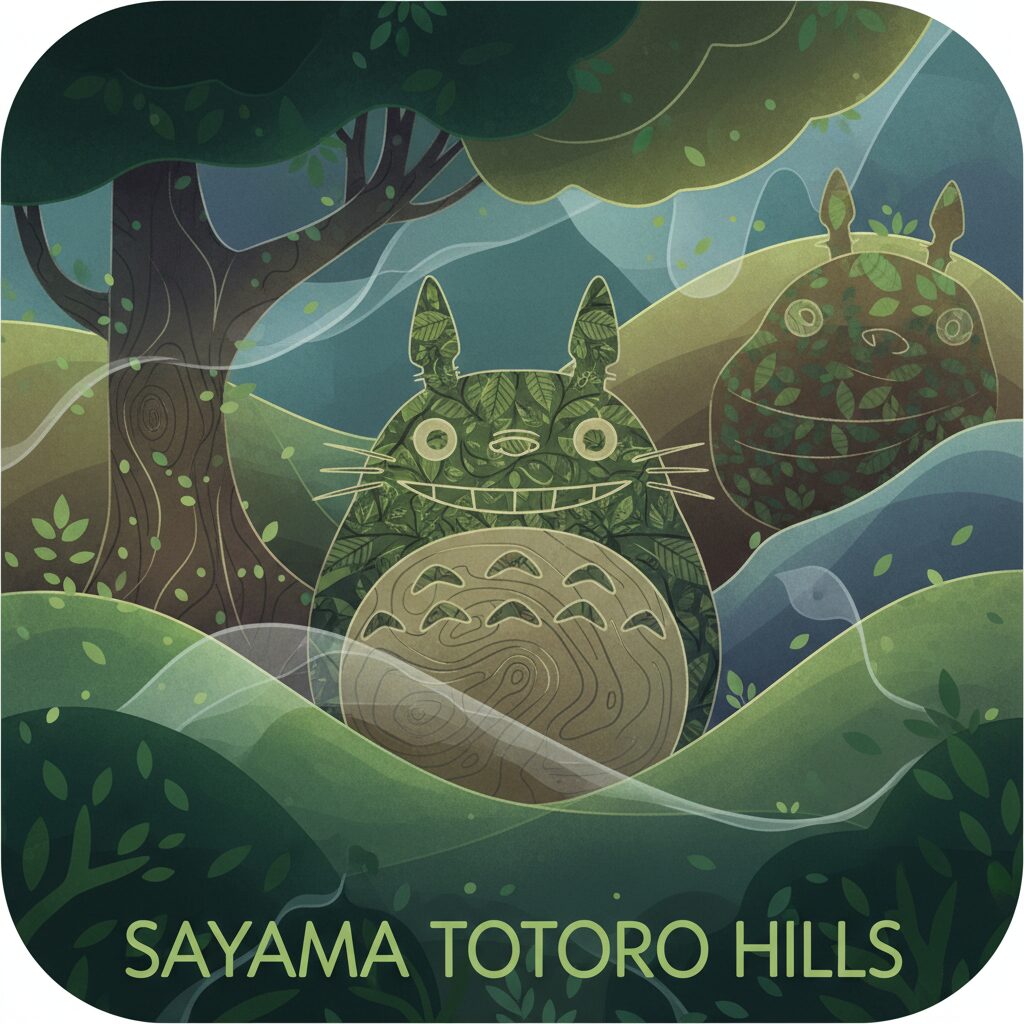
There’s a certain kind of magic that lives in the memories of childhood, a gentle, sun-dappled nostalgia for a world that felt boundless and full of quiet wonders. For millions around the globe, this feeling is perfectly captured in Hayao Miyazaki’s timeless masterpiece, My Neighbor Totoro. It’s a film that doesn’t shout; it whispers, echoing the rustle of leaves in a camphor tree, the pitter-patter of rain on an old roof, and the deep, rumbling sigh of a friendly forest spirit. What if I told you that this world, this gentle landscape of rice paddies, winding country lanes, and dense, mysterious forests, isn’t just a fantasy? It’s a real place, a pocket of Showa-era Japan preserved just on the edge of the sprawling Tokyo metropolis. Welcome to Sayama Hills, the lush, green heart that inspired the setting for one of the most beloved animated films of all time. This is a pilgrimage not just to a location, but to a feeling—a chance to walk the same paths as Satsuki and Mei and perhaps, if you’re quiet enough, hear the whisper of Totoro on the wind.
For travelers enchanted by nature’s quiet magic, exploring ancient forest trails in Yakushima offers a chance to discover another realm where wonder and nostalgia converge.
The Whispers of the Forest: Discovering Totoro’s Footprints
Stepping into Sayama Hills feels like crossing an unseen boundary. The city’s hum gradually fades, replaced by a natural symphony—the buzz of insects, the birds’ chorus, and the soft creak of bamboo swaying in the breeze. The air itself feels different here, heavy with the scent of damp earth and chlorophyll. This is the realm of satoyama, a uniquely Japanese concept describing a quilt of landscapes where human life and nature have harmonized for centuries. It’s a mosaic of managed woodlands, small farms, rice paddies, and reservoirs—a testament to a sustainable way of life that Hayao Miyazaki has long championed. Having grown up in this area, in Tokorozawa, the scenery of his youth is etched into every frame of Totoro. The film serves as a love letter to this landscape, and visiting it feels like reading that letter firsthand.
The preservation of this precious environment is no fluke. When urban sprawl threatened these green hills in the 1980s, a grassroots movement, inspired by the success of My Neighbor Totoro, emerged to protect them. This effort resulted in the formation of the Totoro no Furusato Foundation, or Totoro’s Hometown Foundation. Supported by donations from fans and locals, the foundation has been acquiring small parcels of land, designating them as “Totoro’s Forests.” Each protected area, marked by a charming wooden sign carved with a Totoro, represents a piece of the puzzle—a commitment to preserving the spirit of the film and the ecosystem’s health for future generations. Walking here, you sense the weight of this community effort and a shared love for a story that became a powerful force for conservation, imbuing every step with purpose and gratitude.
Kurosuke’s House: Where Soot Sprites Play
Nestled within this lush landscape is a place that feels like a living piece of the film: Kurosuke no Ie, or Kurosuke’s House. Named after the Makkuro Kurosuke—the little black “soot sprites” Satsuki and Mei find in their attic—this lovingly preserved Showa-era house, with its dark wooden beams, sliding paper screens, and worn tatami mats, is the spitting image of the Kusakabe family home. It’s not a replica but an authentic building from that time, saved and repurposed as a community hub and a sanctuary for Totoro fans. Run by dedicated volunteers, the house is open only on Tuesdays, Wednesdays, and Saturdays, a schedule that adds to its charm and makes each visit all the more special. There’s no entrance fee—just a small donation box to help with maintenance.
Crossing the threshold, you’re instantly transported. The air inside carries the scent of old wood and incense. Sunlight filters through dusty windows, lighting up corners where you can imagine soot sprites scampering away. The real heart of the house is the main room, where a massive, life-sized Totoro sits patiently against the wall. Children and adults alike can’t resist curling up beside him—a photo opportunity that feels like a warm embrace from an old friend. The volunteers are warm and welcoming, sharing stories about the house and the area, their passion for the film and forest palpable. It’s a place built on love, a humble yet heartfelt tribute that captures Miyazaki’s gentle spirit far better than any commercial theme park ever could.
Hiking the Trails of Sayama Hills
Beyond Kurosuke’s House, Sayama Hills’ true magic reveals itself along a network of walking trails. This isn’t a single vast forest, but a sprawling region of rolling hills, dense woods, tranquil lakes, and quiet farmland. The best way to enjoy it is simply to wander. The paths alternate between paved lanes and rustic dirt tracks, weaving through bamboo groves that creak and groan like ancient ships and forests so thick sunlight dapples the ground in shifting patterns. As you walk, you’ll notice details that inspired the film—the towering trees perfectly capable of hiding a Totoro, small Jizo statues adorned with red bibs, and the solitary bus stop on a country road. It’s a journey of imagination, a treasure hunt for moments that seem lifted straight from the anime.
Several key spots are worth exploring. Around Sayama and Tama Lakes, scenic waterside views abound, especially during spring’s cherry blossoms or autumn’s fiery foliage. Deeper in the hills, you can seek out the numbered “Totoro’s Forest” plots. Discovering them feels like a small victory—a connection to the conservation effort. The trails are generally well-marked, but there’s a delightful sense of getting a little lost, of disconnecting from the digital world and tuning in to nature’s rhythms. Listen for the distinct call of the uguisu (Japanese bush warbler) in spring, or the deafening yet meditative drone of cicadas in summer. Feel the crunch of fallen leaves underfoot in autumn. This is a sensory journey, an opportunity to step into the film’s hand-painted, vivid backgrounds.
The Scent of the Earth
One of the most powerful, yet understated, aspects of a walk through Sayama Hills is the scent. It shifts with the seasons and time of day. Mornings after rain bring the heavy petrichor—the rich, loamy aroma of wet earth. Deeper within cedar groves, the sharp, clean pine scent fills your lungs. In the wetlands, a greener, more humid fragrance arises—the smell of life and decay mingling in the mud. This olfactory journey is key to the experience, grounding you in the present and connecting you to the very soil that inspired Miyazaki. It’s the scent of nostalgia, of a Japan slowly fading away, and the foundation’s work preserves not only sights and sounds but this essential, earthy fragrance as well.
Beyond the Forest: The Rhythms of Rural Tokyo
While Totoro is the main attraction, the journey to Sayama Hills provides a richer experience: offering a glimpse into the tranquil rhythm of life in rural Tokyo and Saitama. The region is scattered with small farms and market gardens. As you stroll along the paths linking the forest patches, you’ll pass fields of tea, spinach, and daikon radish. One of the most endearing aspects of the Japanese countryside is the mujin hanbaijo, or unmanned produce stands. These consist of simple wooden shelves or small huts by the roadside, piled with freshly harvested vegetables. You pick what you want and drop the appropriate amount of coins into a small, trusted lockbox. It’s a system founded on honesty and community, a charming relic of a slower, more connected era. Purchasing a bag of freshly picked cucumbers or a bunch of earthy carrots is a delightful way to support local farmers and bring home a literal taste of the satoyama.
The nearby city of Tokorozawa, Miyazaki’s hometown, also has its attractions. Though mostly a modern suburb, it contains pockets of old-world charm. It offers more dining choices and serves as a convenient hub for accessing the hills. Realizing that this vibrant natural environment exists alongside a city of nearly 350,000 residents makes its preservation all the more extraordinary. It underscores the central theme of Totoro: that magic and nature aren’t found in some distant fantasy world but right here, in our own backyards—if we only take the time to notice them.
Seasonal Splendor: When to Visit Totoro’s Home
Sayama Hills displays a distinct kind of beauty throughout every season, making it a place worth returning to repeatedly. Each visit reveals a fresh perspective on this beloved landscape.
Spring (March-May): This season signifies awakening. The pale pink and white cherry and plum blossoms blanket the hillsides, followed by a burst of fresh, vibrant green. The air is mild, filled with the songs of returning birds. It’s a season of hope and fresh beginnings, perfect for a gentle, refreshing walk.
Summer (June-August): The scenery shifts to a deep, nearly overwhelming green. The trees are heavy with foliage, forming a dense canopy that shields from the intense sun. The constant, powerful hum of cicadas provides the quintessential soundtrack to a Japanese summer. The air is thick with humidity, and the woods feel alive, almost primal. This season most closely mirrors the lush, vivid world depicted in the film.
Autumn (October-November): As the heat and humidity fade, the hills burst into color. Maple and ginkgo leaves turn brilliant shades of red, orange, and gold. The air is crisp and clear, and the sun’s lower angle casts long, dramatic shadows. It’s harvest time on the surrounding farms, and the landscape feels abundant and generous. Perhaps, it is the most pleasant season for long hikes.
Winter (December-February): The forest grows quiet and stark. Bare branches of deciduous trees form intricate, skeletal patterns against the sky, revealing the true contours of the hills. The air is cold and clean, and on clear days, you may even spot Mount Fuji in the distance. It’s a season for peaceful, solitary walks, offering a chance to appreciate the subtle, serene beauty of the sleeping landscape.
Practical Magic: Planning Your Pilgrimage
A trip to Totoro’s Forest is less about a structured itinerary and more about a personal journey. However, a bit of preparation will help make your experience as smooth and enchanting as possible.
Access: Getting There from the City
Getting to Sayama Hills from central Tokyo is fairly simple. The most popular route involves taking the Seibu-Ikebukuro Line from Ikebukuro Station to Nishi-Tokorozawa Station, then transferring to the Seibu-Sayama Line, which ends at Seibu-Kyujo-mae Station. This station is adjacent to the MetLife Dome (home of the Seibu Lions baseball team), located at the edge of the hills. From there, it’s a pleasant 15-20 minute walk to the entrance of the main trails and Kurosuke’s House. Alternatively, you can take a train to Kotesashi Station and catch a local bus that brings you closer to the heart of the area. Make sure to check the bus schedule ahead of time, as buses can be infrequent. Using a map app on your phone is highly recommended for navigating the smaller paths.
What to Bring and Wear
This is a day for comfort rather than style. Sturdy, comfortable walking shoes are essential since you’ll be covering varied terrain over a lot of ground. Dress in layers, as the weather can shift, and the forest shade often feels much cooler than open areas. In the summer, insect repellent and a hat are must-haves. It’s also smart to bring a water bottle and light snacks because there are very few shops or vending machines once you venture deep into the hills. Most importantly, bring a camera to capture memories but be ready to put it away and simply enjoy the atmosphere. Don’t forget to carry some cash in small denominations—coins are ideal for the produce stands and the donation box at Kurosuke’s House.
A Word of Advice for First-Time Visitors
It’s important to remember that Sayama Hills is not a theme park. It is a protected nature reserve and a residential area. The magic here is subtle. You won’t find costumed characters or souvenir shops on every corner. The joy lies in quiet discovery and connecting with nature. Please respect the environment by staying on the marked trails and taking all your trash with you. Be considerate of local residents who live here; keep noise levels low and do not trespass on private property. Finally, and very importantly, always check the official website for Kurosuke’s House before you visit. Its opening days and hours are limited and subject to change, and it would be disappointing to make the trip only to find it closed.
A Heartfelt Farewell from the Forest
Leaving Sayama Hills feels like emerging from a pleasant dream. As you head back to the train station, the sounds of nature gradually fade into the hum of the city, yet the feeling of the forest remains. It’s a sense of peace, a reconnection with something simple and profound. A pilgrimage here serves as a reminder that the worlds we cherish in stories often have real-world origins, and that these roots deserve protection. You may not encounter a giant, furry creature with a wide grin, or a bus shaped like a cat, but you will discover the spirit of Totoro in the kindness of the volunteers, in the rustling camphor leaves, and in the quiet, enduring beauty of the satoyama landscape. It’s a journey that warms the heart, leaving you with a pocketful of soot sprites and a renewed appreciation for the subtle magic surrounding us all.