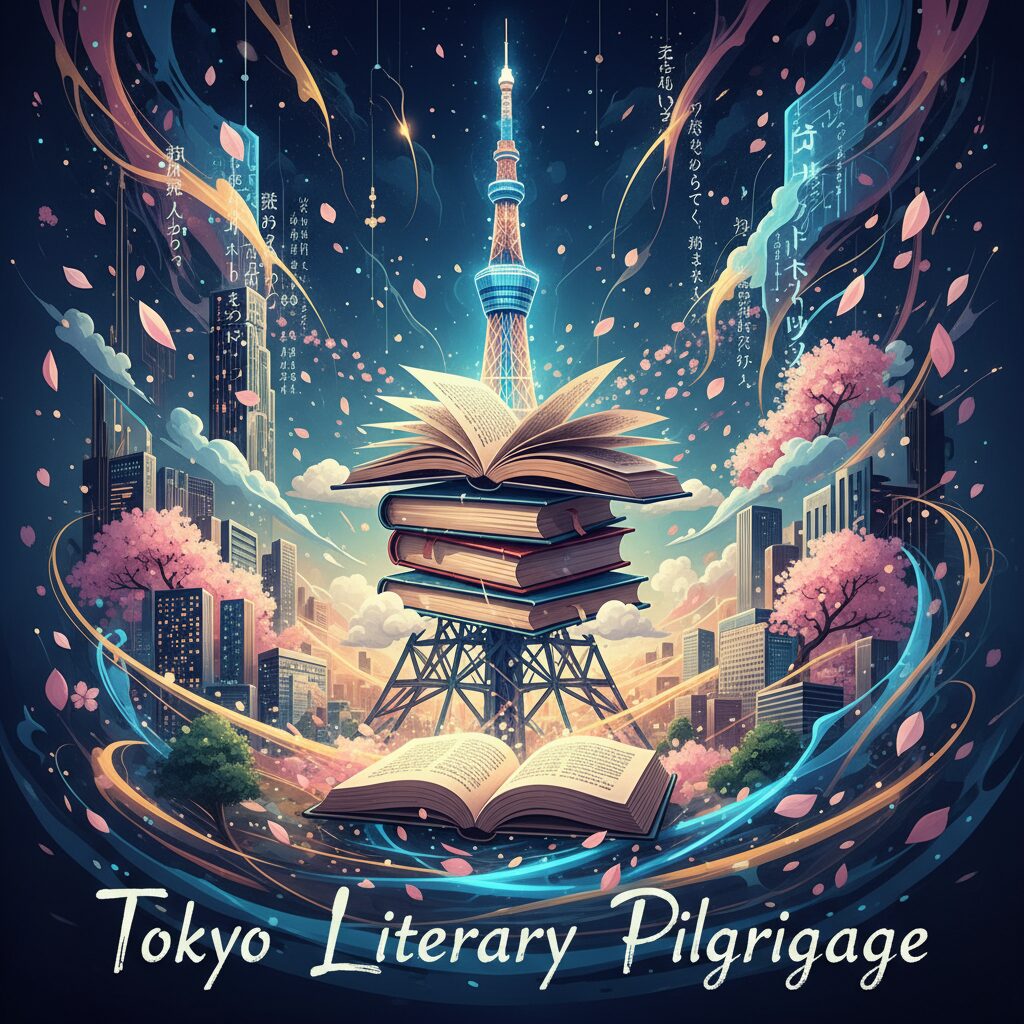
Tokyo. The name itself conjures a universe of images: the electric pulse of Shibuya Crossing, the serene hush of ancient temples, the kinetic energy of a million stories unfolding at once. But for readers of Haruki Murakami, the city is something more. It’s a canvas where the mundane bleeds into the surreal, where talking cats, mysterious women, and portals to other worlds feel not just possible, but probable. To walk through Tokyo with Murakami’s novels as your guide is to peel back the surface of the world’s largest metropolis and discover a labyrinth of dreams, a place where loneliness and connection dance under the glow of neon and the quiet watch of the moon. This isn’t just a tour; it’s an immersion. It’s about finding the strange magic hidden in a Shinjuku jazz bar, the contemplative silence in a suburban park, or the profound weight of history in the simple act of running. You’ll trace the footsteps of Toru Watanabe, Aomame, and Kafka Tamura, but more importantly, you’ll discover how the city itself becomes a character in their stories—and in yours. Prepare to see a different Tokyo, a city of possibility, where the next alleyway might just lead to another world.
Embrace the city’s surreal mysteries further by exploring Murakami’s Tokyo labyrinth where fiction and reality entwine in unexpected ways.
Echoes in the Concrete Jungle: Shinjuku and Yoyogi Park
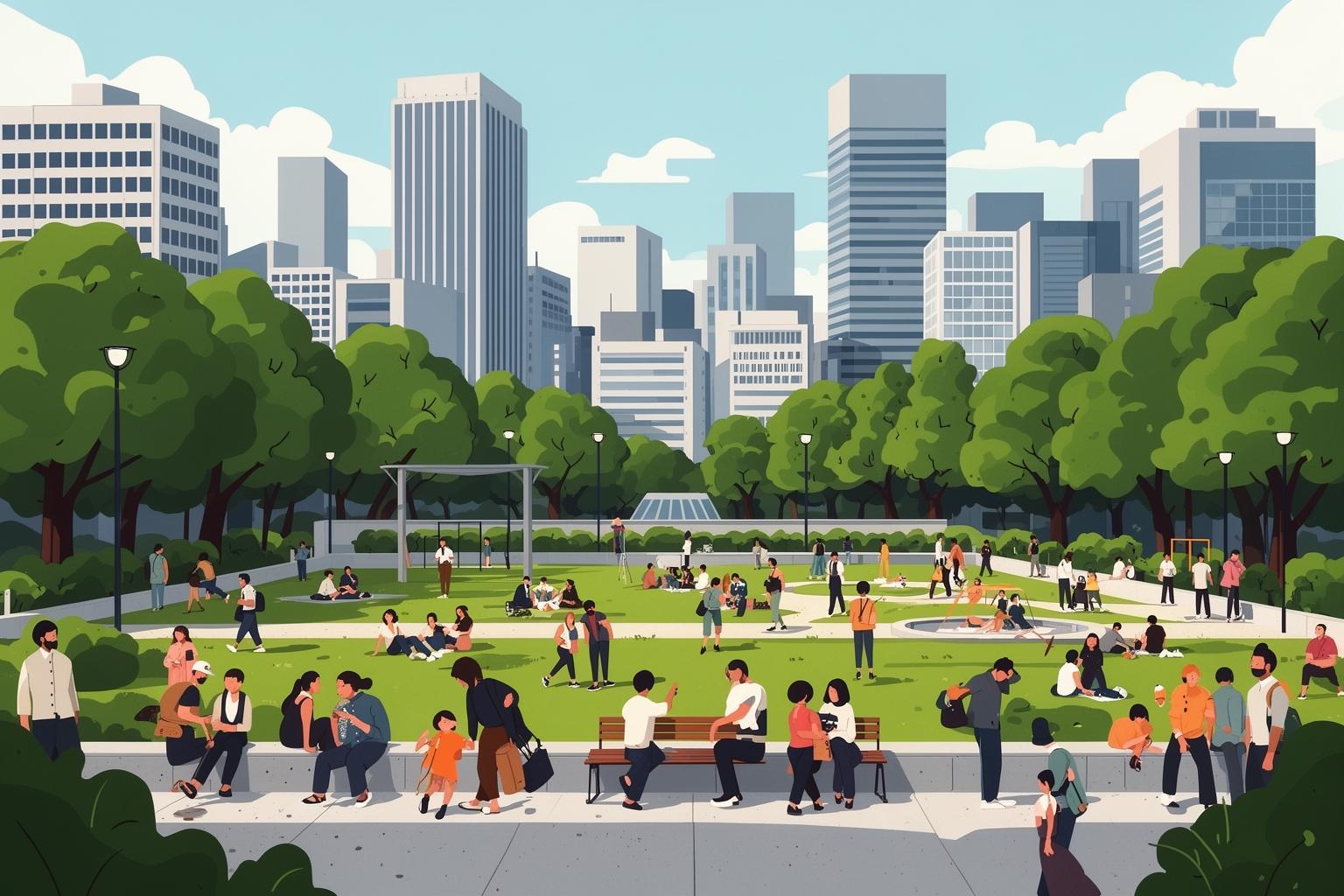
Our journey starts where many of Murakami’s stories of urban alienation and searching find their intense, pulsating core: Shinjuku. This place is more than a mere district; it’s a vast ecosystem, a dizzying contradiction of dense crowds and deep solitude. Exiting Shinjuku Station means being caught up in a tide of humanity so overwhelming it feels like a natural force. As the world’s busiest train station, this concrete-and-steel giant handles millions of people daily. Murakami encapsulates this sensation perfectly—the feeling of being a lone, nameless particle in a sprawling, indifferent accelerator. This is the stage for the wanderings in novels like Norwegian Wood and After Dark, where characters drift through neon-lit nights, seeking something or someone to hold onto.
The Neon Glow and Hidden Alleys
To truly absorb the Murakami atmosphere, one must embrace the night. When dusk falls, Shinjuku’s western side, with its towering skyscrapers like the Tokyo Metropolitan Government Building, transforms into a grid of sparkling lights viewed from above—a quiet, geometric cityscape. But the real tales unfold on the eastern side. Here, amidst the electric haze of Kabukicho, the city’s famed entertainment district, energy pulses palpably. It’s a cacophony of sound and light, with barkers, tourists, and locals all intertwined in the lively spectacle. While Murakami’s characters often seem detached from this frenzy, it undeniably molds them. They stroll these streets, watching life’s performance from a certain distance.
Yet your real destination lies in the quieter, more intimate corners hidden within this chaos. Make your way to Shinjuku Golden Gai. This cluster of tiny, worn bars, preserved like a post-war Tokyo time capsule, is the spiritual home of the dimly lit, whiskey-infused venues so often found in his novels. Each bar is a world of its own, seating only a handful of guests. The air hums with whispered conversations and the soft clink of ice in glasses. Here, you can picture his characters nursing a Cutty Sark, lost in thought, while a scratchy jazz record spins on the turntable. A tip for first-timers: many bars have a cover charge and can feel intimidatingly local, but some welcome foreigners more openly. Look for English signs, walk in quietly confident, and expect a unique, intimate encounter. This isn’t a place for loud groups; it’s for quiet reflection and conversation.
The Green Expanse of Solitude
When the sensory bombardment of Shinjuku grows overwhelming, there’s a clear escape, just as Toru and Naoko found in Norwegian Wood. A short walk south leads to the vast, soothing expanse of Yoyogi Park. The shift is stunning. The city’s roar softens to a gentle murmur, replaced by rustling leaves and distant music from a practicing musician. The park is a sprawling green sanctuary, a lung for the city, and a stage for its residents’ private moments. On any given day, you might see rockabilly dancers, actors rehearsing lines, couples picnicking, or solitary figures lost in thought.
This is the Tokyo Murakami depicts—not the landmarks, but the spaces between them. The park is where his characters come to walk, to think, and to have conversations that shift their lives. Wandering the winding paths, especially on a quiet weekday morning, you can sense that contemplative mood. Sit on a bench, watch sunlight filter through the canopy of massive camphor trees near the Meiji Jingu shrine entrance, and you’ll grasp the peaceful melancholy that colors much of his writing. The park transforms dramatically with the seasons. In spring, cherry blossoms form a fleeting, dreamlike canopy. In autumn, the ginkgo trees near Harajuku Gate blaze a bright golden yellow, blanketing the ground. This seasonal rhythm offers a poignant counterpart to the inner cycles of his characters.
The Polished Surface: Aoyama and Omotesando
From the raw, chaotic energy of Shinjuku, we shift to an entirely different frequency. A subway ride eastward brings us to Aoyama and Omotesando, neighborhoods embodying Tokyo’s sleek, sophisticated, and somewhat detached side. This is the realm of high fashion, minimalist architecture, and upscale cafes. In novels like 1Q84 and After Dark, this setting acts as a backdrop for characters navigating a world defined by surfaces, where deeper, stranger realities often lie just beneath the polished exterior. The atmosphere here conveys curated perfection, quiet affluence, and an almost unsettling sense of order.
Jazz, Coffee, and Contemplation
A recurring theme in Murakami’s world is the jazz bar or quiet café—sanctuaries where time slows down, fostering introspection or a fateful encounter. Though the specific bars he describes are often fictional blends, their spirit is tangible and can be found in the basement clubs and stylish cafes tucked away in Aoyama’s backstreets. Picture descending a narrow staircase off Omotesando’s main street, pushing open a heavy wooden door, and entering a space filled with the warm, intricate sounds of a Thelonious Monk record. The bartender nods while polishing a glass. The lighting is dim. This is the quintessential Murakami moment.
To experience this feeling, seek out one of the area’s long-established jazz kissaten or bars. These are more than just drinking spots; they are temples of sound, where patrons listen reverently to vast vinyl collections. Blue Note Tokyo, a famous and more formal venue, is located here, but the true Murakami seeker will search for smaller, more intimate establishments. Take a seat at the counter, order a simple drink, and just listen. Watch the other patrons. In these quiet, shared moments of appreciation, the city’s loneliness feels briefly eased. This is where you can imagine Aomame from 1Q84 sitting, carefully observing the world around her—a solitary figure against a backdrop of sophisticated cool.
The Serenity of the Nezu Museum
Amidst Omotesando’s designer flagship stores and architectural wonders lies an oasis of profound calm: the Nezu Museum. Rebuilt by the renowned architect Kengo Kuma, the museum is a striking example of modern Japanese design, but its true treasure, in a Murakami-like spirit, is its expansive traditional Japanese garden. Stepping into this garden feels like entering another realm. The city’s noise fades away, replaced by the gentle trickle of water, the rustling bamboo, and the calls of birds. Winding paths guide visitors past stone lanterns, a serene koi pond, and several traditional teahouses scattered along the hillside.
This is exactly the kind of secluded, beautifully ordered natural space where a Murakami character might retreat to escape the pressures of their strange reality. It’s a place for reflection, where the external world can be kept at bay. The garden is a masterpiece, feeling both meticulously planned and wildly natural. Take your time here. Sit in one of the rest areas and simply watch the play of light and shadow on the water. It’s easy to imagine a character from his novels finding a moment of clarity or a cryptic clue in the patterns of the koi swimming below. The garden embodies the aesthetic of mono no aware—a gentle, poignant awareness of the transience of things—that permeates his work.
A City of Words: Jimbocho
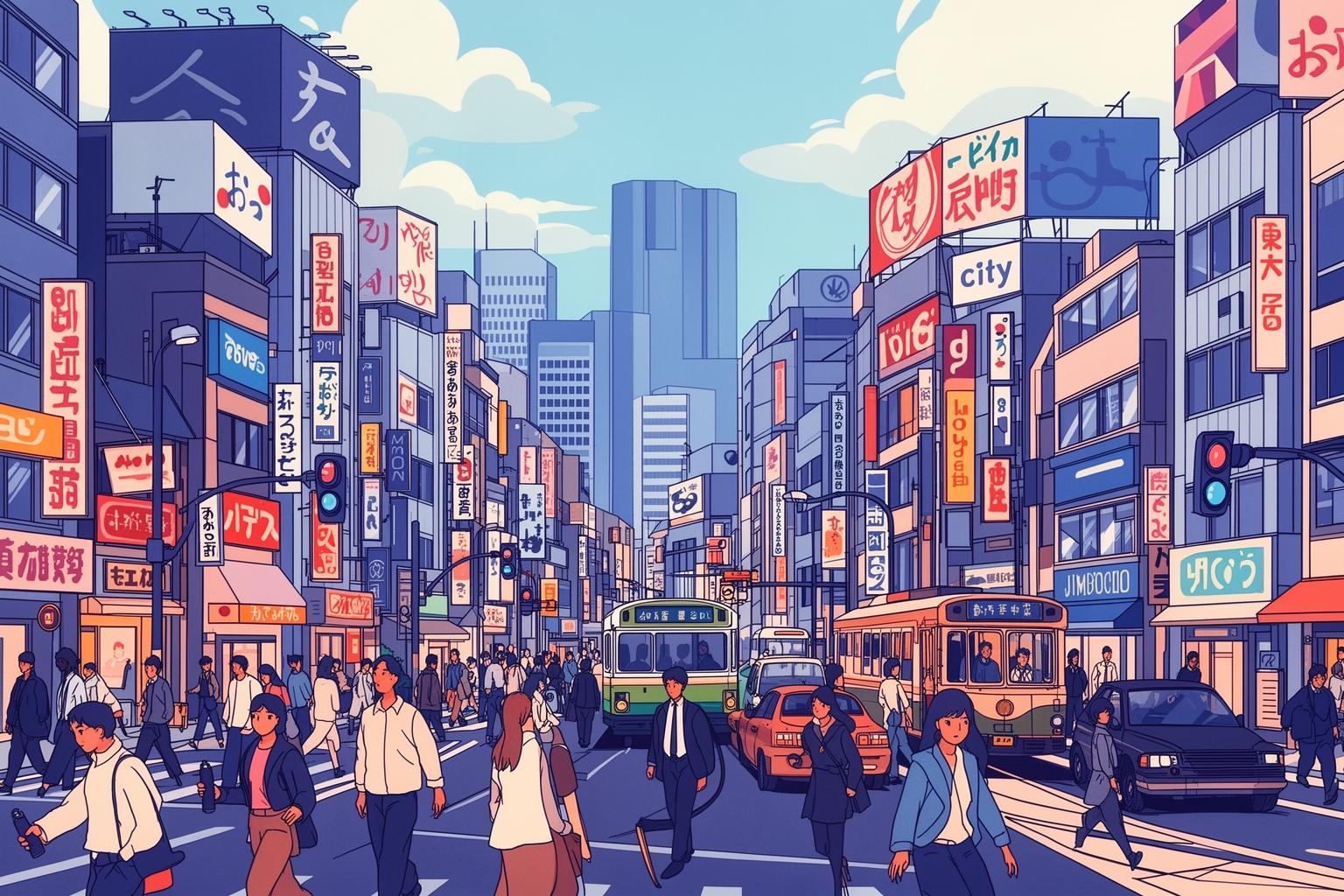
No literary journey through Tokyo would be complete without visiting Jimbocho, the city’s renowned book town. For a writer as passionate about reading, music, and the power of archives as Murakami, this neighborhood holds a sacred significance. Situated just north of the Imperial Palace, Jimbocho is a paradise for book lovers. Dozens of bookstores, many specializing in rare or antique editions, line the main street of Yasukuni-dori. The atmosphere here feels unique, filled with the nostalgic, comforting scent of old paper and ink. This is a landscape of knowledge, forgotten tales, and parallel worlds waiting to be uncovered on dusty shelves—a fitting backdrop for the realms of Kafka on the Shore or The Wind-Up Bird Chronicle.
Wandering the Corridors of Print
The charm of Jimbocho lies in wandering. While the main street boasts impressive multi-story flagship stores, the true magic resides in the narrow side streets. Here, you’ll discover tiny, specialized shops devoted to everything from vintage movie posters and woodblock prints to academic texts and foreign-language novels. Books are often stacked high, spilling out onto the sidewalks, forming paper canyons. You don’t have to read Japanese to appreciate the vibe—it’s about the texture, the visual richness, and the sheer passion for the printed word that emanates from every storefront.
Picture Kafka Tamura, the young protagonist from Kafka on the Shore, wandering these streets in search of a book that holds a key to his past. The bookstores feel like dreamlike libraries, especially the older ones with dark wooden shelves, creaking floors, and quiet, knowledgeable proprietors. The Sanseido Bookstore, one of the largest, offers a great starting point, but challenge yourself to get lost. Step into any store that catches your eye, even if you can’t read the signs. Let serendipity lead the way. You may not find a portal to another world, but you will discover a piece of Tokyo’s soul.
The Kissaten Culture
Among the bookstores are another of Jimbocho’s gems: its vintage-style coffee shops, or kissaten. These are not the bright, modern cafes of Omotesando. Instead, they are darker, quieter, and more reverent spaces, often featuring plush velvet seating, wood-paneled walls, and a faint haze of cigarette smoke from a bygone era (though many are now non-smoking). They are institutions of contemplation. Places like Ladrio or Milonga Nuova are legendary, serving siphon-brewed coffee with a sense of ceremony. This is where you sit with a newly bought book. It offers the perfect atmosphere to imagine one of Murakami’s introspective characters, nestled in a corner booth, letting the rich coffee and quiet ambiance fuel their thoughts as they attempt to unravel a mysterious puzzle. Ordering coffee here is participating in a ritual— a moment of stillness amidst the bustling city—an experience that feels lifted directly from the pages of his novels.
The Rhythm of the Everyday: The Chuo Line
While Shinjuku and Aoyama stand as the iconic, high-energy centers of Murakami’s Tokyo, much of the enchantment in his books unfolds in the quiet, modest residential neighborhoods. To discover this side of the city, we take the Chuo Line westward from Shinjuku. This train line serves as a crucial artery in his fictional universe, linking diverse lives and realities, famously appearing in 1Q84 as the path Aomame follows on her fateful taxi journey. The neighborhoods it traverses, such as Koenji, Asagaya, and Ogikubo, provide a glimpse into the everyday Tokyo where his characters reside—a world of small apartments, local shopping arcades (shotengai), and a lingering bohemian atmosphere.
Koenji’s Bohemian Heart
Getting off the train at Koenji reveals a neighborhood with a distinct counter-culture vibe. It’s known for its vibrant punk rock scene, numerous vintage clothing stores (furugi), and a maze of narrow streets filled with izakayas, record shops, and independent businesses. This is the kind of place where a character might work a part-time job, hunt for a rare jazz LP, or meet a friend in a small, unpretentious yakitori spot. The atmosphere is relaxed, creative, and a bit scruffy around the edges. It feels authentic and lived-in. Strolling through the covered Pal and Look shotengai, you witness the rhythm of daily life—the shopkeepers greeting their regular customers, the aroma of grilled food, the eclectic mix of people. This everyday reality is the foundation Murakami skillfully uses to launch the surreal. It is precisely because these settings are so ordinary that the intrusion of the bizarre becomes so impactful.
Asagaya’s Quiet Charm
One stop further down the line lies Asagaya, a neighborhood that feels somewhat more mature and serene than Koenji, yet still maintains a creative, local spirit. The area is known for its tree-lined streets and the lovely Asagaya Pearl Center, a long, covered shopping arcade that serves as the community’s heart. Here, you can easily imagine one of his protagonists going about their daily routine: buying groceries, dropping off clothes at the dry cleaners, living a life of quiet normalcy before a mysterious phone call arrives or a strange woman with an unusual offer appears. The area is also home to numerous small theaters and jazz bars, reflecting the artistic current that runs through these suburban communities. A walk through the residential streets, with their small houses and carefully tended gardens, offers a striking contrast to the verticality of central Tokyo and provides insight into the domestic spaces where much of his characters’ internal worlds unfold.
The Metaphysics of Motion: Running the Imperial Palace
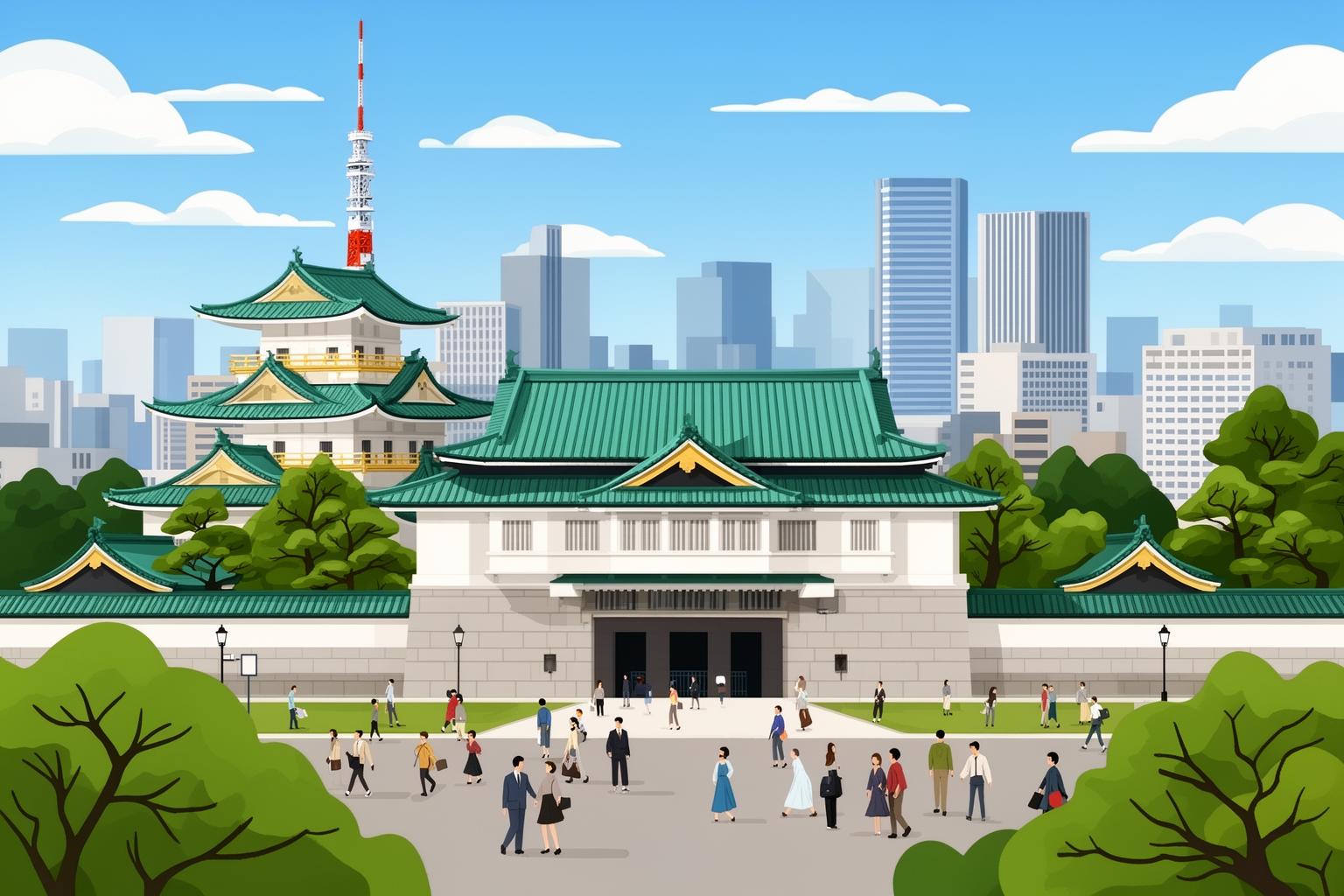
No exploration of Murakami’s world would be complete without recognizing the significant role that running has in his life and work, most notably described in his memoir, What I Talk About When I Talk About Running. For him, long-distance running is more than mere exercise; it is a meditative practice, a discipline, and a metaphor for the writer’s journey. His preferred route, and one of the most popular running paths in all of Japan, is the 5-kilometer loop around the perimeter of the Imperial Palace.
The Runner’s High
Running this course allows you to connect with the author’s philosophy on a physical level. The route is both beautiful and symbolic, taking you past the ancient stone walls and moats of the former Edo Castle, now the residence of the Emperor of Japan. You run alongside history, a sharp contrast to the modern skyscrapers of the Marunouchi business district just across the street. The path is wide, well-maintained, and populated by runners of all ages and skill levels, creating a shared, silent sense of purpose. As you settle into a rhythm, the repetition of your footfalls and steady pace can induce a state of mind that feels distinctly Murakami-esque—a focused emptiness where thoughts can ebb and flow without judgment, and the mind is free to explore strange and creative realms. You don’t have to be a marathoner to appreciate it; even a brisk walk around the loop offers a unique perspective on the city’s geography and history.
Practical Notes for the Path
If you choose to join the ranks of runners, the best times are early morning or evening after work, when the air is cooler and the path is vibrant with activity. There are several runner-support stations nearby, such as the popular Adidas Runbase, where you can rent shoes and apparel, use lockers, and shower for a small fee, making it very accessible for travelers. The convention is to run counter-clockwise. As you circle the route, you’ll pass landmarks like the Sakuradamon Gate and the gardens. Observe the other runners—their focus, determination. In this shared, simple act, you can sense the dedication and persistence that Murakami advocates as essential, not just for running or writing, but for navigating the labyrinth of life itself.
Finding Your Own Story in Murakami’s Tokyo
Tracing the footsteps of fictional characters through a very real city is both a strange and wonderful experience. What begins as a literary scavenger hunt gradually evolves into something more profound. You start to view the world through a different perspective. You notice the cats basking in the alleyways of Yanaka, the solitary figures in late-night diners, the subtle melancholy of a passing train, and you find hints of a Murakami story everywhere. You come to understand that his Tokyo is not a creation, but an amplification of the city that already exists—its quiet loneliness, its hidden beauty, and its potential for the surreal to emerge from the fabric of the everyday.
The true pilgrimage doesn’t end once you’ve checked every location off a list, but when you begin to discover your own strange, magical moments. It happens when you get lost in a residential neighborhood and stumble upon a tiny, perfect shrine you weren’t expecting. It happens when you sit in a café and overhear a conversation that sounds like it could be lifted from a novel. It happens when you look up at the two moons in the sky, even though you know only one is real. Haruki Murakami offers his readers a key to a secret version of Tokyo, and the greatest joy lies in realizing that the door was open all along. So wander, get lost, listen to the city’s music, and remain open to the possibility that your own story is waiting just around the next corner.