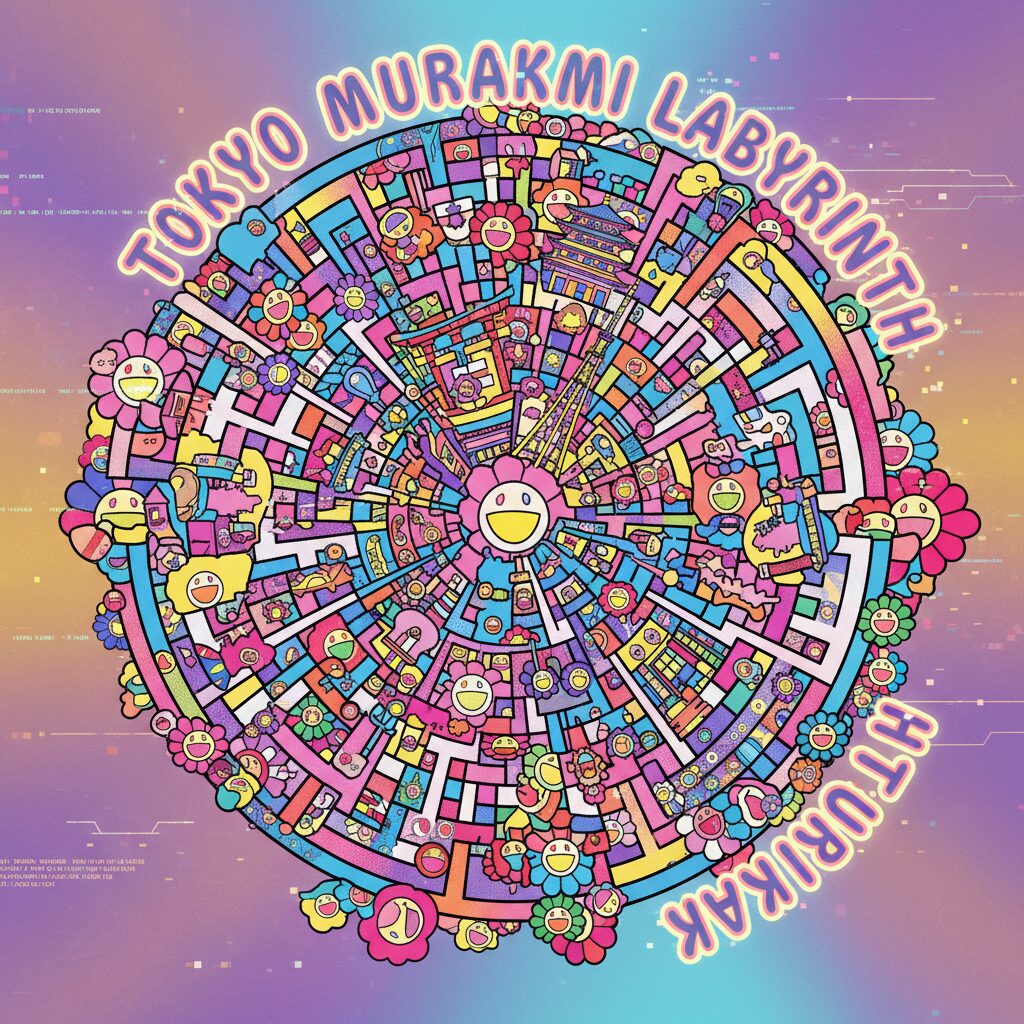
Tokyo is not just a city; it’s a consciousness. It’s a sprawling, breathing entity where the mundane and the magical bleed into one another, often without warning. For readers of Haruki Murakami, this sentiment is a familiar friend. His Tokyo is a character in itself—a labyrinth of lonely hearts, talking cats, parallel worlds with two moons, and subterranean jazz bars that seem to exist outside of time. To walk its streets is to step inside a narrative, to trace the outlines of stories that feel both impossibly strange and deeply, achingly real. This is not a typical sightseeing tour. This is a pilgrimage, a journey into the atmospheric heart of Murakami’s literary universe. We’re not just looking for filming locations or specific buildings; we are hunting for a feeling. It’s the quiet melancholy of a walk along a canal, the anonymous hum of the world’s busiest train station, the scent of old paper in a secondhand bookstore, and the resonant sound of a lonely saxophone drifting from a basement club. Prepare to get a little lost, to embrace the ambiguity, and to discover how the city’s rhythm aligns with the dreamlike cadence of his prose. Welcome to Haruki Murakami’s Tokyo.
For a more detailed guide to navigating this atmospheric landscape, explore our pilgrim’s guide to Murakami’s Tokyo.
The Sound of Solitude: Jazz Bars and Whiskeys in Shinjuku
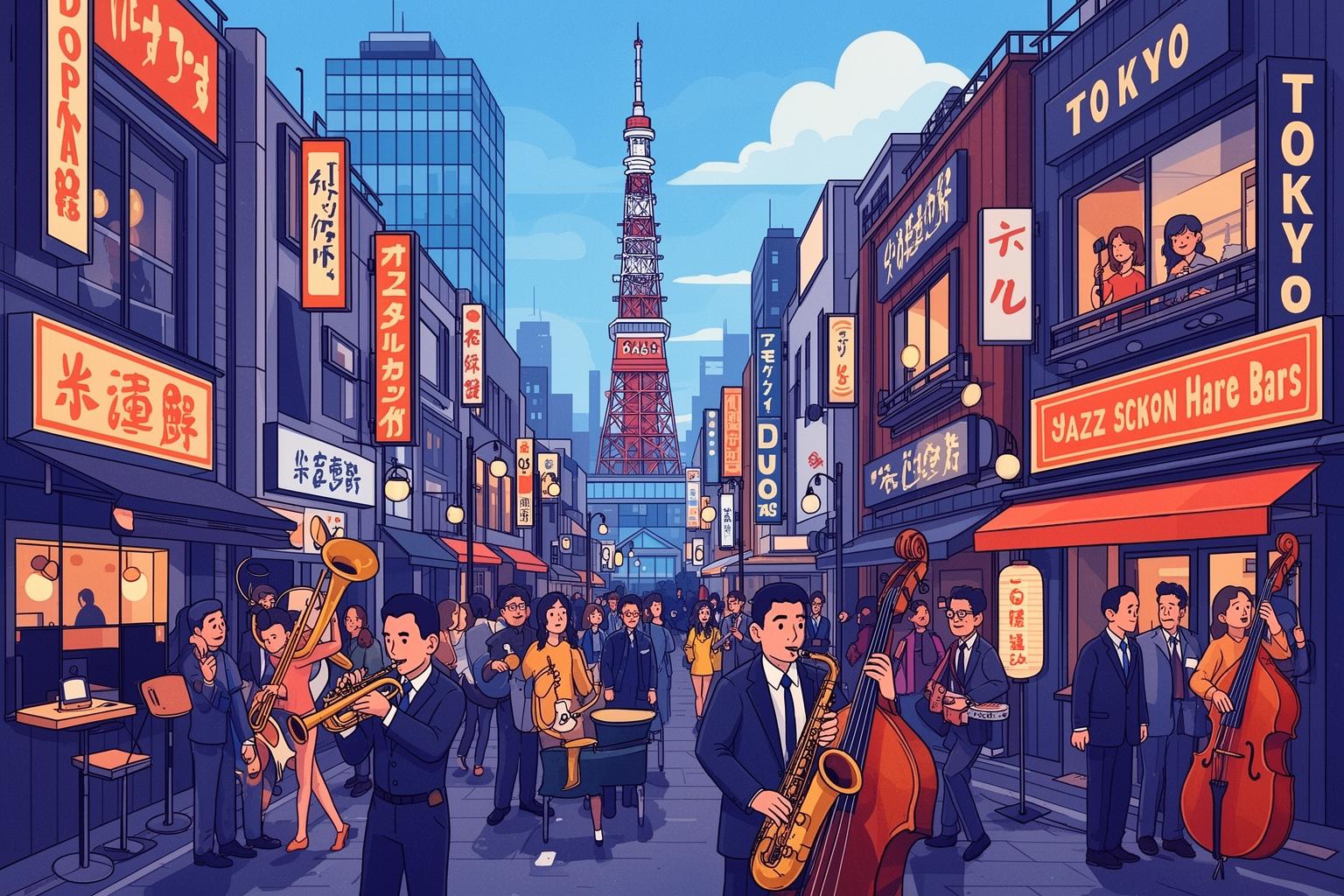
Shinjuku is the vibrant, chaotic core of modern Tokyo—a dazzling fusion of neon lights, commerce, and humanity. It’s where countless Murakami protagonists find themselves—either passing through its station, a concrete-and-steel lifeline, or seeking refuge from its overwhelming energy in the quiet, dimly lit havens tucked away within. The sound of jazz, ever-present in Murakami’s world, unlocks this part of the city. It serves as a soundtrack for reflection, a comforting shield against urban alienation.
Dug and the Golden Gai Labyrinth
To truly immerse yourself in a Murakami scene, you must go downward. Beneath Shinjuku’s busy streets lies Dug Jazz Cafe & Bar, a legendary spot frequented by the author himself and immortalized in Norwegian Wood. Discovering it is part of the ritual. You slip off the main street, notice the modest sign, and descend a narrow staircase. The atmosphere shifts instantly—cooler, quieter, and scented with dark wood, old vinyl, and a faint trace of cigarette smoke from decades ago. This isn’t a place for loud talk. It’s a sanctuary for listening. Guests sit in quiet reverence, savoring whiskey or coffee, as the warm, intricate tones of John Coltrane or Miles Davis records fill the room. The low lighting throws long shadows from vintage posters and photographs lining the walls. You can easily imagine Toru Watanabe seated at the bar, lost in thought, the music enveloping him. It’s a place to be alone, yet together. Order a whiskey neat, and let the atmosphere sink into your bones. It feels less like a bar and more like a time capsule, preserving a unique kind of cool, contemplative solitude.
Just a short stroll from Dug lies an entirely different world: Golden Gai. This well-preserved corner of post-war Tokyo is a mesmerizing maze of six narrow alleys crammed with over two hundred tiny bars, some so small they hold only five or six people. Walking through Golden Gai at night feels like stepping onto the set of After Dark or into the surreal cityscapes of 1Q84. Each doorway offers a glimpse into another realm—a punk rock bar, a flamenco-themed closet, a quiet den run by an aging mama-san. The intimacy is palpable. You’ll be shoulder-to-shoulder with patrons, sparking conversations with strangers beneath the glow of paper lanterns. It’s a place where unexpected connections seem possible, where the city’s anonymous façade dissolves, revealing its quirky, human core.
Shinjuku Station: The Labyrinth’s Heart
More than a transit hub, Shinjuku Station symbolizes Tokyo’s overwhelming scale and beautiful chaos. It’s the world’s busiest railway station—a vast underground city of platforms, tunnels, and department stores serving millions each day. In Murakami’s novels, it’s where characters lose themselves, a starting point into the unknown or a symbol of modern life’s crushing impersonal forces. For first-time visitors, it can be utterly disorienting. The key is to surrender to it. Accept that you may get lost. The West Exit leads to the skyscraper district, a canyon of corporate towers that feels sleek and futuristic, while the East Exit bursts into the vibrant chaos of Kabukicho and major shopping areas. Rather than trying to conquer it, let yourself float with the human current. Watch the endless flow of people, each on their own journey—a city of stories converging and diverging in this vast, singular space. Here, you can truly feel the urban loneliness woven throughout Murakami’s writing—the sense of being just one anonymous soul in a sea of millions.
Echoes of Youth: Strolls Through Yotsuya and Ichigaya
Leaving behind the electric buzz of Shinjuku, we discover a much quieter, more reflective side of Murakami’s Tokyo along the Chuo Line tracks. The neighborhoods of Yotsuya and Ichigaya serve as the main setting for the tender, melancholic memories in Norwegian Wood. This is not a landscape of grand landmarks but of serene residential streets, tree-lined canals, and the subtle emotional weight of the past.
Walking with Naoko: The Route from Ichigaya to Yotsuya
One of the most iconic scenes in Norwegian Wood is the long, aimless Sunday afternoon walk Toru and Naoko take—a journey that mirrors their own wandering, uncertain path. Recreating this walk is a deeply moving experience for any fan of the novel. Begin at Ichigaya Station and walk alongside the Sotobori Canal. The atmosphere immediately feels different from the city center—peaceful. The loudest sound is the gentle rumble of a train passing on the opposite bank. The scenery is simple: a waterway, a grassy embankment, and cherry trees forming a breathtaking pink canopy in spring. This walk invites reflection. There are no tourist traps or souvenir shops, only the path ahead and a quiet space for your mind to wander. You can almost sense Toru and Naoko’s presence, their hushed conversations lingering in the air. The route takes you through tranquil neighborhoods, past the old fishing pond mentioned in the book, and eventually toward Yotsuya. The beauty of this pilgrimage lies in its subtlety—you aren’t visiting a monument, but inhabiting a memory, feeling the gentle sadness and nostalgia that define the novel.
The Dux Bakery and Everyday Magic
In the novel, Naoko buys a special bread from the Dux Bakery in Yotsuya. Although the real-life inspiration no longer exists, its spirit endures in the small local bakeries tucked away in the neighborhood’s side streets. Searching out one of these shops is a very Murakami-esque quest—finding magic in the mundane. The significance of food, routine, and simple pleasures is a recurring theme in his work, serving as an anchor in a world that often feels untethered. Find a local bakery that smells of freshly baked bread and warm sugar. Purchase a pastry or a simple loaf, then take it to the canal’s edge, sit on a bench, and savor it slowly. This small act connects you to the story on a sensory level, reminding you that even in tales filled with loss and confusion, there are moments of simple, grounding comfort.
The Surreal and the Everyday: Koenji and the Chuo Line
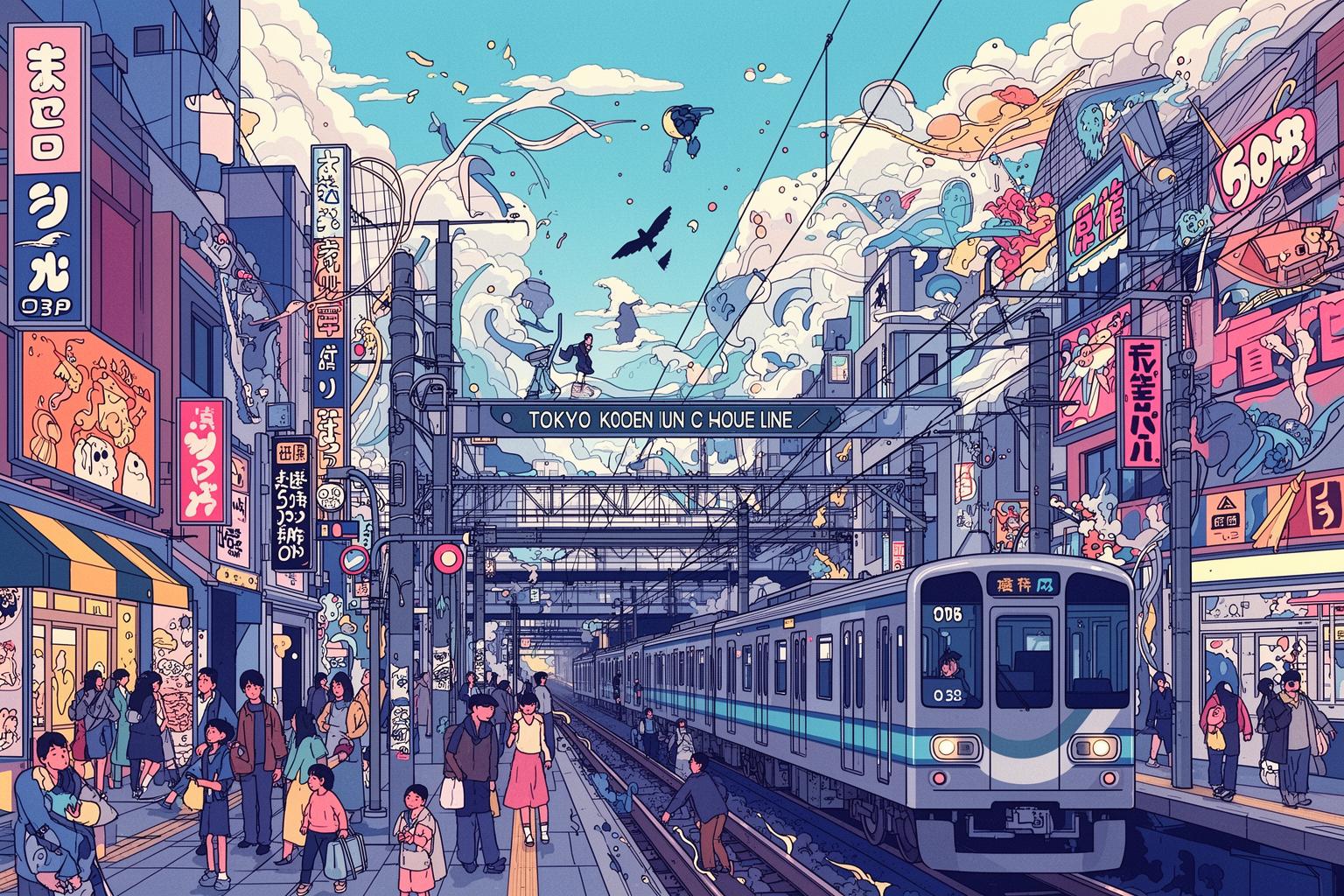
The Chuo Line, recognized by its distinctive orange trains, serves as the lifeline connecting many of Murakami’s significant locations. Riding it feels like turning the pages of his novels. Each stop reveals a different side of Tokyo, a unique atmosphere. Traveling westward from Shinjuku, the line leads to Koenji, a neighborhood that seems tailor-made for a story like 1Q84, where the boundaries of reality blur and anything might happen.
Koenji’s Two Moons: A Whisper of 1Q84
Koenji stands as Tokyo’s bohemian center. It’s a lively, fiercely independent area famed for its vibrant punk rock scene, numerous vintage clothing shops (called furugiya), and quirky, indie stores. The vibe is slightly unconventional, somewhat rebellious, and deeply creative. It’s a place where a second moon could appear in the sky with little surprise. Although the novel’s iconic emergency staircase isn’t an actual site you can visit, the neighborhood captures its essence. This is where Aomame, the novel’s protagonist, would feel at home. To soak it in, simply wander. Explore the covered shotengai shopping arcades near the station, offering a blend of traditional grocers and trendy cafes. Venture into the narrow backstreets, uncovering hidden bars, tiny art galleries, and record shops brimming with rare vinyl. Koenji invites you to lose yourself. It’s a space to abandon your map, follow your curiosity, and embrace the strange, unexpected encounters the city presents. Find a rooftop or a quiet park as night falls, gaze up at the sky, and let your imagination roam.
Riding the Chuo Line: A Passage Through Murakami’s World
Don’t view the train merely as a way to get from one point to another. On this pilgrimage, the journey itself becomes the destination. The Chuo Line is a steady presence in Murakami’s characters’ lives, a dependable rhythm amidst their often-chaotic worlds. Riding the train provides a snapshot of Tokyo life. You observe students heading to school, salarymen returning home, and families enjoying their day out. Grab a window seat on the Rapid service and watch the city unfold. The bustling, high-rise landscape of Shinjuku slowly transitions into the quieter, lower-rise residential neighborhoods of Nakano, Koenji, and Kichijoji. Each station carries its own distinct vibe. The view from the window—rooftops, power lines, and fleeting glimpses into everyday moments—is like watching a film. It’s the perfect moment to put on headphones, press play on a jazz playlist, and let the train’s motion carry you into a reflective, Murakami-inspired mood.
Quiet Contemplation: Libraries, Parks, and Cats
Beyond the bars and busy streets, Murakami’s world is also one of profound silence and deep reflection. His characters often find comfort in books, nature, and the mysterious company of cats. These contemplative spaces are just as essential to the journey as the more vibrant urban settings.
The Waseda University Environs
Haruki Murakami graduated from Waseda University, and the campus along with its surrounding neighborhood provided the backdrop for the student-life scenes in Norwegian Wood. Visiting the area offers a glimpse into the author’s formative years. The campus itself is a beautiful, leafy sanctuary. Not to be missed is the Tsubouchi Memorial Theatre Museum, an impressive Elizabethan-style building that seems as if it were transported from another era—a distinctly Murakami-esque architectural oddity. The streets around the university are dotted with affordable eateries, classic coffee shops (kissaten), and bookstores catering to students. The atmosphere here blends youthful ambition with scholarly calm. It’s easy to picture a young Murakami strolling these same streets, crafting the ideas that would later become his novels. It’s a place to sense the intellectual currents running beneath the city’s surface.
Jinbocho: A Haven of Secondhand Books
For book lovers, Jinbocho is sacred territory. It is Tokyo’s book town, home to the world’s highest concentration of secondhand and antiquarian bookstores. This is a place where Murakami’s characters—and likely the author himself—would while away countless hours. As soon as you step out of Jinbocho Station, you notice it: the dry, sweet, intoxicating aroma of old paper. The main street, Yasukuni-dori, is lined with multistory bookshops, their shelves weighed down by literary treasures. The real gems, however, lie in the narrow side streets, where highly specialized stores focus on everything from woodblock prints and film theory to old maps and pulp fiction. No itinerary is needed in Jinbocho. The pleasure is in discovery—running your fingers along countless spines, pulling out volumes that catch your eye, and getting lost in their pages. The mood is one of quiet reverence. After hours of browsing, retreat to a nearby kissaten. These traditional coffee shops, often dim, smoky, and furnished with worn velvet chairs, are ideal spots to settle with your newfound books and a cup of carefully brewed siphon coffee.
Inokashira Park and the Search for Lost Cats
Cats feature prominently as a recurring symbol in Murakami’s work. They are guides, companions, and secret keepers, often seeming to perceive the world better than humans do. While you can’t literally search for the specific cats from Kafka on the Shore or The Wind-Up Bird Chronicle, you can visit a place where their spirit feels alive: Inokashira Park in Kichijoji. This expansive, picturesque park serves as a weekend refuge for Tokyo residents. Its centerpiece is a large pond where swan-shaped paddle boats can be rented. Yet the park’s true charm lies in its quieter corners. Wander away from the main pond to find wooded trails, hidden shrines, and many benches perfect for reading. It is a place where the urban and natural worlds blend together. And yes, you will see cats. They lounge in sunny patches, observe the world with an air of detached wisdom, and slip away into the bushes as you approach. Watching them, it’s easy to believe they understand something you don’t. The park makes a perfect final stop on the pilgrimage—a place to sit, reflect, and let the city’s many stories settle.
Practical Navigation for the Urban Explorer
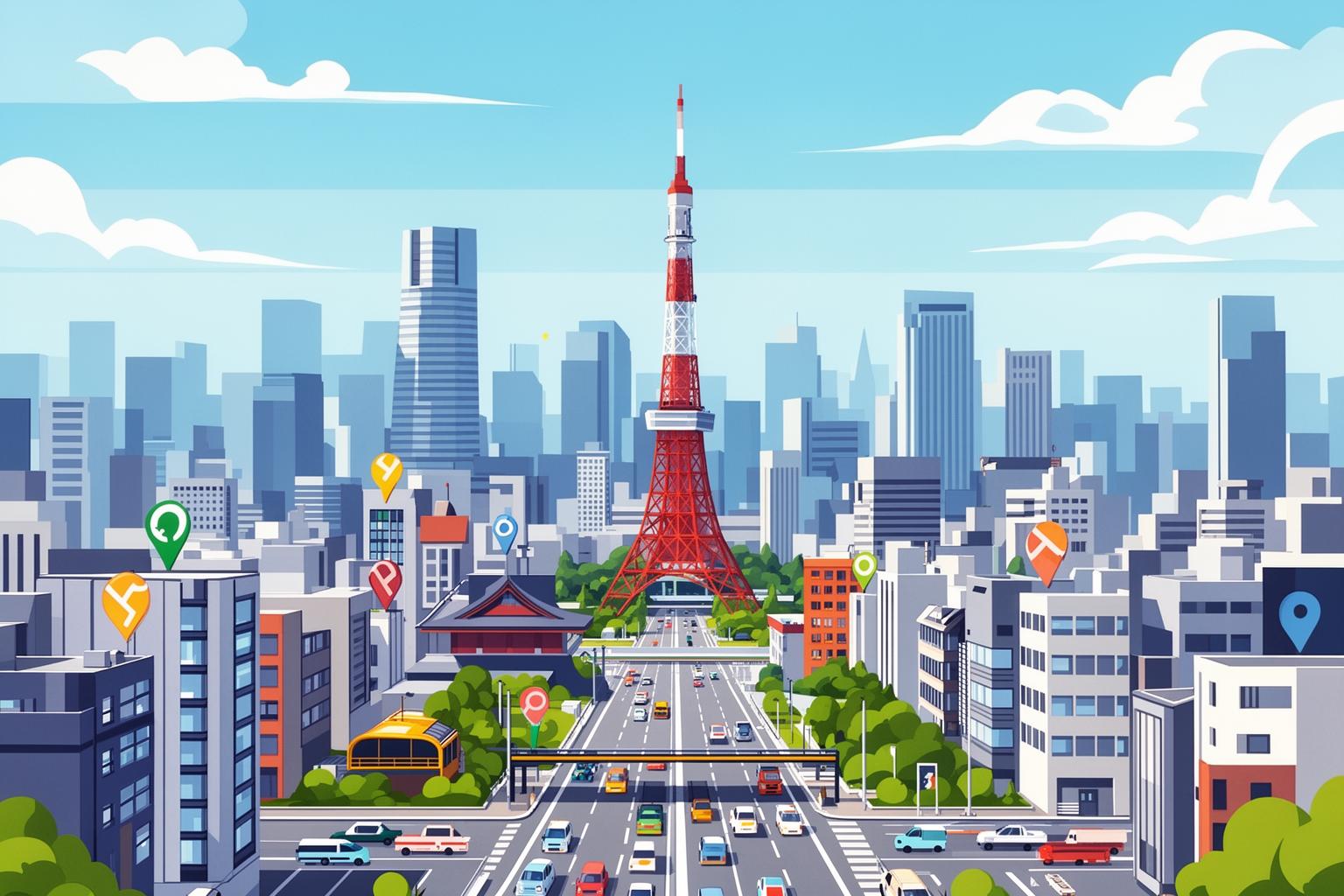
Tokyo can feel overwhelming, but with a few helpful tips, it becomes surprisingly easy to navigate. The secret is to embrace its world-class public transportation system and maintain a sense of curiosity.
Getting Around Tokyo
The city’s rail network is your greatest ally. It’s a complex mesh of JR (Japan Railways) lines and privately operated subway lines, yet it is incredibly efficient, clean, and punctual. For this journey, the two most essential lines are the JR Yamanote Line, a loop that links most of Tokyo’s main hubs like Shinjuku, Shibuya, and Tokyo Station, and the JR Chuo Line, which runs across the center, connecting Shinjuku to Yotsuya, Koenji, and Kichijoji. To simplify travel, get a Suica or Pasmo IC card upon arrival. You can recharge it with money and just tap it at ticket gates for smooth access to nearly all trains and buses. Google Maps offers excellent real-time transit directions, telling you exactly which train to take, the platform to use, and the fare. One important tip: try to avoid traveling during the peak morning rush hour (approximately 7:30 to 9:30 AM), as trains can become extremely crowded.
A Woman’s Perspective on Safety
As a female traveler, I can attest that Tokyo is one of the safest large cities worldwide. Nonetheless, like any big metropolis, it’s smart to stay aware of your surroundings. The primary concern is usually managing crowds. In busy spots like Shinjuku Station or packed trains, keep your bag zipped up and positioned in front of you. Pickpocketing is uncommon, but caution is always wise. During rush hour, many train lines offer women-only cars, which can make traveling more comfortable. These are clearly marked on the platform, usually at the front or rear of the train. When exploring nightlife districts such as Golden Gai, the environment is generally very safe and welcoming, but it’s best to stick to well-lit alleys and be mindful of your drink. The city is wonderfully walkable even after dark, but if you feel uncertain, taxis are always a safe and dependable choice.
When to Visit
Tokyo is captivating throughout the year, but certain seasons align especially well with the Murakami vibe. Spring (late March to April) brings cherry blossoms. The view of the blossoms along the Sotobori Canal during the Norwegian Wood walk is unforgettable, though be prepared for heavy crowds. Autumn (October to November) is arguably the ideal season for this pilgrimage. The air is crisp and clear, the fall foliage stunning, and the slightly wistful mood perfectly suits a cozy jazz bar or getting lost between bookstore shelves. Summer (June to August) is hot and humid, making extended walks more challenging. Winter (December to February) is cold but often sunny, offering clear views and ample reason to seek warmth and comfort in Tokyo’s many indoor retreats.
Finding Your Own Story in Murakami’s Tokyo
A journey through Haruki Murakami’s Tokyo is ultimately not about ticking off locations from a list. You can stand on a street corner in Koenji, but you can’t summon two moons in the sky. You can walk the route from Ichigaya to Yotsuya, but you can’t replicate the exact emotions of the characters who traveled it before you. The true purpose of this pilgrimage is to attune yourself to the city’s frequency, to view the world through a slightly altered lens. It’s about grasping how a physical place can inspire an entire universe of stories. The magic is not in finding the precise bar or bakery, but in discovering your own version—a small, unnamed jazz café, a stray cat that follows you for a block, a curious conversation with a stranger in a Golden Gai bar. Murakami offers us a map, but the territory is ours to explore. He teaches us to seek the wells hidden in our own backyards, the secret staircases just off the main road, and the music that plays softly beneath the surface of our everyday lives. So come to Tokyo. Walk its streets, ride its trains, and listen closely. You may just uncover a story of your own waiting to be found.