There are places on this earth that feel older than time itself, where the air hums with an energy that predates human memory. These are landscapes that breathe, where every rock and root tells a story, and the trees stand as silent witnesses to millennia. Yakushima is one such place. Floating in the turbulent waters south of Kyushu, this small, round island is a realm of staggering mountains, ancient cedar forests, and an almost mythical abundance of rain. It’s a UNESCO World Heritage site, a sanctuary for unique flora and fauna, but for many travelers, it resonates on a deeper, more imaginative frequency. This is the island that breathed life into the wild, spiritual heart of Hayao Miyazaki’s cinematic masterpiece, Princess Mononoke. While not a direct filming location, Yakushima is the soul of that film—its mossy stones, its god-like animals, and its profound message about the violent, beautiful struggle between humanity and nature are all born from this very soil. A journey here is more than a simple vacation; it is a pilgrimage to the source of an animated legend, a chance to walk through the living inspiration for the Deer God’s forest and feel the whispers of the kodama in the rustling leaves. It’s an invitation to understand the deep, Shinto-infused reverence for nature that permeates Japanese culture, a reverence that Miyazaki so brilliantly captured on screen. Prepare to step into a world where myth and reality blur, where the forest feels truly, deeply alive.
Drawn by Yakushima’s mystical allure, travelers may also appreciate an exploration of mythical folklore as a complementary insight into Japan’s ancient legends.
Echoes of Shishigami: The Living World of Shiratani Unsuikyo
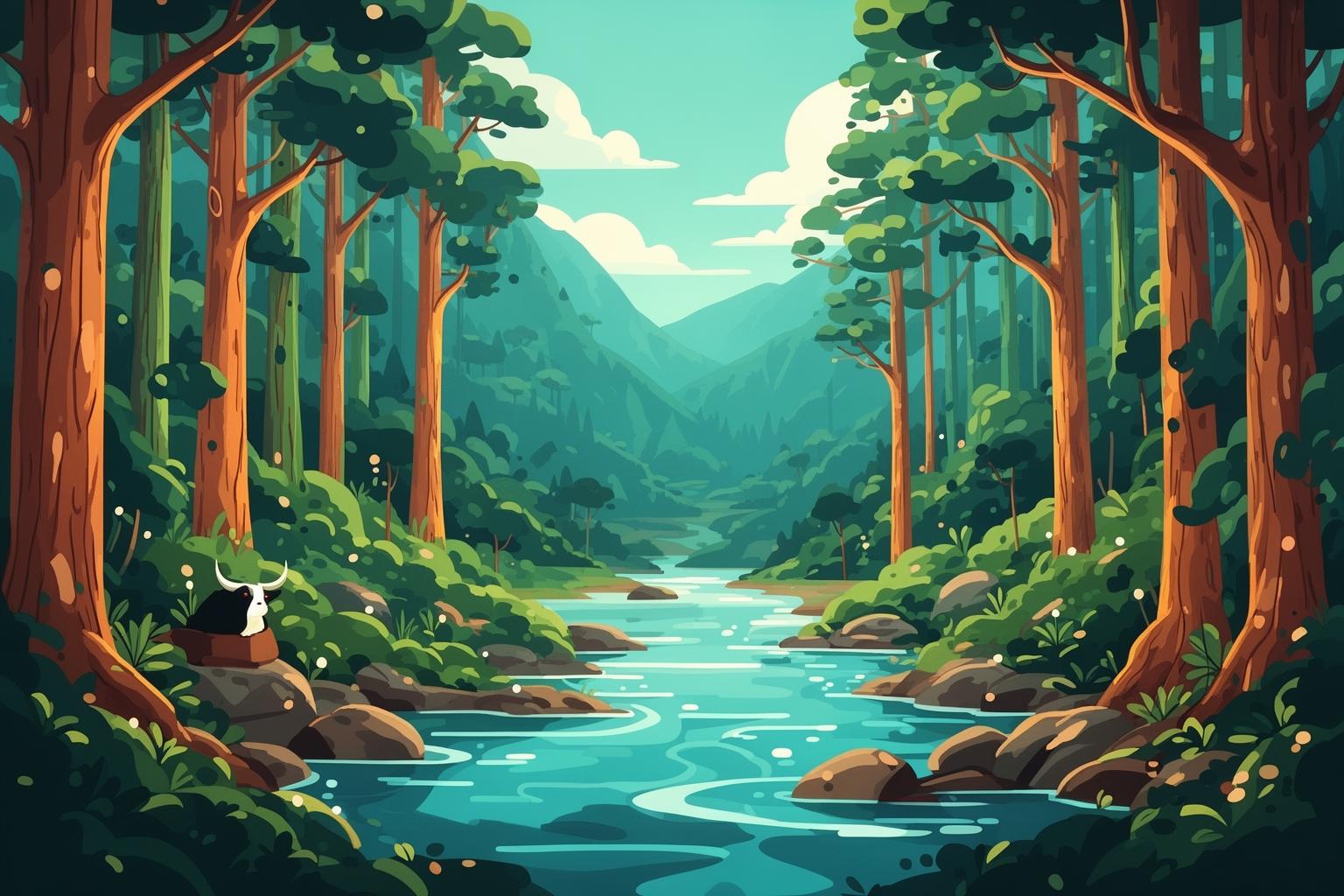
Your true journey into the world of Princess Mononoke begins at Shiratani Unsuikyo, the Ravine of White Valley and Cloud Water. The name alone is poetic, a perfect introduction to the otherworldly beauty that lies ahead. This site is the most famously and directly connected to the film’s visual style. From the moment you step onto the trail, the modern world fades away, replaced by a silence so deep it feels almost tangible. The air turns cool and dense, filled with the scent of moist earth and fragrant cedar. Everything—truly everything—is blanketed in a lush, impossibly green carpet of moss. Hundreds of varieties, each with a distinct texture, weave a velvet tapestry that drapes over granite boulders, clings to ancient tree trunks, and softens every surface into gentle, rounded shapes.
This forest was home to San, the wolf princess. As you wander the labyrinth of trails, you’ll find yourself instinctively listening for the faint, rattling sound of the kodama, the white tree spirits featured in the film. The forest feels so alive, so aware, that their presence here seems not just possible but likely. Sunlight struggles to break through the dense canopy and, when it does, it arrives in dramatic, ethereal beams, illuminating floating spores and shimmering water droplets like a divine spotlight. The most iconic location is a small clearing officially named “Mononoke Hime no Mori” (Princess Mononoke’s Forest). Here, twisted roots of Yakusugi cedars wrap around moss-covered stones, while a crystal-clear stream babbles nearby. It is an almost perfect recreation of the film’s most sacred settings. To sit here is to feel the island’s heartbeat. You immediately understand why Miyazaki chose this place as his inspiration. The forest is not merely a backdrop; it is an ancient and powerful character in its own right.
Hiking in Shiratani Unsuikyo can be tailored to your preference, from easy strolls to strenuous climbs. Well-marked trails range from one-hour walks along wooden boardwalks to more challenging five-hour hikes that lead deeper into the mountains, finishing at the towering granite monolith of Taikoiwa Rock. From this viewpoint, you’re rewarded with a breathtaking panorama of the island’s mountainous interior, a vista that makes you feel perched on the rooftop of a forgotten world. For first-time visitors, mid-length routes offer the best balance, guiding you through the most cinematic landscapes without demanding the endurance of an experienced mountaineer. Just be cautious; the mossy stones and roots remain slick due to the island’s generous rainfall.
In the Presence of Giants: Seeking the Jomon Sugi
If Shiratani Unsuikyo represents the soul of Princess Mononoke, then the Jomon Sugi stands as its ancient, pulsing heart. This solitary tree is the island’s elder, a living monument of unfathomable age. Estimates range from 2,170 to 7,200 years old. To stand before it is to touch a timeline that far surpasses human history. The journey to Jomon Sugi isn’t a casual stroll; it is a demanding, ten-hour round-trip trek requiring respect and preparation. It is a true pilgrimage, a test of endurance that purifies the spirit before granting an audience with the forest’s monarch.
The trail starts along the old logging railway, known as the Arakawa Trail. For the initial hours, you walk on wooden planks laid between the rails, a haunting reminder of the real conflict between industry and nature central to Miyazaki’s film. The path is relatively flat here, serving as a long prelude, guiding you deeper into the island’s heart. All around, the forest thickens, the trees grow taller, their presence increasingly imposing. You cross suspension bridges over rushing mountain streams and pass other well-known Yakusugi, such as the Meoto Sugi (Husband-and-Wife Cedars), two trees joined together in a centuries-long embrace.
One of the most moving landmarks along the route is Wilson’s Stump (Wilson-kabu), the giant, hollow remnants of a cedar felled centuries ago. You can step inside, and looking up from within, the opening to the sky forms a perfect heart shape. It’s a beautiful, almost enchanted detail amidst this challenging hike. From there, the real ascent begins. The trail steepens, becomes rugged, and often demands using ropes to pull yourself up while scrambling over a network of roots. It is a primal, physical experience that connects you intimately to the raw landscape.
After hours of effort, you finally arrive. The Jomon Sugi does not reveal itself immediately. You view it from a specially built platform, set at a distance to protect its delicate root system. Its immense scale is hard to comprehend. The trunk is enormous, gnarled, and textured like the hide of an ancient beast. Its branches stretch skyward with defiant, timeless strength. It has withstood countless typhoons, earthquakes, and the rise and fall of empires. Its beauty is not delicate or symmetrical; it is the beauty of resilience, survival, and profound, enduring permanence. In that moment, all fatigue melts away, replaced by a deep awe and humility. You are gazing at a being that was a sapling when the pyramids of Giza were being constructed. It is the ultimate embodiment of forest gods, a silent, living deity that commands absolute reverence.
Beyond the Ancient Woods: The Island’s Rhythms
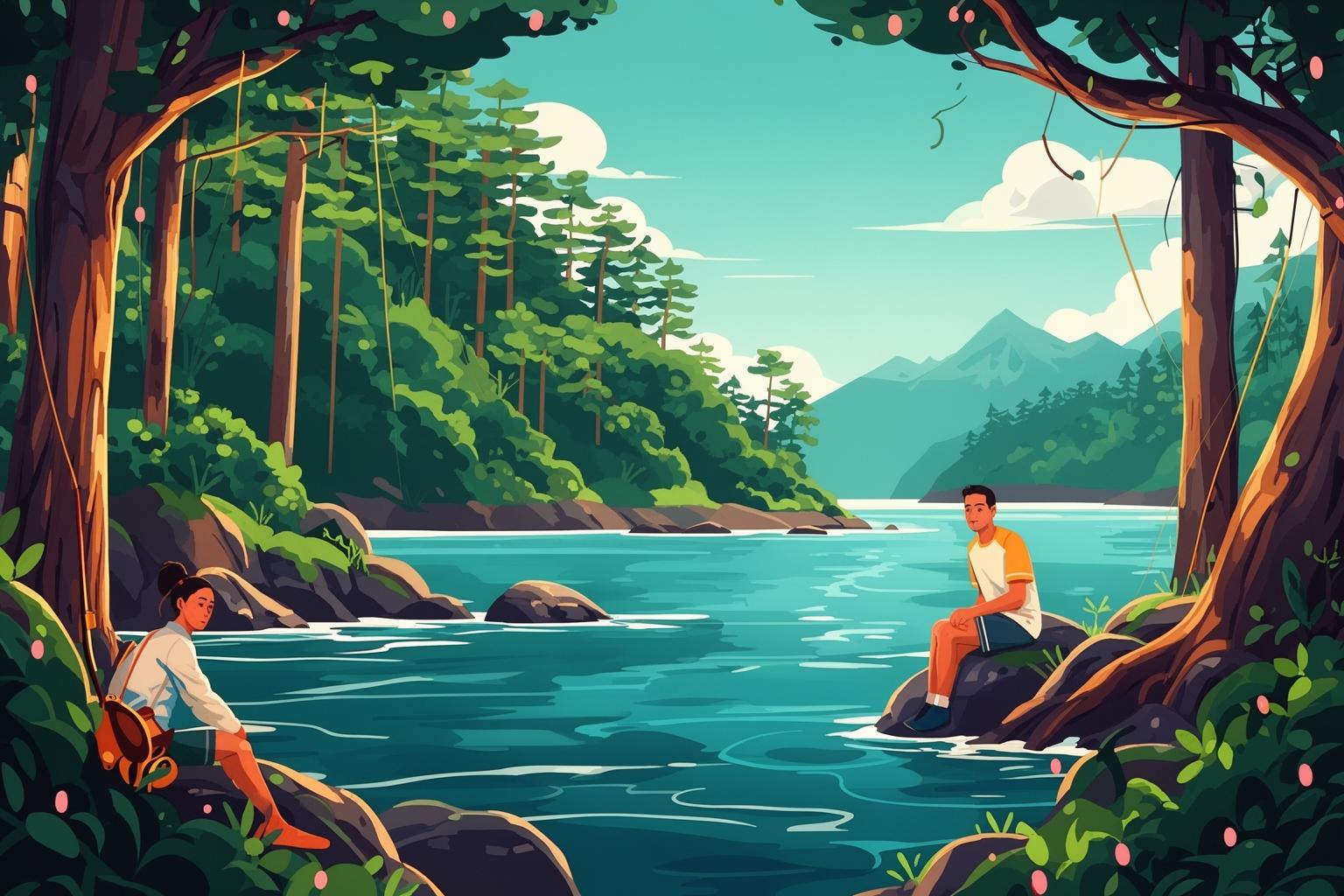
While the forests are the main attraction, Yakushima’s charm also embraces its dramatic coastline and the gentle pace of its local life. The island is a realm of contrasts, where tranquil green mountains plunge into the deep blue Pacific. To truly experience the island, one must explore it in its entirety.
Where Mountains Meet the Sea
The island’s terrain is so steep that its towering granite mountains appear to rise straight from the ocean. This shapes a breathtaking landscape of powerful waterfalls. Among the most striking are Oko-no-taki and Senpiro-no-taki. Oko-no-taki is one of Japan’s tallest waterfalls, an 88-meter thunderous cascade that you can approach closely, feeling its cool mist on your face. Senpiro-no-taki offers a different spectacle—a broad, forceful torrent that has carved its path through a single giant granite block, forming a vast, impressive gorge. These waterfalls serve as the island’s lifelines, channeling the abundant rainwater from the peaks down to the sea.
The coastline itself is a place of raw, natural beauty. At Nagata Inakahama Beach, a stretch of golden sand on the northwest shore, you can witness another natural wonder. From May to August, this beach turns into one of the most critical nesting sites for loggerhead and green sea turtles in the North Pacific. Watching a mother turtle painstakingly drag herself onto the beach under the cover of darkness to lay her eggs is a deeply moving moment, a reminder of the ancient cycles of life that persist here, largely untouched. Joining a guided, respectful night tour is the only way to observe this without disturbing the turtles.
The Art of Slow Living
The human aspect of Yakushima is as enchanting as its nature. Life in the small port towns of Miyanoura and Anbo flows at an entirely different pace. There is a calm, unhurried vibe that encourages you to slow down. The local community shares a profound, innate bond with the island, built on generations of respect and dependence. You see it reflected in how they talk about the mountains, the weather, and the sea.
This connection is also evident in the local cuisine. The island is renowned for its tobiuo (flying fish), often served fried whole, fins and all, creating a striking and flavorful dish. The subtropical climate produces succulent tankan and ponkan oranges, whose juice is a refreshing delight after a long hike. And to truly savor the local spirit, you must try the shochu. Crafted from local sweet potatoes and the island’s famously pure, soft water, Yakushima’s shochu has a clean, smooth taste that perfectly embodies the essence of the place. Enjoying a simple meal of fresh seafood and a glass of Mitake shochu while listening to the waves is an essential part of the Yakushima experience.
A Practical Guide to Your Yakushima Pilgrimage
Exploring a place as wild and remote as Yakushima requires some preparation. The island’s untamed nature is its greatest charm, yet it also poses unique challenges for the unprepared traveler. Planning ahead will help ensure your trip is safe, comfortable, and truly enchanting.
Getting There and Getting Around
Yakushima is most often reached from Kagoshima, the southernmost major city on mainland Kyushu. From there, you have two main choices. The quickest is a high-speed jetfoil ferry, which takes about two to three hours and offers an exhilarating ride over the waves. The more relaxed and less costly option is the car ferry, taking around four hours and allowing you to bring your vehicle. Alternatively, the island’s small airport receives several daily flights from Kagoshima, Fukuoka, and Osaka, providing a fast and scenic approach over the island’s mountainous terrain.
Once on Yakushima, renting a car is nearly essential. Although there is a local bus system, its infrequent service may not fit the demanding schedules of long hikes or the spontaneous exploration the island encourages. Having a car lets you travel the stunning coastal road at your own pace, stop at deserted beaches, and reach remote trailheads early in the morning. Be sure to reserve your rental car well in advance, especially during peak times like Golden Week in May or summer holidays, as the island’s limited fleet fills up quickly.
When to Visit the Enchanted Isle
Yakushima is a destination worth visiting year-round, with each season offering a unique experience. Spring (March to May) is arguably the most beautiful, featuring pleasant temperatures, blooming mountain cherry blossoms, and fresh green growth in the forests. Summer (June to August) is hot and humid, marking the height of the rainy and typhoon seasons. While the forests are at their greenest, you should be prepared for heavy rain and possible travel interruptions. Autumn (September to November) brings cooler, more stable conditions, ideal for long-distance hiking and enhanced by subtle fall colors in the mountain foliage. Winter (December to February) is the quietest season. The coast remains mild, but the high peaks are often dusted with snow, creating a striking contrast. Snow hiking is best suited for the well-equipped and adventurous, though lower elevation trails stay accessible.
One constant throughout the year is rain. There’s a local saying that it rains “35 days a month” in Yakushima. Although exaggerated, this is nearly true. The island’s heavy rainfall supports its unique ecosystem. Do not expect sunshine every day. Instead, embrace the rain—it’s when the forest feels most atmospheric, with mist curling through the trees and moss glowing as if illuminated from within.
What to Pack for the Wild
Proper gear is essential for your comfort and safety. First and foremost, bring high-quality waterproof clothing: a reliable rain jacket, waterproof pants, and most importantly, sturdy waterproof hiking boots with good traction. Trails are often wet and slippery. Dress in layers, as temperatures can drop significantly with elevation or rain. Moisture-wicking synthetic fabrics or wool are preferable to cotton, which retains moisture and chills you.
Other necessities include a comfortable backpack with a rain cover, ample water and high-energy snacks for the trail, a headlamp (for early starts), insect repellent, and sun protection. If you plan to hike to Jomon Sugi, consider hiring a local guide. They not only ensure your safety but also enrich your experience with deep knowledge of the island’s ecology, history, and folklore. Many local shops also rent complete hiking gear sets if you prefer not to travel with your own.
A Traveler’s Philosophy: Treading with Respect
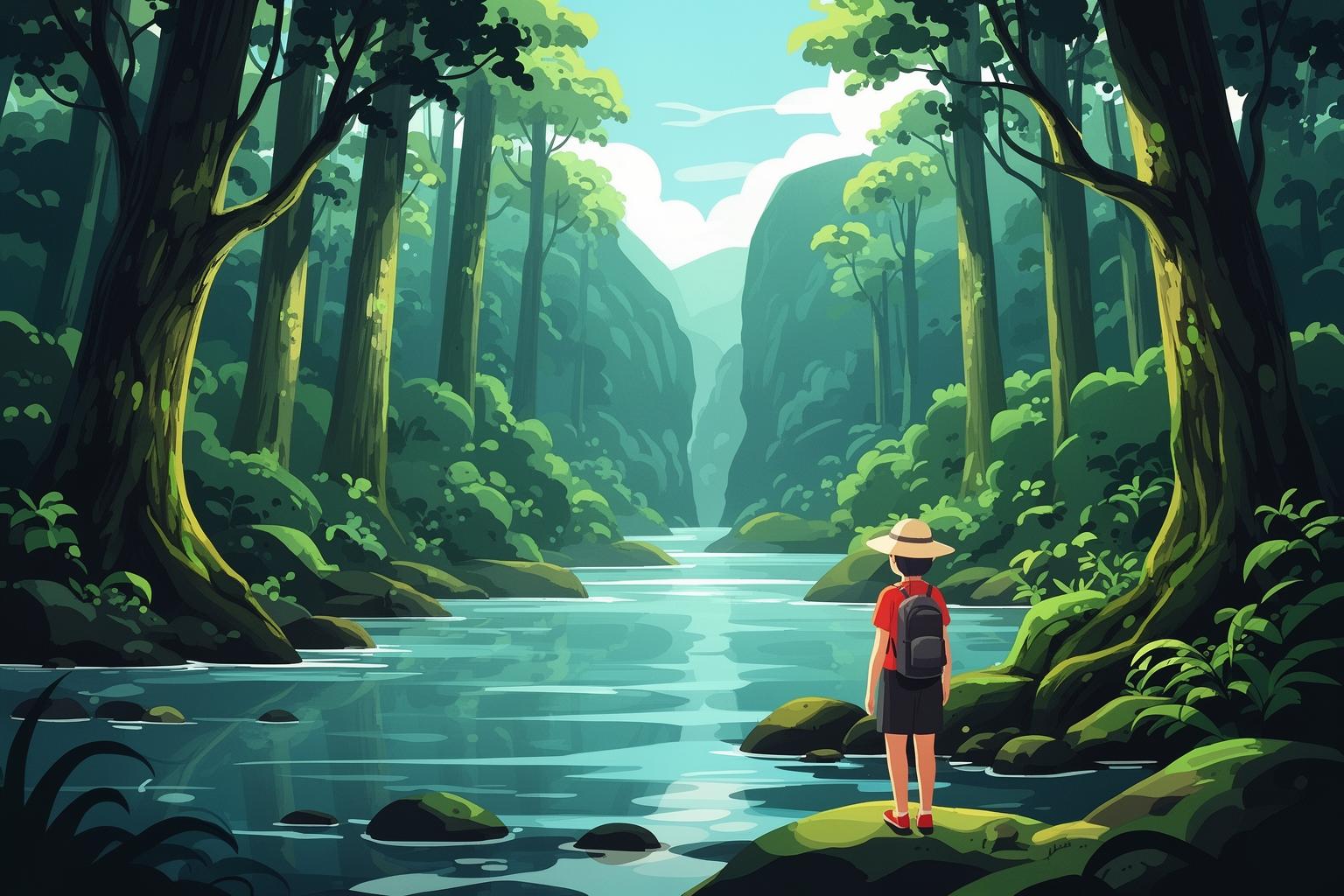
A journey to Yakushima leads you into a sacred realm. The profound respect for nature portrayed in Princess Mononoke is not just fiction; it reflects a belief system that recognizes gods, or kami, in mountains, trees, and rivers. As visitors, we enter their domain as guests. This requires a particular mindset—one of mindful and respectful travel. Staying on the designated paths is essential to protect the delicate moss and fragile root systems that have developed over centuries. The principle of “Leave No Trace” is vital. Carry out everything you bring in, including all food scraps. The island’s ecosystem is intricately balanced, and our impact should be as minimal as possible.
Beyond that, it’s about the spirit with which you journey. Move quietly. Take the time to pause, listen, and simply be present. Turn off your phone and let the forest’s sounds—the dripping water, bird calls, and wind through the canopy—be your soundtrack. By moving gently and with humility, you pay homage to the island and the cultural essence Hayao Miyazaki aimed to express. You become less a tourist and more a pilgrim, contributing to the preservation of the very magic you came to experience. This journey powerfully echoes the film’s core message: that nature and humanity are intertwined, and our survival hinges on coexistence marked by reverence and understanding.
Your visit to Yakushima will linger long after you leave. The memory of towering trees, the scent of rain-soaked moss, and the sense of being part of something vast and ancient will remain with you. You arrive seeking the world of an anime, yet you depart with a deep connection to the real world that inspired it. Yakushima doesn’t merely reveal the source of a story; it invites you into its heart, allowing you to sense its power and carry a fragment of its wild, sacred spirit with you on your onward journey.