
There are stories that stay with you, that weave themselves into the very rhythm of your heart. Makoto Shinkai’s Your Name (Kimi no Na wa) is one of those cinematic experiences—a breathtaking tapestry of time, connection, and breathtakingly beautiful animation. It’s a film that painted a portrait of Tokyo so vivid, so emotionally charged, that the city itself became a character. For those of us touched by the intertwined fates of Taki and Mitsuha, the desire to step into their world is a powerful pull. This is the essence of seichi junrei, the sacred pilgrimage to locations featured in anime, a journey that transforms passive viewing into an active, emotional exploration. The story isn’t just on the screen; its echoes linger in the real-world streets, shrines, and skyscrapers of Japan’s sprawling capital. This guide is your map to those echoes, a pathway to tracing the red string of fate through the vibrant, beating heart of Tokyo, where the mundane and the magical collide on every corner.
For travelers drawn by the emotional allure of seichi junrei, visiting an anime pilgrimage site in Nagano can add a rich, alternative perspective to the journey.
The Heart of the Connection: Suga Shrine’s Iconic Stairs
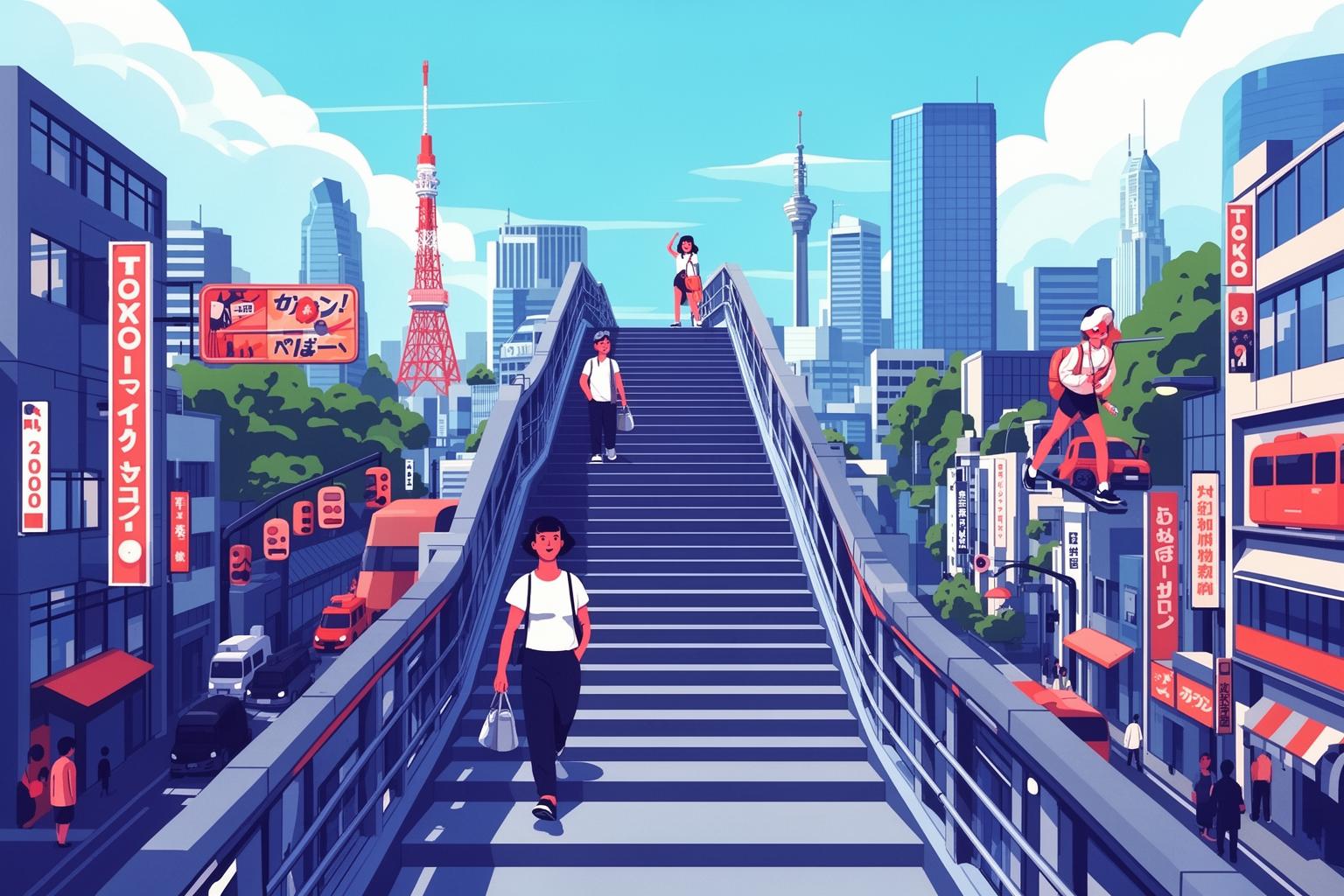
Our journey begins not with a bang, but with a quiet sense of anticipation. To discover the story’s most poignant location, you must first leave behind the electric chaos of central Shinjuku. Take a short train ride to Yotsuya Station, and with each step away from the platform, you’ll feel the city’s frantic pulse ease into a gentle, residential hum. The atmosphere shifts here. It’s calmer, filled with everyday sounds—the distant chime of a bicycle, the rustle of leaves in carefully tended pocket gardens. This is the backdrop for the film’s climax, a setting that feels both deeply ordinary and profoundly sacred.
As you navigate the labyrinthine streets of Yotsuya, you might even question if you’re in the right place. Then, you turn a corner, and there they are. The stairs. The world seems to pause for a moment. The iconic red handrail cuts a sharp, vibrant line against the muted tones of the surrounding homes and the endless blue of the sky. It’s a surreal experience, a perfect blend of animation and reality. You’ve seen this image countless times on screen, charged with years of longing and the desperate hope of reunion. Standing at the bottom, looking up the steep incline, you feel the weight of Taki and Mitsuha’s entire journey.
As you climb, each step feels intentional. You’ll notice the subtle details the film captured so perfectly: the texture of the concrete, the way the trees form a dappled canopy overhead, the precise arrangement of the apartment buildings framing the view. When you reach the top and turn around, the scene falls into place. This is it. This is the spot where they finally found each other. It’s an incredibly powerful moment. Many visitors, myself included, find themselves simply standing there, soaking in the atmosphere, replaying that final, heart-stopping scene in their minds. It’s a testament to the power of storytelling that a simple staircase in a quiet neighborhood can feel like the emotional center of the universe. For first-time visitors, a word of advice: come during a weekday morning or late afternoon. The light is softer, the crowds are fewer, and you can experience the location with the reverence it deserves. Remember, this is a residential area. The magic of the place is tied to its tranquility, so tread softly and be a respectful pilgrim.
Shinjuku’s Concrete Canvases: Where Taki’s World Unfolds
If Yotsuya embodies the story’s heart, Shinjuku pulses as its roaring, dynamic soul. This is Taki’s realm—a towering city of glass, steel, and light stretching to the horizon. Shinkai’s brilliance lay not only in capturing the vast scale of this urban giant but also its peculiar, lonely beauty. The film’s legendary time-lapses of Shinjuku transform the ceaseless movement of trains and traffic into rivers of light, serving as a visual metaphor for the currents of time and fate that carry the characters onward. A pilgrimage through Shinjuku becomes an immersion into the very aesthetic of Your Name, revealing the striking contrast between human closeness and metropolitan anonymity.
The View from Above: A City Stretching to the Horizon
To truly understand the world Taki inhabits, you must see it from his vantage point—from above. Although the film includes fictionalized perspectives, this experience can be matched with breathtaking accuracy from the observation decks of the Tokyo Metropolitan Government Building. Best of all, these decks are completely free to the public. Take the dedicated elevator from the ground floor, and as you rise 45 stories in less than a minute, watch the city shrink beneath you.
The doors open onto a 360-degree panorama that is utterly awe-inspiring. The city unfolds in every direction, a dense, seemingly endless mosaic of buildings, parks, and highways. On a clear day, you can glimpse the distant outline of Mount Fuji, just as it appears in the film—a quiet, majestic observer. This view perfectly captures the theme of distance woven throughout the movie. Somewhere amidst that sea of rooftops lives another person, leading another life. The sensation of being so small in such vastness, yet yearning for a connection, forms the emotional core of Taki’s life in Tokyo. I recommend visiting twice if possible: once by day to appreciate the sheer scale and geography, and again after sunset. At night, Shinjuku transforms into the city of light seen in the film’s opening credits—a glittering, pulsating expanse that feels both futuristic and deeply romantic.
A Web of Steel and Glass: The Shinjuku Streetscape
Back on the ground, the sensory experience shifts dramatically. Shinjuku is a symphony of organized chaos. The film captures this energy in its portrayal of crowded crosswalks and towering landmarks. One essential stop for any pilgrim is the Shinjuku Police Station intersection, a distinctive circular junction encircled by skyscrapers. It’s the very spot where one of the film’s iconic shots, looking up at the Mode Gakuen Cocoon Tower, was taken. Standing there, you can almost sense the camera sweeping across the sky.
Navigating Shinjuku Station itself is an adventure. As the world’s busiest transport hub, it feels like a living, breathing organism. Don’t be daunted; instead, embrace it as part of the journey. Watch the incredible flow of people—a testament to the city’s population and efficiency. This is the daily reality Taki moved through. Allow yourself to get a bit lost amid its underground passages and countless exits. It is in these moments of navigating the city’s intricate web that you come closest to understanding the character’s life. Notice the details: the unique design of the train platforms, the jingles announcing departures, the advertisements flickering across enormous screens. Every element was carefully researched and recreated, making a simple walk through the area feel like stepping inside the film.
Tracing Taki and Okudera-senpai’s Day Out

The pilgrimage is about more than just the main plot points; it also highlights the quiet moments that enrich the world. The date between Taki (while Mitsuha is in his body) and his coworker, the elegant Okudera-senpai, reveals a different side of Tokyo—one that is sophisticated, artistic, and a bit more relaxed. Following their journey takes you from the architectural grandeur of Roppongi to a quaint corner of Shinjuku.
Modern Art and Quiet Conversations: The National Art Center, Tokyo
Their date begins at The National Art Center, Tokyo, situated in the chic Roppongi district. Even before entering, the building impresses as a masterpiece. Its flowing glass facade is instantly recognizable from the film. It feels less like a building and more like a gentle, frozen wave shimmering in the sunlight. Inside, the sense of light and openness is remarkable. The main atrium is a vast, open space dominated by two massive concrete cones, atop which the center’s cafes are perched.
Here you’ll find Salon de Thé ROND, the very cafe where Taki and Okudera-senpai share conversation and dessert. You can sit in the same spot, surrounded by stunning architecture, and gaze out over the exhibition halls. The atmosphere exudes serene sophistication, creating a perfect bubble of calm away from the city’s rush. It’s an opportunity to experience a more cultured side of Tokyo life. Practical advice: the museum is directly accessible from Nogizaka Station on the Chiyoda Line. While entry to the main atrium is free, special exhibitions require a ticket. Even if you can’t visit an exhibit, stopping by the atrium and cafe alone makes for a meaningful pilgrimage stop.
An Italian Interlude: Cafe La Bohéme
Every anime fan dreams of visiting the workplace of a favorite character, and Your Name offers a beautiful real-world counterpart. The Italian restaurant where Taki works, “Il Giardino delle Parole” (a tribute to Shinkai’s earlier film, The Garden of Words), was inspired by the actual Cafe La Bohéme near the Shinjuku Gyoen National Garden. Stepping inside feels like discovering a little piece of Europe hidden in Tokyo.
The interior is warm and inviting, featuring high ceilings, dark wood accents, and a grand, theatrical ambiance that perfectly reflects the animation. You can easily picture Taki and Okudera-senpai bustling about in their uniforms. The restaurant is popular not only among anime fans but also locals who enjoy excellent food and a romantic atmosphere. This makes it an ideal stop for lunch or dinner on your pilgrimage day. Reservations are highly recommended, especially for evening dining. Ordering a pasta dish and a glass of wine here offers a wonderful, immersive way to honor the film while savoring a genuinely excellent meal.
The In-Between Spaces: Finding Quiet Moments
Some of the most emotionally powerful scenes in Your Name unfold not at iconic landmarks, but within the transitional, everyday spaces of the city. These settings reflect the film’s themes of near-misses, fleeting glances, and intersecting paths over time. Often overlooked by casual tourists, they are crucial destinations for a dedicated pilgrim.
The Overpass of Fateful Glances
One such spot is the pedestrian bridge near Shinanomachi Station. This is the overpass where, late in the film, an adult Taki and Mitsuha briefly recognize each other as their separate trains pass in opposite directions—a fleeting spark before it fades. Discovering this bridge is rewarding. It’s a simple, functional structure spanning a broad stretch of train tracks.
Standing mid-bridge, you sense the city’s heartbeat in the steady rhythm of trains gliding underneath—the Yamanote Line’s soothing green, the Chuo-Sobu Line’s vibrant yellow. It’s an ideal place for reflection. You can watch the trains roll by, imagining the countless stories within each carriage, the infinite possibilities of lives running parallel. This spot prompts thoughts about all the near connections we miss, the people we pass daily without a second glance. The view here, with the NTT Docomo Yoyogi Building rising in the distance, is another moment where reality and animation blend effortlessly.
An Oasis in the Metropolis: Shinjuku Gyoen
While not a direct setting from any specific scene, Shinjuku Gyoen National Garden embodies the soul of the area where Taki lives and works. It symbolizes the film’s ongoing interplay between nature and urban life. Just steps from towering skyscrapers and busy streets, this park is an expansive, meticulously cared-for sanctuary of tranquility.
Entering the garden feels like stepping into a different realm. City noise fades into birdsong and the rustling of leaves. The park showcases several garden styles, from a traditional Japanese landscape with teahouses and koi ponds to a formal French garden and sweeping English landscape. It’s an ideal place to relax after a long day of walking. For the Your Name pilgrim, it offers a tangible expression of the balance Taki seeks in his life and a beautiful contrast to the rural natural beauty of Mitsuha’s hometown. Visiting here deepens understanding of the environment that shaped Taki—a reminder that even in the world’s largest city, moments of natural calm are never far away.
A Pilgrim’s Practical Guide: Making Your Journey Seamless
Embarking on a seichi junrei is an incredible experience, but a bit of planning can make the difference between a good day and a perfect one. Tokyo is vast, yet with a thoughtful approach, you can follow the path of Taki and Mitsuha efficiently and enjoyably.
Crafting Your Itinerary
Many of the key spots are clustered close together, making a one-day walking tour completely doable. A sensible route would be to start your day in Shinjuku. Begin by heading up the Tokyo Metropolitan Government Building for the morning view. Then, explore the street-level locations around Shinjuku Station and the Cocoon Tower. From there, enjoy a pleasant walk to Cafe La Bohéme for lunch, followed by a relaxing stroll through Shinjuku Gyoen. In the afternoon, take the Marunouchi Line from Shinjuku-Gyoenmae Station to Yotsuya-Sanchome Station. It’s a short walk from here to the iconic Suga Shrine stairs, where the late afternoon light is often stunning. Finally, as evening approaches, you can either walk or catch a brief train ride from nearby Yotsuya Station to Shinanomachi to visit the pedestrian bridge. The Roppongi Art Center can serve as your final stop or be saved for another day with other nearby sights.
Photographer’s Notes: Capturing the Magic
For many, this pilgrimage is also a photographic adventure. The aim is to capture the essence of the anime, which often comes down to angles and lighting. Don’t hesitate to get low to the ground for dramatic shots looking up at skyscrapers, just like in the film. When at the Suga Shrine stairs, try framing your shot with the red railing leading the eye upward into the scene. Patience is essential; wait for others to clear the frame to get that perfect solitary shot. The golden hour, shortly before sunset, casts a warm, nostalgic glow on everything, making it ideal for photos at the stairs or the Shinanomachi bridge. For night views from the government building, brace your camera against the glass to reduce reflections and capture the sharp, sparkling lights of the city below.
Respectful Pilgrimage: A Gentle Reminder
Lastly, and most importantly, is the principle of a respectful pilgrimage. Many of these locations, especially the Suga Shrine stairs, are situated in quiet, residential neighborhoods. The residents here are not part of a tourist attraction; they are simply living their daily lives. Be mindful of noise levels. Avoid gathering in large, disruptive groups. Do not block pathways or trespass on private property to get better photos. The spirit of seichi junrei is one of gratitude and respect—for the story’s creators, the locations that inspired them, and the local communities that welcome these cherished sites. By being a quiet and considerate visitor, you help ensure these places can be enjoyed by fans for many years to come.
Beyond the Frame: The Enduring Magic of a Story in the City
A journey through the real-life locations of Your Name is more than a mere sightseeing tour. It’s a deeply meaningful act of connection. It involves taking a story that moved you on screen and anchoring it physically in the real world. Each location you visit stops being just a spot on a map; it transforms into a chapter of a beloved story, filled with the emotions of the characters and the artistry’s beauty.
As you walk these streets, Tokyo reveals itself through a new perspective. A simple train ride becomes a moment of reflection on crossing paths. A view from a skyscraper turns into a contemplation of distance and longing. A quiet staircase stands as a symbol of hope and reunion. This pilgrimage changes the city from an impersonal metropolis into a personal landscape, a canvas where your own memories and the film’s narrative can merge. You depart with more than just photos—you gain a deeper appreciation for how stories can sanctify the ordinary, uncovering the magic hidden in everyday life, waiting to be discovered.