There are places on this earth that feel unstuck from time, where the air hums with an ancient energy and the landscape tells stories older than human memory. Yakushima is one such place. Floating in the Ōsumi Islands south of Kyushu, this round, mountainous island is a remnant of a primal world, a sanctuary of green so intense it feels almost spiritual. It’s a land sculpted by rain and granite, where thousand-year-old cedar trees, the yakusugi, stand as silent witnesses to the passing of centuries. For hikers and lovers of the outdoors, Yakushima presents a challenge and a reward in equal measure. But for many, its name resonates for another reason: this is the living, breathing forest that Hayao Miyazaki channeled into his animated masterpiece, Princess Mononoke. To walk here is to step through the screen, to feel the damp moss beneath your fingertips and understand the wild, untamable spirit of the Deer God’s domain. It is less a vacation and more a pilgrimage, a journey into the heart of Japan’s wild soul and the creative vision it inspired.
For those eager to delve deeper into the island’s mystique, a Kodama photography journey offers a captivating glimpse into its enchanted spirit.
The Spirit of Mononoke’s Forest
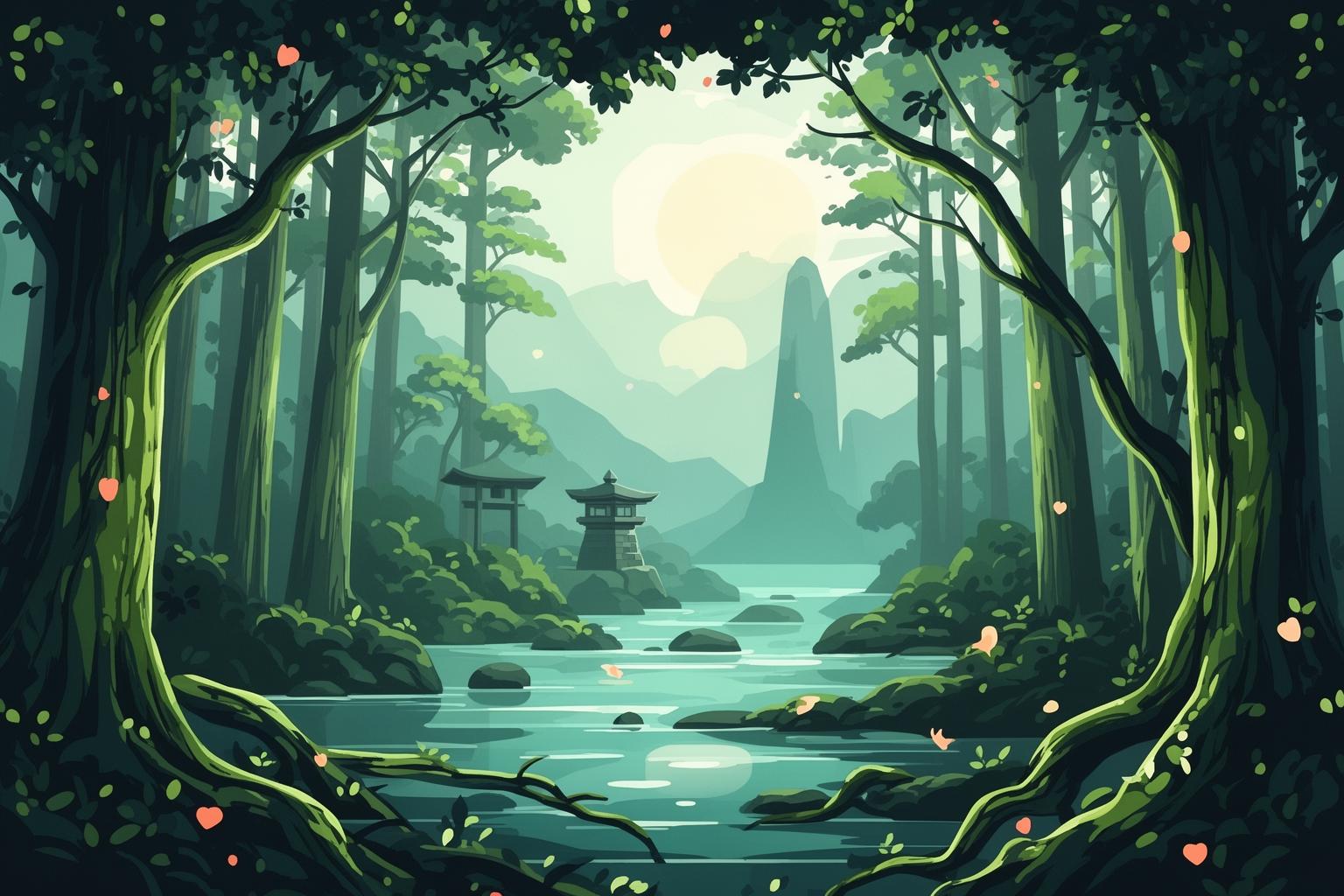
The connection between Yakushima and Studio Ghibli goes beyond mere resemblance; it is a profound, atmospheric link. The best place to experience this is the Shiratani Unsuikyo Ravine. Its name, meaning “White Valley Cloud Water Gorge,” poetically hints at the mysterious environment inside. Stepping onto the trails here feels like intentionally leaving the modern world behind. The air becomes cool and heavy with moisture. The only sounds are the soft rush of clear streams meandering around granite boulders and the drip of water from lush green canopies. Every surface pulses with life. A dense, vibrant carpet of moss blankets twisted tree roots, fallen logs, and ancient stones, creating a scene of stunning, verdant disorder. This is the world that fascinated Miyazaki, and it’s easy to see why. The forest floor is a rich mosaic of textures and green hues, from the deep emerald moss to the dark, gnarled bark of cedars and hemlocks. Light filters down in dappled beams, highlighting patches of the forest floor and causing the mist to glow. Here lies the famous Kokemusu-no-mori, or “Moss Forest,” an area so closely resembling the film’s landscapes that it feels like a sacred grove. You can almost imagine the little white tree spirits, Kodama, peeking from behind branches, their heads softly rattling. This is not a passive sight to behold but an immersive experience. You sense the forest breathing around you. To truly savor it, you must slow down, pause on the path, listen to the silence, and notice the intricate details of this self-contained world. The trails vary in difficulty, offering both short, meditative walks and more challenging hikes into the island’s deeper interior, but the spirit of Mononoke is open to all who enter with a quiet sense of awe.
A Journey to Jomon Sugi
While Shiratani Unsuikyo provides a glimpse into the heart of the forest, the trek to Jomon Sugi is a full-fledged pilgrimage to encounter its monarch. This massive yakusugi is among the oldest trees in Japan, with age estimates ranging from 2,000 to over 7,200 years. It is not a casual destination; reaching it demands a strenuous ten-to-twelve-hour round-trip hike that starts before dawn. For outdoor enthusiasts, this represents the island’s ultimate challenge and greatest reward. The journey begins in darkness, with a headlamp beam piercing the cold morning air. The initial part of the trail follows the Anbo Forest Railway tracks, an old logging line now transformed into a walking path. Your footsteps echo on the wooden planks between the rails, creating a rhythmic beat amidst the waking forest. This relatively flat section lulls you into a false sense of ease before the real ascent begins. The path then veers sharply upward, becoming a rugged, steep climb over roots and rocks. Along the way, you encounter other giant cedars, each with its own character and name, like the Meoto Sugi—two trees fused together like a married couple. A notable landmark is Wilson’s Stump, the massive remains of a cedar felled centuries ago. You can step inside its hollowed core and look up through a heart-shaped opening to the sky, a truly magical perspective. The final approach to Jomon Sugi is filled with a growing sense of anticipation. And then, there it is. The tree is so immense, so ancient and gnarled, that it defies easy description. Its bark is a landscape in itself, a rugged terrain of fissures and bulges. Its powerful branches extend like weathered arms. A viewing deck has been constructed to protect its fragile root system, and from this respectful distance, you can only stand in awe. Seeing Jomon Sugi is a humbling experience. It connects you to a timescale far beyond human comprehension, a living monument that has endured through epochs. The physical exhaustion of the hike fades away, replaced by a profound sense of accomplishment and reverence.
Yakushima’s Living Ecosystem
The island is much more than just its two most well-known destinations. It is a complete, dynamic world shaped by water and elevation. A local saying suggests it rains “35 days a month,” an exaggeration that nonetheless captures the essential truth of Yakushima: it is one of the wettest places in Japan. This constant rainfall nourishes the moss-covered forests and gives rise to numerous rivers and spectacular waterfalls. The island’s vertical terrain produces a remarkable range of climates, from the subtropical coast adorned with hibiscus flowers to the cool temperate forests inland and the subalpine zones of the highest peaks, which receive snow in winter. This diversity supports a unique ecosystem. While hiking, you will almost certainly encounter the island’s native wildlife. Yakushika, a subspecies of sika deer, are smaller and more compact than their mainland relatives. They move through the forests with quiet grace, often indifferent to hikers’ presence. You will also spot the Yakuzaru, or Yakushima macaques, known for their distinctive long fur. They are a constant, curious presence along trails and roads. Beyond the forests, the island’s coastline reveals another kind of wild beauty. At Nagata Inakahama, a stretch of golden sand, loggerhead and green sea turtles come ashore from May through August to nest, creating a powerful natural spectacle. The island also boasts dramatic waterfalls cascading down granite cliffs. Senpiro-no-taki falls in a wide, powerful curtain of water, while Oko-no-taki, one of Japan’s top 100 waterfalls, is a towering 88-meter plunge you can approach from its base, feeling the immense power of the spray on your face. Exploring these varied aspects of Yakushima reveals an island of remarkable complexity and life, a place where the mountains and the sea engage in an eternal, life-giving dance.
Planning Your Pilgrimage
Embarking on a journey to Yakushima demands careful preparation to truly embrace its untamed nature. Although the island is remote, it is well-equipped for visitors who come informed. This practical knowledge is essential for an enjoyable and deep experience.
Getting There
Your trip to Yakushima will almost always start in Kagoshima, the southernmost major city on mainland Kyushu. From there, you have two main options. The quickest route is the high-speed jetfoil, commonly known as the “Toppy” or “Rocket,” which glides across the water and reaches Yakushima’s Miyanoura or Anbo Port in about two to three hours. It’s efficient but may be canceled during rough sea conditions. The more relaxed and economical choice is the car ferry, which takes approximately four hours, allows you to bring a rental car from the mainland, and offers open decks to enjoy the sea views. For those pressed for time, Yakushima Airport provides multiple daily flights from Kagoshima, with occasional direct flights from larger cities like Fukuoka or Osaka. Flying offers a breathtaking aerial perspective of the island’s mountainous interior as you descend.
Getting Around the Island
Upon arrival, you will quickly realize Yakushima is larger than expected and its attractions are spread out. Public transportation is available via a bus network, but schedules are infrequent and may not suit the early starts needed for major hikes such as the one to Jomon Sugi. To fully explore at your own pace, renting a car is almost essential. This allows you to reach remote trailheads, visit waterfalls spontaneously, and stop at scenic coastal viewpoints. Be ready for narrow, winding mountain roads, especially on the Western Forest Road (Seibu Rindo), a UNESCO World Heritage area often frequented by deer and monkeys crossing the pavement. Cautious driving is imperative. Rental agencies are found near the ports and airport, and booking ahead, particularly during peak season, is highly advised.
What to Pack
Packing for Yakushima is all about preparing for the elements, primarily rain and rugged terrain. Your gear can make or break your trip. High-quality waterproof clothing is essential—this means a breathable rain jacket and rain pants, not just a cheap poncho. Sturdy, waterproof hiking boots with good ankle support are your most crucial equipment; make sure they are well broken-in beforehand to avoid blisters. Your feet will be grateful. Dress in layers. Even on warm days, the deep forest can be cool and damp, and mountain weather can shift suddenly. Moisture-wicking base layers, a fleece or insulated mid-layer, plus your waterproof shell will keep you adaptable. Also vital are a headlamp for pre-dawn starts, a reusable water bottle to stay hydrated, and high-energy snacks. Due to the fragile environment and lack of facilities on long trails, carrying a portable toilet kit is responsible and often required. Think like a serious hiker—because on Yakushima, you will become one.
Best Time to Visit
Yakushima is a year-round destination, with each season offering its own charm. Spring, from March to May, is popular as mountain rhododendrons bloom and the weather is generally pleasant. Summer, from June to August, features lush greenery and turtle nesting season but also marks the rainy season with heat, humidity, and the highest typhoon risk. Autumn, from September to November, is often regarded as the best season for hiking—the air is cooler and drier, skies are clearer, and crowds start to lessen. Winter, from December to February, provides solitude and a unique beauty as the highest peaks get dusted with snow. This season is suited only for experienced, well-equipped hikers, as trails can be icy and hazardous, but the stark, quiet beauty rewards those prepared for the challenge.
A Lasting Impression
A trip to Yakushima lingers with you long after you’ve left its shores. It is more than just a collection of stunning sights; it is an encounter with the raw, life-affirming power of nature. Standing beneath a tree that sprouted when the Roman Empire was at its peak fundamentally reshapes your perspective on time and your place within it. The island teaches a new language—the language of dripping moss, rushing water over granite, and wind through ancient cedar branches. You depart with a deeper appreciation for the delicate, resilient balance of the natural world and the profound inspiration it can provide. The fatigue from a long hike transforms into a deep sense of peace and clarity. Returning to the noise and pace of modern life, you feel recalibrated, carrying the island’s quiet strength within you. Yakushima is a reminder that there are still places where magic is real, where the gods of the forest continue to roam, and where you can, for a brief time, walk among them.