
There are stories that feel like a dream you can’t quite remember, a melody lingering just at the edge of hearing. Makoto Shinkai’s masterpiece, Your Name., or Kimi no Na wa., is one such story. It’s a film that resonates with a deep, universal ache—the search for a person, a place, a feeling you know is important but can’t quite name. It captured the world with its breathtaking animation, its heart-wrenching story of connection across time and space, and its powerful sense of place. The film’s magic lies not just in its fantasy but in its grounding, in settings so real you feel you could step right into them. And here’s the secret: you can. This journey, this pilgrimage known in Japan as seichi junrei, is a chance to walk in the footsteps of Taki and Mitsuha, to bridge the gap between animation and reality, and to see if that lingering feeling of connection finds its anchor in the real world. From the electric, sprawling heart of Tokyo to the serene, timeless mountains of Gifu, we’re about to chase the ghost of a comet and maybe, just maybe, find something we’ve been looking for. This guide is your thread, your musubi, connecting you to the tangible soul of an unforgettable story.
Embarking on this cinematic pilgrimage might also lead you to explore the ancient forests where nature’s quiet grandeur echoes the film’s evocative landscapes.
Tokyo’s Urban Heartbeat: Where Taki’s Story Unfolds
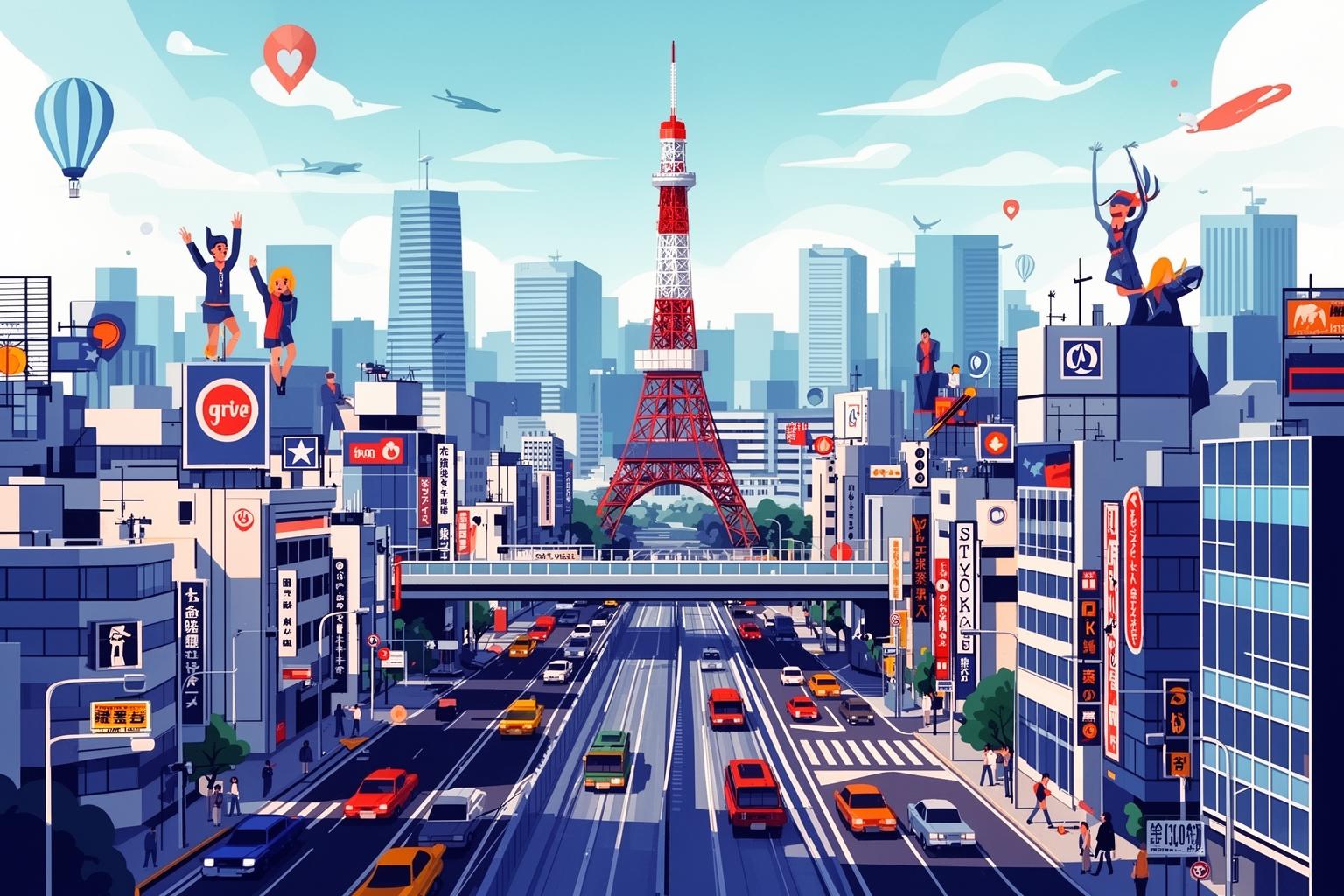
Tokyo, in Your Name., is more than just a backdrop; it acts as a character itself. It’s a sprawling, interconnected network of steel, glass, and illumination—a place filled with endless possibilities and overwhelming anonymity. It’s where Taki leads his fast-paced existence, a whirlwind of part-time jobs, school, and rushed train rides. The film flawlessly captures this rhythm—the steady flow of crowds, dizzying views from towering skyscrapers, and quiet moments snatched in cafes amid the urban expanse. To step into the real Tokyo while carrying the film in your mind is to delight in disorientation. The animated world seeps into reality at every corner, showing that Shinkai’s vision is not mere fantasy, but a meticulously observed and beautifully crafted reality. Your pilgrimage starts here, amid the concrete canyons where half the story unfolds, and the scale is as awe-inspiring in person as on screen.
The Iconic Red Staircase: Suga Shrine, Yotsuya
No image is more closely tied to the film’s emotional climax than the red-railed staircase where Taki and Mitsuha finally, at last, meet. This spot is the heart of the pilgrimage, the one place every fan hopes to visit. Finding it feels like completing a quest. You’ll head to Yotsuya, a neighborhood that is surprisingly serene compared to the bustle of nearby Shinjuku. It’s an area of gentle slopes, quiet residential streets, and an unhurried pace. As you walk from Yotsuya Station, anticipation builds. Then you turn a corner, and there it is: the Suga Shrine staircase. It may be smaller than the grand scale suggested by the animation, but its impact is immense. Standing at either the top or bottom, gazing across to the other side, you can almost hear the soundtrack swell. You feel the weight of their long search. The air here feels charged with the memory of countless cinematic reunions. Visiting is like stepping into the film’s conclusion. For the best experience, come on a weekday morning or late afternoon. The golden hour light, filtering through nearby buildings, casts long shadows and bathes the scene in the warm hues of kataware-doki (twilight). This is a residential and sacred space, so respect your surroundings. Take photos, but also pause to stand, breathe, and let the story settle into reality. The shrine itself, at the top of the stairs, is a peaceful local place of worship—a perfect spot for quiet reflection on your journey.
A View from Above: The National Art Center, Tokyo
Remember the stylish, sunlit cafe where Taki has his date with his coworker, Okudera-senpai? That striking location is very much real. It’s the National Art Center, Tokyo, situated in the trendy Roppongi district. Designed by the renowned architect Kisho Kurokawa, the building is a marvel of flowing glass walls, a concrete cone, and an overwhelming sense of light and openness. You don’t need an exhibition ticket to enter the main atrium, the setting for that unforgettable scene. The cafe, Salon de Thé ROND, sits atop one of the giant inverted concrete cones, offering commanding views of the lobby below. You can sit there, order coffee and cake, and replay the moment in your mind. It’s a perfect blend of high art, pop culture, and everyday life. The atmosphere is one of refined calm, a striking contrast to the bustling city beyond its glass walls. It feels both futuristic and timeless—exactly the kind of place Shinkai would pick to represent Tokyo’s modern aesthetic. Easily accessible from Nogizaka or Roppongi Stations, the center is worth exploring. Check out the current exhibits; it is one of Japan’s premier art venues. But even if only for the cafe, the experience of being in this beautifully designed space, a living piece of the film, makes the trip worthwhile.
Navigating Shinjuku’s Concrete Jungle
Shinjuku is the frenetic, throbbing heart of Taki’s Tokyo. It’s a maze of towering skyscrapers, neon-lit streets, and the busiest train station in the world. The film uses rapid cuts of its iconic scenery to mirror Taki’s hectic life, and you can trace his route through this urban labyrinth. Start at Shinjuku Station’s South Exit, a hive of activity surrounded by department stores and enormous video screens—a scene shown repeatedly in the film. From there, seek out the pedestrian bridges offering panoramic views of the traffic and train lines below. These are the city’s lifelines, and standing on one lets you feel its pulse. One of the most recognizable spots is the pedestrian bridge near the Shinjuku Police Station, known for its distinctive circular design. This is where the camera often pulls back, revealing the vast scale of the city Taki navigates daily. Another must-see is the iconic “LOVE” sculpture by Robert Indiana, a landmark that Taki and his friends pass by. It’s a popular photo spot and a small island of pop art amid corporate architecture. To truly experience the Shinjuku of the film, visit at night. The city transforms into a river of light, with neon reflections on wet pavement, just like in the anime’s stunning nighttime scenes. The sensory overload is intense—the noise, the lights, the crowd—but it’s an exhilarating experience that helps you understand the world that shaped Taki.
Into the Serene Landscape: Mitsuha’s Itomori
The transition from Tokyo to the countryside is a central theme in Your Name. It represents a journey from the modern to the traditional, from chaos to tranquility. The fictional town of Itomori, where Mitsuha lives, is rich in tradition, nestled among mountains, and centered around a mystical lake. Although Itomori itself is not on any map, its essence was drawn from real locations in the Hida region of Gifu Prefecture. Visiting this area after the bustle of Tokyo is like entering a different world, just as Taki experienced. The air feels fresher, the pace slower, and the scenery is filled with deep greens of forests and the vast blues of the sky. Here lies the other half of the story—the part connected to nature, spirituality, and the enduring ties of tradition that Mitsuha initially longs to escape, but ultimately strives to protect.
The Heart of Tradition: Hida-Furukawa
The quaint town of Hida-Furukawa is widely recognized as the primary inspiration for Itomori’s townscapes. A short train ride from the more tourist-heavy Takayama, Hida-Furukawa offers a more intimate and authentic glimpse of traditional Japan. The moment you step off the train, you feel immersed in the film’s world. Hida-Furukawa Station itself is crucial, with its pedestrian overpass offering the exact view Taki and his friends see upon arrival. The town is known for its charming canals teeming with vibrant koi fish and streets lined with preserved wooden merchant houses. It’s very walkable, with every corner capturing a piece of Itomori’s spirit. A particularly notable spot is the Hida City Library, the very place where Taki’s group researched the comet’s history and Itomori’s mysterious disappearance. Inside, the library is warm and inviting, filled with the scent of wood and old paper. The staff are aware of the library’s fame and welcome visitors, though it’s important to remember it is a working public library—so be quiet, respectful, and always ask permission before photographing. Nearby, you can visit the Keta Wakamiya Shrine, thought to have inspired the appearance of local shrines in the town. For a taste of the film, stop by Ajidokoro Furukawa, a local eatery where you can try Gohei-mochi, the skewered, miso-glazed rice cake Taki enjoys in the movie. Hida-Furukawa is more than just a backdrop; it’s a vibrant town that truly captures the timeless spirit of Itomori.
The Mystical Center: Hie Shrine and Suwa Lake
Two of the most spiritually significant sites in Mitsuha’s world are her family’s Miyamizu Shrine and the crater lake that defines Itomori’s landscape—both of which have real-life counterparts. The Miyamizu Shrine is believed to be inspired by the Hie Shrine, located on a hill in the nearby city of Takayama. Reaching it involves climbing a long, steep flight of stone steps flanked by towering cedar trees, creating an atmospheric journey. With each step, the sounds of the city fade away, replaced by rustling leaves and the distant caws of crows. It’s easy to imagine Mitsuha making this climb as part of her shrine maiden duties. The shrine itself exudes an ancient, powerful aura, providing a tangible sense of history that anchors the film’s mystical elements. The visual inspiration for Lake Itomori lies a bit farther away in Nagano Prefecture. Lake Suwa is a large, scenic lake that, when seen from above, closely resembles the fictional crater lake. The best viewpoint is from Tateishi Park, a small park on a hillside overlooking the water. The climb is rewarding: as you gaze across the lake, especially at twilight, Itomori seems to unfold before your eyes. You can almost envision the comet streaking across the sky. Though this location is a separate trip from the Hida region, for dedicated fans, visiting the real Lake Itomori is a memorable experience that completes the film’s visual narrative.
Weaving Your Own Story: Practical Pilgrimage Tips

Embarking on this journey is more than simply ticking locations off a list; it’s about crafting your own story and forming a personal connection to it. To fully enjoy the experience, a bit of planning can make a big difference. This isn’t a rushed tour, but a trip to be savored, allowing the ambiance of each place to truly resonate.
Planning Your Journey: Tokyo and Hida
The most sensible route is to follow Taki’s path. Begin in Tokyo, soaking in the vibrant urban atmosphere for two or three days. The city’s excellent public transportation makes it easy to travel between Shinjuku, Yotsuya, and Roppongi. After exploring Taki’s world, it’s time to visit Mitsuha’s. The most scenic and efficient way to reach the Hida region is by train. From Tokyo, take the Shinkansen (bullet train) to Nagoya, then transfer to the JR Hida Wide View Express. This part of the trip is stunning, as the train winds through mountains and along river valleys, offering a perfect transition from city to countryside. Plan to spend at least two full days in the Hida area—one exploring Hida-Furukawa, and another visiting the larger city of Takayama, which provides more lodging and dining options and is home to Hie Shrine.
Beyond the Screen: Savoring the Local Culture
While visiting the anime locations is the main goal, the true magic comes from engaging with the culture of these places. In Hida, don’t just photograph the Gohei-mochi—try it. Visit a sake brewery, as the region is known for its pure water and outstanding rice wine. Enjoy a meal of Hida beef, a delicacy that rivals Kobe beef. In the morning, explore Takayama’s Miyagawa Morning Market, a lively slice of local life. In Tokyo, veer off the beaten path. Wander the quiet, charming streets of Kagurazaka near Yotsuya or dive into the cozy, atmospheric pubs of Shinjuku’s Omoide Yokocho (Memory Lane). Since the film celebrates connection, connect with the places you visit. Eat the local food, engage with people (even a simple “arigatou” goes a long way), and let the rhythm of everyday life become part of your journey. These details turn a trip into a lasting memory, a simple visit into a heartfelt pilgrimage.
A Note on Etiquette and Respect
It’s wonderful that these real-life locations have become cherished by fans worldwide, but this comes with the responsibility to be a respectful visitor. These are not film sets; they are communities, sacred places, and public spaces. When visiting Suga Shrine and its staircase, remember you are in a quiet residential neighborhood—keep your voice low and be considerate of residents. At Hie Shrine, or any shrine, observe proper etiquette. Bow once before passing through the torii gate, and if you wish, purify your hands and mouth at the chozuya water pavilion before approaching the main hall. Inside the Hida City Library, silence is essential. It’s a place for study and reading. While the staff are friendly, their primary duty is to the local patrons. Always ask permission before taking photos. By showing respect, you honor both the film you love and the real-world culture that inspired it, ensuring future fans can enjoy the same wonderful experience.
The Echo of a Name
To journey through the world of Your Name. is to recognize that the story’s central theme of musubi—the invisible thread connecting people, places, and time—is a palpable force. You sense it standing on that staircase in Yotsuya, a spot now eternally tied to a fictional moment of deep connection. You feel it in the serene dignity of Hida-Furukawa, a town bearing the weight of both real history and imagined memory. This pilgrimage offers more than just a glimpse of where the movie was set. It enriches your understanding of the story, its emotional landscape, and the cultural contrast between urban and rural Japan at its heart. You arrive as a fan of a film, but you leave with a personal bond to these places, having woven your own thread into their narrative. You searched for Taki and Mitsuha, but ultimately, you find a piece of yourself, a memory now uniquely yours, resonating with the subtle, persistent question: your name?