There are films that you watch, and then there are films that you feel—experiences that resonate so deeply they blur the line between the screen and reality. Makoto Shinkai’s masterpiece, ‘Your Name.’ (Kimi no Na wa.), is one such film. It’s a breathtaking story of connection, distance, and fate, painted with hyper-realistic animation that captures the very soul of its settings. The tale of Taki in bustling Tokyo and Mitsuha in the serene countryside of Itomori captured hearts worldwide, but the film’s true magic lies in its profound sense of place. For those of us who have dreamt of stepping into its world, there’s incredible news: you can. The Tokyo that Taki calls home is not a fantasy. It’s a real, living, breathing city waiting to be explored. This journey isn’t just sightseeing; it’s a ‘seichi junrei,’ a sacred pilgrimage for fans, where we trace the steps of our favorite characters and find our own connection, our own ‘musubi,’ in the heart of Japan’s capital. From the quiet, sun-dappled stairways of a residential neighborhood to the electric, neon-soaked canyons of the world’s busiest entertainment district, this is your guide to walking through the stunning, real-life canvas of ‘Your Name.’. Get ready to see Tokyo not just with your eyes, but with your heart.
For travelers whose hearts ache for journeys steeped in cinematic wonder, experiencing the real-life charm of Tomonoura can be a captivating extension of their pilgrimage through Tokyo.
The Red Steps of Fate: Suga Shrine in Yotsuya
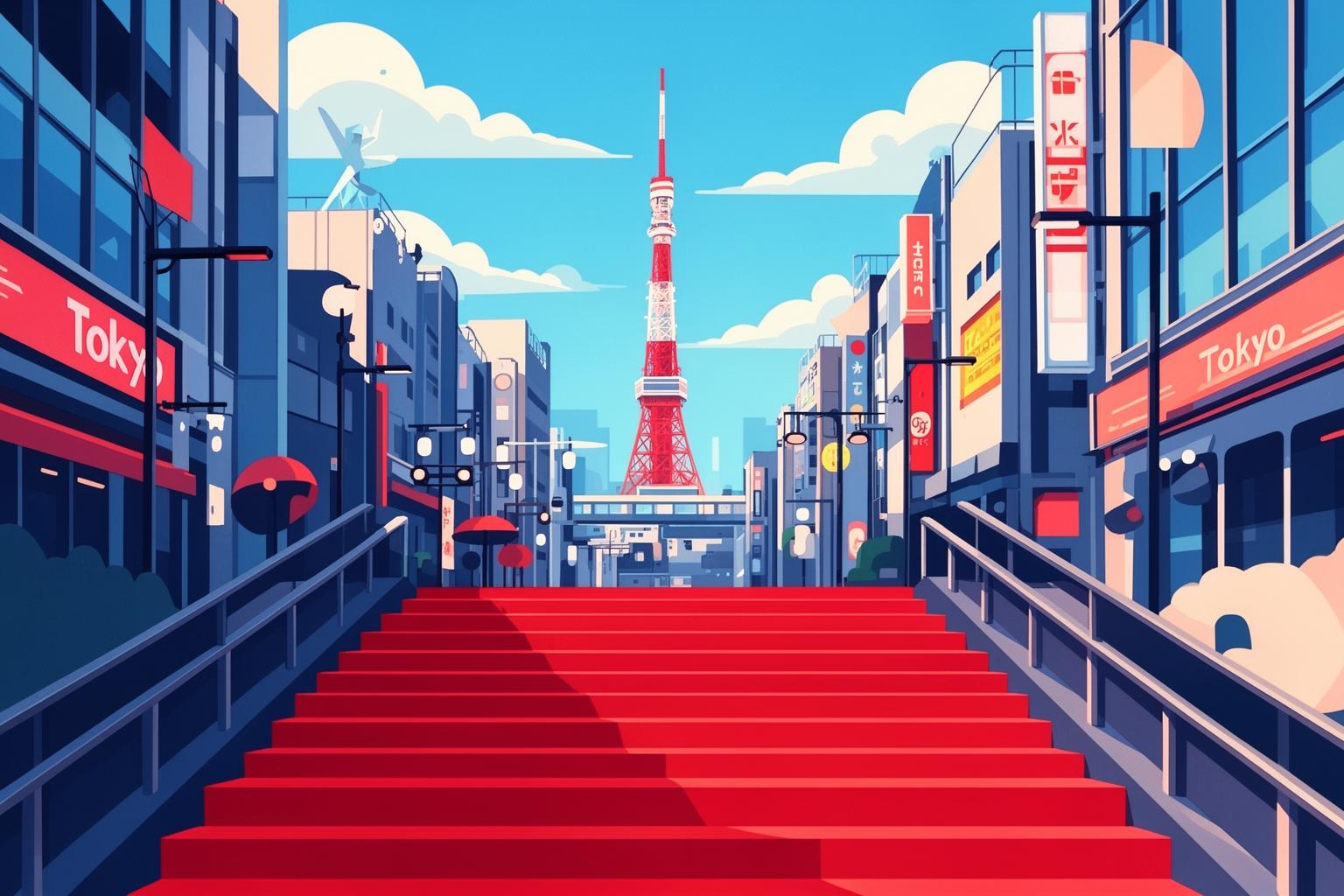
The final, heart-wrenching, yet ultimately hopeful scene of ‘Your Name.’ is etched into the memory of every fan. Two souls, separated by time and space, finally meet on a striking red-railed staircase. That iconic spot really exists, and it’s our first destination. Nestled in a tranquil residential area of Yotsuya, a neighborhood that feels worlds away from the city’s bustling energy, are the steps leading up to Suga Shrine. The journey to find them is part of the enchantment. After exiting Yotsuya Station, you’ll wander through quiet streets, past charming homes and quaint local shops. With each turn, a tangible sense of anticipation grows. You’ll sense it in the air—a feeling of searching for something unnamed. And then, there it is. The gentle curve of the road, the opposing staircases, and that unmistakable vibrant red handrail. The reality is exactly like the film yet beautifully distinct. In person, the steps seem more intimate, less steep, yet the emotional weight remains undeniable. Standing at the bottom looking up, or at the top looking down, you can’t help but replay the scene in your mind: Taki and Mitsuha, their desperate search culminating in a single, tentative question: “Kimi no na wa?”. It’s a powerful moment. The area is incredibly photogenic, especially in the soft light of morning or late afternoon. Sunlight filters through the tree leaves, dappling the stone steps in a way as poetic as Shinkai’s animation. For the perfect shot, try capturing the view from both top and bottom—one perspective reflecting Taki’s point of view, the other Mitsuha’s. Remember, this is a residential area. Its quiet charm is its greatest asset. Visitors should be considerate and respectful, keeping their voices low and avoiding disruption to the daily lives of the people who call this lovely neighborhood home. After your cinematic moment, take time to visit the Suga Shrine at the top of the stairs. It’s a small but serene local shrine, a place to offer a quiet prayer or simply absorb the peaceful atmosphere—a perfect spot to reflect on the film’s themes of destiny and connection.
A Bridge Between Worlds: The Shinanomachi Pedestrian Deck
Not every iconic place is a grand monument. Sometimes, the most touching moments occur in the most ordinary settings. Our next stop, the pedestrian bridge near Shinanomachi Station, is a prime example. This is where Taki and his crush, the graceful Okudera-senpai, part ways after their date. More significantly, it’s where Taki, later in the film, gazes out at the city, desperately trying to reach Mitsuha, as his memories of her begin to fade like a dream. The bridge itself is a simple, functional piece of urban infrastructure—an overpass spanning a maze of busy train tracks. Yet, within the film’s context, it becomes a symbol of separation and longing. Standing there offers a view that is quintessentially Makoto Shinkai. Below, JR trains glide in and out of the station, their steady clatter serving as a constant heartbeat. In the distance, the distinctive silhouette of the NTT Docomo Yoyogi Building punctuates the skyline, a landmark that recurs in many of Shinkai’s works, silently witnessing the city’s countless stories. The atmosphere is one of bittersweet melancholy. You can almost sense Taki’s frustration and confusion, his bond with Mitsuha stretching thin over the vast urban sprawl. It’s a place where the ordinary transforms into something profound. The ideal time to visit is during the golden hour, as the sun begins to set. The sky lights up in shades of orange and purple, and the city lights start to twinkle, creating a truly magical panorama. It’s an excellent spot for photography, capturing the dynamic energy of Tokyo’s transit systems against a dramatic sky. This location is just a short walk from Shinanomachi Station, making it an easy and quick stop on your pilgrimage. It serves as a beautiful transition, shifting from the quiet intimacy of Yotsuya to the overwhelming scale of our next destination: Shinjuku.
Concrete Canvases and Electric Dreams: Taki’s Shinjuku
If Yotsuya symbolizes the quiet, destined moments in the story, Shinjuku embodies the vibrant, chaotic, and ever-moving world of Taki’s everyday life. This vast district offers a sensory overload—a symphony of light, sound, and energy. It is not merely a single location but a collection of settings that anchor Taki’s story in the reality of modern Tokyo. Exploring Shinjuku means immersing yourself in his world and appreciating the beauty within its overwhelming scale.
Weaving Through the Crowds: Shinjuku Station and Yunika Vision
Shinjuku Station is famously the busiest train station worldwide. The film showcases rapid, dynamic shots of Taki maneuvering through its maze-like corridors and packed platforms. Experiencing this reveals the rhythm of his life. Don’t hesitate to get slightly lost—it’s all part of the journey. Just outside the east exit lies another key landmark: the Yunika Vision building. Its three enormous LED screens continually display music videos, news, and advertisements, bathing the plaza below in a steady neon glow. This is the core of Shinjuku’s visual identity, a landmark repeatedly featured as a backdrop. Find a spot in the plaza, look up at the dazzling screens, and absorb it all. You’re standing at one of Tokyo’s most iconic intersections, sensing the electric pulse Taki would have felt daily. The flood of people, the cacophony of sounds, the brilliant lights—it’s an experience both exhilarating and slightly surreal, perfectly reflecting the city’s relentless energy.
A Moment of Peace: The Shinjuku Gyoen National Garden
Life in a city like Tokyo balances intensity with calm. Amidst the concrete and neon are oases of deep tranquility. Though not highlighted as a key scene, the Shinjuku Gyoen National Garden feels closely tied to the spirit of Makoto Shinkai’s work. Its carefully curated English, French, and Japanese gardens, along with its stunning tropical greenhouse, evoke the lush, detailed natural worlds characteristic of his films. This park offers a beautiful thematic contrast, reflecting the duality between Taki’s urban existence and Mitsuha’s rural background. It’s easy to imagine Taki visiting to sketch, think, or escape the city’s sensory overload. Visiting here provides a perfect way to unwind after the hectic streets of Shinjuku. As you stroll its peaceful paths, you find a moment of calm and reflection, a quiet place to process the journey so far. The greenhouse especially, with its humid air and exotic plants, feels like entering a completely different world—a pocket of untamed nature nestled in the city’s heart.
The View from the Top: Reaching for the Sky
The comet, the celestial trigger of the entire story, is a spectacle Taki observes from a high-rise building. While the fictional restaurant where he works, ‘Il Giardino delle Parole,’ is a charming reference to another Shinkai film (‘The Garden of Words’), the breathtaking view is very real. You can experience a similar sense of wonder from several observation decks nearby. The Tokyo Metropolitan Government Building in Shinjuku offers free access to its two panoramic observatories, providing stunning views of the sprawling cityscape. For a slightly more upscale experience, Tokyo City View at the Roppongi Hills Mori Tower (a short train ride away) features a 360-degree open-air sky deck that is unmatched, especially at night. Standing there, gazing at the endless sea of lights stretching to the horizon, you grasp the city’s vastness. You can imagine looking up at the night sky, just as Taki did, witnessing something magical. The glittering tapestry below represents millions of lives, millions of stories, all intertwined in unseen ways—a powerful real-world embodiment of the film’s core theme of ‘musubi.’ It’s a profound, humbling experience that connects you directly to one of the film’s most pivotal and visually stunning moments.
Crafting Your ‘Your Name.’ Itinerary: A Pilgrim’s Guide
Embarking on your own ‘seichi junrei’ is simpler than you might expect. The main locations are conveniently grouped, making a one-day walking and transit tour entirely feasible. The most sensible route starts at the film’s quiet and emotional center. Begin your morning in Yotsuya. The gentle morning light is perfect for photographing the Suga Shrine steps, and the area will be at its calmest. Allow yourself an hour or two to absorb the atmosphere, locate the staircase, and visit the shrine. From Yotsuya, it’s a pleasant fifteen-minute walk or a brief train ride—just one stop on the JR Chuo-Sobu Line—to Shinanomachi Station. The pedestrian bridge right outside offers an excellent mid-morning spot to capture the iconic view of the train tracks and city skyline. Next, dive into the city’s vibrant core by hopping back on the JR Chuo-Sobu Line for two stops to Shinjuku. Here, you can spend the remainder of your day. Start by experiencing the lively hustle of Shinjuku Station and the dazzling Yunika Vision screens. When you need a break, the tranquil Shinjuku Gyoen National Garden nearby provides a perfect retreat. Plan to enjoy your late afternoon and evening here. As dusk approaches, head to an observation deck such as the Tokyo Metropolitan Government Building. Watching the city transform from day to night from above offers a fitting end to your pilgrimage, reflecting the film’s dramatic celestial moments. A few practical tips for your trip: wear your most comfortable walking shoes since you’ll be on your feet often. A reloadable IC card like Suica or Pasmo is essential for easy train travel. Lastly, while it’s exciting to recreate the film’s photos, always stay aware of your surroundings. These are real places where people live and work, so be respectful, quiet, and courteous.
Beyond the Screen: Finding Your Own Connection
A pilgrimage through the world of Your Name. is more than a cinematic scavenger hunt. It invites you to view a city through a new perspective, one shaded with wonder, romance, and destiny. As you walk these streets, stand on that bridge, and climb those steps, you begin to grasp how Makoto Shinkai and his team captured not just Tokyo’s appearance, but its essence. They uncovered the extraordinary within the ordinary, the magic within the mundane. This journey lets you experience that transformation firsthand. The hum of a passing train turns into a sound of longing, a crowded intersection becomes a dance of intertwined fates, and a simple staircase stands as a monument to hope. You set out searching for the world of Taki and Mitsuha, but you leave with a personal connection to the city. The true beauty of this pilgrimage lies in discovering that the magic of Your Name. isn’t confined to the screen. It awaits you in quiet residential lanes, dazzling cityscapes, and the shared experience of standing where a beautiful story began, feeling the unbreakable threads of musubi that bind us all.