Step off the bus and into a living, breathing postcard from a time long past. The air in Tomonoura, a small port town nestled in the city of Fukuyama, Hiroshima, carries a gentle whisper of salt and history. It’s a place where the rhythm of life is dictated not by the relentless tick of a clock, but by the ebb and flow of the tides. Stone-paved alleys, too narrow for cars, curve between weathered wooden buildings with charcoal-gray tiled roofs, their facades telling stories of merchants and sailors from centuries ago. This isn’t a meticulously preserved theme park; it’s a genuine community where the past isn’t just remembered, it’s woven into the very fabric of daily existence. For many travelers, Tomonoura’s allure is its timeless beauty, a perfectly preserved Edo-period port. But for a new generation of pilgrims, it holds a different kind of magic. This is the town that famously captured the heart of animation legend Hayao Miyazaki, serving as the soulful inspiration for the whimsical, sea-soaked world of his film, Ponyo. To walk these streets is to step into a world that feels both deeply Japanese and wonderfully familiar, a cinematic dreamscape brought to life. It’s a journey into a gentler, more thoughtful Japan, a place to wander, to wonder, and to let the serene pace of the harbor wash over you.
For travelers captivated by Japan’s timeless charm and cinematic allure, a photographic pilgrimage through Hida-Furukawa offers another window into a world where history and art intertwine.
A Living Postcard
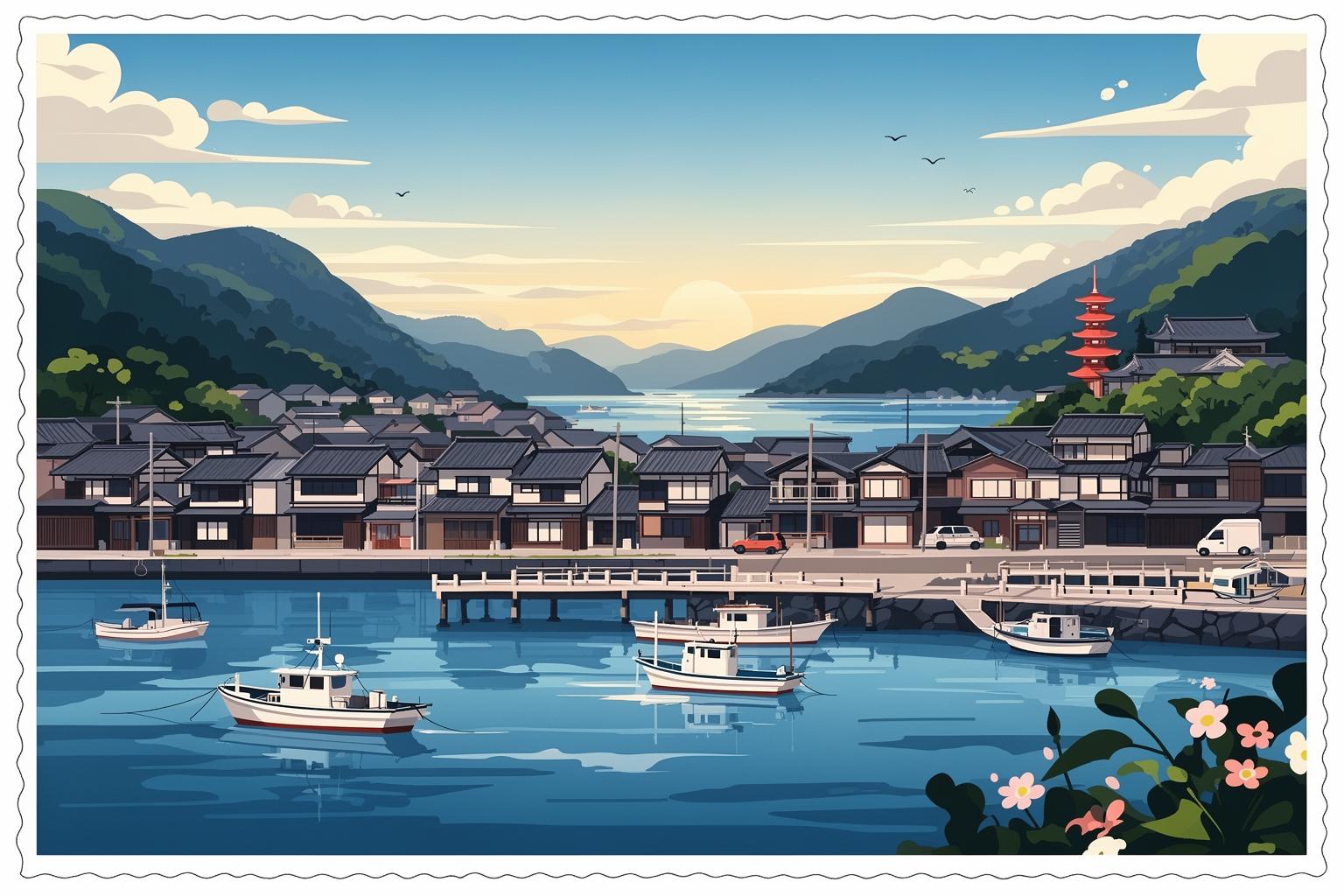
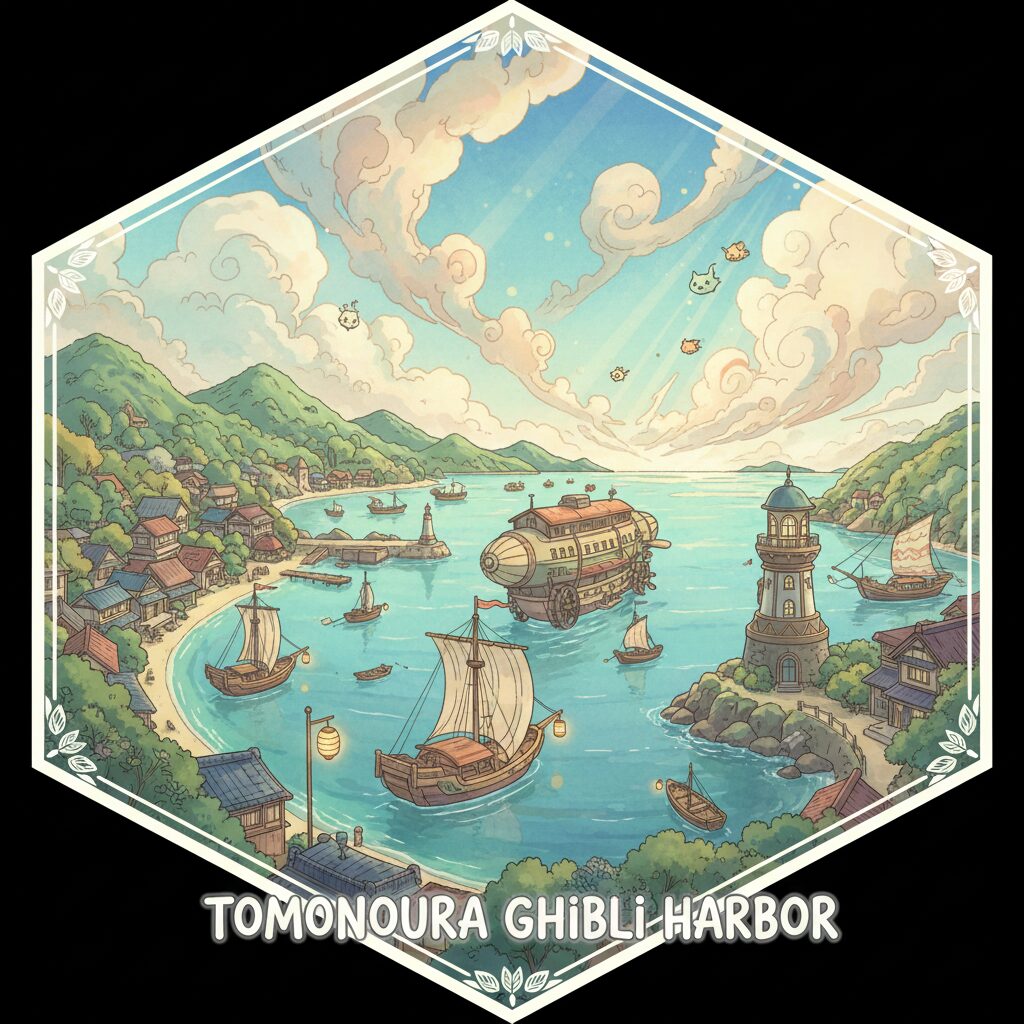
The first thing that strikes you about Tomonoura is its atmosphere. It envelops you like a warm blanket, immediately calming your pulse. The town is designed for wandering, not hurrying. At its center lies the breathtaking, bowl-shaped harbor, which has remained largely unchanged for centuries. Small fishing boats gently sway on the water, their reflections mingling with those of the traditional buildings lining the quay. The air is filled with the calls of gulls and the soft drone of a solitary fishing vessel heading out into the Seto Inland Sea. As you stroll away from the waterfront, you are drawn into a maze of narrow streets and hidden alleys. Here, the modern world feels distant. You’ll pass houses with intricate wooden lattices, shops selling local crafts behind sliding paper doors, and tiny temples nestled in quiet corners, their grounds shaded by ancient, twisted pines. A strong sense of community is evident—you might see neighbors chatting on their doorsteps or a shopkeeper carefully sweeping the stone path before their store. This authenticity is what makes Tomonoura so enchanting. It’s not just a place to see, but a place to experience. Find a spot on the stone gangi, the terraced stone steps leading down to the water, and simply watch. Watch the light shift on the sea, watch the fishing boats come and go, watch the cats lounging in patches of sunlight. This is the heart of the town’s charm—the luxury of doing nothing at all, in a place that feels like everything.
The Ghibli Connection: In the Footsteps of Ponyo
For many international visitors, the gateway to Tomonoura is through the enchanting world of Studio Ghibli. In 2005, Hayao Miyazaki spent two months living in a small house overlooking this very harbor, seeking inspiration for his next film. He found it in the gentle waves, winding streets, and warm-hearted people of Tomonoura. The result was Ponyo, a love letter to the sea and a story that beautifully captures the town’s whimsical, slightly magical spirit. Although there are no official signs or monuments declaring this the “Ponyo town,” the connections are unmistakable and a joy to uncover on your own. As you explore, you’ll experience a delightful sense of déjà vu. The curved harbor wall where Sosuke first finds Ponyo closely resembles Tomonoura’s own protective seawall. The tightly packed houses clinging to the hillside in the film reflect the town’s real-life topography. Even the small details resonate—the quiet, narrow lanes where Ponyo runs atop the waves, the local boats drifting around the bay, and the overall atmosphere of a community deeply connected to the ocean. Fans often suggest the iconic Joyato lighthouse as inspiration for the lighthouse where Sosuke’s mother works, and the gentle, rolling hills surrounding the town evoke the landscape of the movie. The true magic, however, lies not in ticking off a checklist of locations, but in experiencing the film’s spirit. Miyazaki didn’t simply replicate the scenery; he absorbed the town’s soul. The kindness of the local people, the slow and steady rhythm of life, and the profound respect for the sea are the elements he wove into his animated masterpiece. To visit Tomonoura after watching Ponyo is to see the world through his eyes, discovering the fantastical hidden within the everyday.
Echoes of History: More Than Just an Anime Town
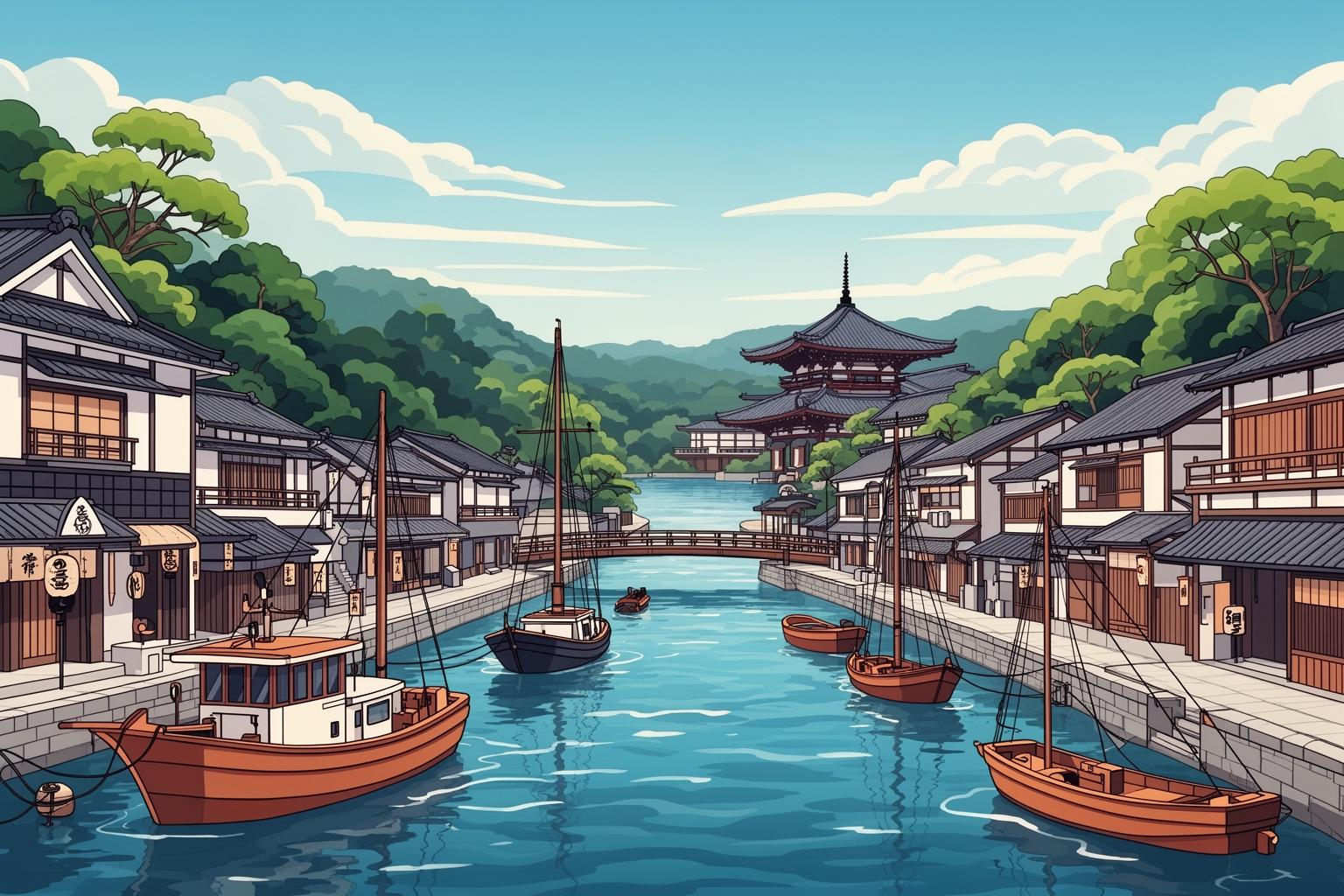
Long before it inspired animators, Tomonoura was a crucial center of maritime trade and a site of great historical significance. Its distinctive location made it an ideal shiomachi no minato, a port where ships awaited the right tide. Vessels sailing the Seto Inland Sea would anchor here, sometimes for days, waiting for favorable currents, turning the town into a vibrant hub of commerce, culture, and intrigue. This rich heritage is embedded in every corner of the town.
The Joyato Lighthouse
Standing tall at the harbor and serving as the unmistakable symbol of Tomonoura is the Joyato lighthouse. Positioned at the end of the stone pier, this graceful stone structure has guided ships safely since the Edo period. At over 11 meters high, it is the largest of its kind from that time in Japan. Rather than a towering, modern lighthouse, it has a more organic and poetic presence. Its role was not to cast a powerful beam over long distances but to offer a steady, reassuring light for sailors navigating the final, challenging approach to the harbor. One can easily imagine the relief of sailors spotting its gentle glow after a long voyage. Today, although it no longer houses a light, it remains the town’s spiritual anchor. Sitting near its base, watching boats drift by as the sun sets behind the islands, is a quintessential Tomonoura experience. It stands as a silent monument to countless journeys that began and ended here, symbolizing the town’s enduring bond with the sea.
Ota Residence and Irohamaru Museum
The legacy of Tomonoura’s merchant prosperity is beautifully preserved at the Ota Residence. This expansive complex was once home to a wealthy family who built their fortune brewing Homeishu, a local medicinal liqueur. Entering the residence is like stepping back into the Edo period. The meticulously maintained rooms with tatami mats, painted screens, and views of peaceful inner gardens offer insight into the refined lifestyle of a successful merchant family. The complex includes several buildings, such as storehouses with their characteristic white plaster walls, highlighting the scope of their business. A short walk away, the Irohamaru Museum offers a more dramatic chapter of history. Dedicated to a pivotal incident involving one of Japan’s most celebrated figures, Sakamoto Ryoma, the museum recounts how, in 1867, the steamship he was aboard, the Irohamaru, collided with a rival clan’s vessel and sank just off Tomonoura’s coast. The tense negotiations that followed took place right in town. Housed in a converted warehouse, the museum displays artifacts recovered from the sunken ship and tells the story of Ryoma’s connection to Tomonoura, adding a samurai-era drama to the town’s peaceful ambiance.
Fukuzenji Temple and Taichoro Pavilion
For the most stunning view in town, a short, steep climb up a stone stairway leads to Fukuzenji Temple. While the temple itself is a serene Buddhist sanctuary, its true gem is the Taichoro reception hall. This exquisite wooden pavilion, perched on the cliff’s edge, offers a sweeping panorama of the harbor and the islands of Sensuijima and Bentenjima. The view was so magnificent that in 1711, a Korean emissary on a diplomatic mission declared it “the most beautiful view in all of Japan.” His praise was well deserved. Designed like a picture frame, the hall’s open verandas perfectly capture the glittering sea and the graceful curves of the islands. Visitors can sit on the tatami mats, enjoy a cup of green tea, and absorb the breathtaking scenery. It is a moment of pure serenity, where art, nature, and history seamlessly come together. The gentle sea breeze flows through the open hall, while the sounds of the town below fade into a soft hum. It is a meditative experience connecting you to the centuries of travelers who have stood here, captivated by the same timeless beauty.
Savoring the Seaside: Local Flavors and Crafts
A visit to a port town isn’t complete without savoring its culinary delights, and Tomonoura offers a delicious experience of the Seto Inland Sea. The town’s identity is closely tied to its food culture, which is simple, fresh, and deeply satisfying.
A Taste of the Seto Inland Sea
The undisputed highlight of the local cuisine is tai, or sea bream. The waters around Tomonoura are renowned for producing some of the finest sea bream in Japan, and the town proudly celebrates this gift. Each late spring, a traditional sea bream fishing event—a spectacular practice carried on for over 380 years—takes place. Year-round, local restaurants serve this prized fish in various styles. A must-try is tai-meshi, a straightforward yet incredibly flavorful dish of rice cooked in a clay pot with a whole sea bream, its delicate essence permeating every grain. You can also enjoy it as sashimi, fresh and firm, or grilled with salt to perfection. Many small, family-run eateries line the harbor, offering set meals that highlight the day’s catch. Dining while overlooking the water and enjoying seafood likely caught that very morning creates a connection to the town’s livelihood and natural rhythm.
Homeishu: The Elixir of Longevity
Beyond its seafood, Tomonoura is famous for a unique and historic beverage: Homeishu. This medicinal liqueur has a history spanning more than 350 years. It is a sweet, herbal drink made by steeping a blend of 16 different herbs in shochu and sweet rice wine. Believed to promote health and longevity, it was once a treasured product of the Ota family, whose former home is now a tourist attraction. Several shops in town specialize in Homeishu, offering tastings and selling beautifully packaged bottles that make ideal souvenirs. Some shops even feature their own unique variations of the traditional recipe. The flavor is complex, with a warming, slightly bitter, and sweet profile that is truly distinctive. Sampling a small glass offers a taste of Tomonoura’s history—a sip of a tradition passed down through generations.
Practical Guide to Your Tomonoura Adventure
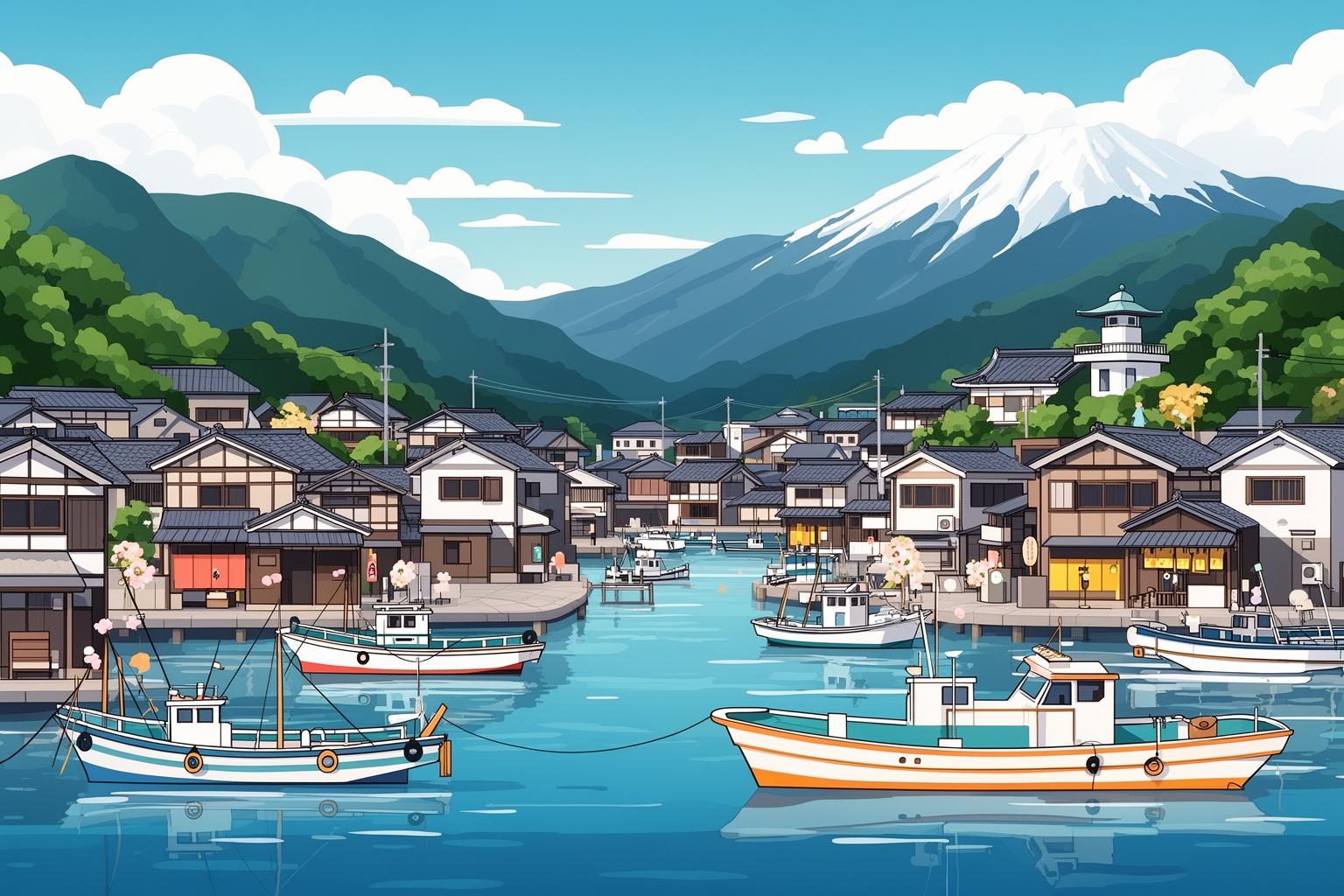
Tomonoura’s relative seclusion adds to its charm, yet reaching it is quite simple with a little preparation. Its compact size makes it perfect for a relaxing day trip or a tranquil overnight stay.
Getting There
The main access point to Tomonoura is Fukuyama City. If you’re traveling by Shinkansen (bullet train), Fukuyama Station is on the main Sanyo Shinkansen line, conveniently reachable from major cities such as Hiroshima (about 25 minutes), Osaka (about 1 hour), and Tokyo (about 3.5 hours). From Fukuyama Station, the last part of the trip is a pleasant local bus ride. Exit from the station’s south exit and head to the nearby bus terminal, then look for the bus bound for Tomo Port (鞆の浦, Tomo-no-ura). The trip takes around 30 minutes and costs a few hundred yen. The bus travels through Fukuyama’s suburbs before reaching the coastline, offering your first views of the sea. The final stop is right at the historic harbor’s edge, placing you perfectly at the beginning of your adventure.
Best Time to Visit
Tomonoura is stunning year-round, though spring and autumn are especially delightful. In spring (March to May), mild weather and cherry blossoms enhance the historic scenery. Autumn (October to November) offers comfortable temperatures, clear blue skies, and crisp air, ideal for long walks. Summer (June to August) is warm and can be humid but brings lively local festivals and a vibrant seaside atmosphere. Winter (December to February) is quiet and peaceful, with cold but clear air, allowing you to enjoy the town’s charming streets mostly to yourself for a more reflective and serene experience.
Navigating the Town
Once there, the best way to get around is on foot. The historic center of Tomonoura is a pedestrian’s paradise, featuring narrow alleys and stone paths where cars cannot enter. The area is compact and easy to explore on foot, and wandering without a strict plan is one of the greatest pleasures of visiting. Be sure to wear comfortable shoes, as you’ll be walking on uneven stones and gentle slopes. For those wanting to see a bit more or explore the slightly more modern outskirts, renting a bicycle near the harbor is an excellent option. However, to truly appreciate the details—the intricate tilework on roofs, a small shrine tucked between houses, the play of light on the water—a slow, leisurely walk is unbeatable.
Beyond the Harbor: Nearby Explorations
If you have a bit of extra time, a wonderful way to enhance your Tomonoura experience is by taking a short ferry ride to Sensuijima Island. The ferry, a quaint little vessel whimsically named the Heisei Irohamaru in honor of Sakamoto Ryoma’s ship, departs from the main pier every 20 minutes. The journey itself is a delight, lasting only about five minutes but offering fantastic views back towards the town, showcasing its beautiful harbor from a fresh perspective. Sensuijima is a largely undeveloped island that forms part of the Setonaikai National Park. It is a place of natural beauty and tranquility, providing a perfect contrast to the historic townscape. The island features several walking trails that meander through lush forests and lead to observation points with stunning panoramic views of the Seto Inland Sea and its many islands. There are a few different beaches where you can relax, skip stones, or simply listen to the sound of the waves. One of the island’s unique attractions is its five-colored rock formations, Goshikiiwa, which are believed to possess spiritual energy. Whether you’re seeking an invigorating hike or just a quiet spot to sit and reflect, Sensuijima offers a refreshing natural escape just moments away from the heart of Tomonoura.
Tomonoura is more than a destination; it is an atmosphere, a feeling. It’s the thrill of recognizing a scene from a beloved film, the quiet reverence of standing in a place steeped in centuries of history, and the simple pleasure of watching a fishing boat return to harbor at dusk. It’s a town that invites you to put away your map, forget your schedule, and simply be present. In a world that often moves too fast, Tomonoura serves as a gentle, beautiful reminder of the power of slowing down and the magic that can be found in a harbor where time—and the tide—wait for everyone.