

There are stories that feel like a dream you can’t quite shake, long after you’ve woken up. They leave an echo, a faint melody of memory and longing that hums just beneath the surface of your day. Makoto Shinkai’s masterpiece, Kimi no Na wa—or Your Name—is one such story. It’s a celestial romance that swept the globe, a tale of two souls, Taki in bustling Tokyo and Mitsuha in the tranquil countryside, bound together by a cosmic miracle. But the magic of Shinkai’s work lies not just in its breathtaking animation or its heart-wrenching narrative, but in its profound connection to the real world. His films are painted with the textures of reality, using hyper-realistic backgrounds that transform actual locations into canvases for his characters’ lives. This has given birth to a modern form of pilgrimage, the seichi junrei, where fans journey to the very spots that brought their favorite stories to life. For fans of Your Name, this pilgrimage is a dual experience, a dance between two Japans: the electric, sprawling metropolis of Tokyo and the serene, traditional heartland of Hida in Gifu Prefecture. It’s a journey to find the places where Taki and Mitsuha’s worlds collided, to stand where they stood, and to feel, just for a moment, that impossible connection woven across time and space. This is not just a tour; it’s an emotional map, and our journey begins in the heart of the city that Taki called home.
Embracing the captivating interplay of cinematic art and urban history, many fans venture further to explore Tokyo pilgrimage routes that reveal the city’s real-life magic behind Your Name.
Tokyo’s Concrete Dreams: Where Taki’s Story Unfolds
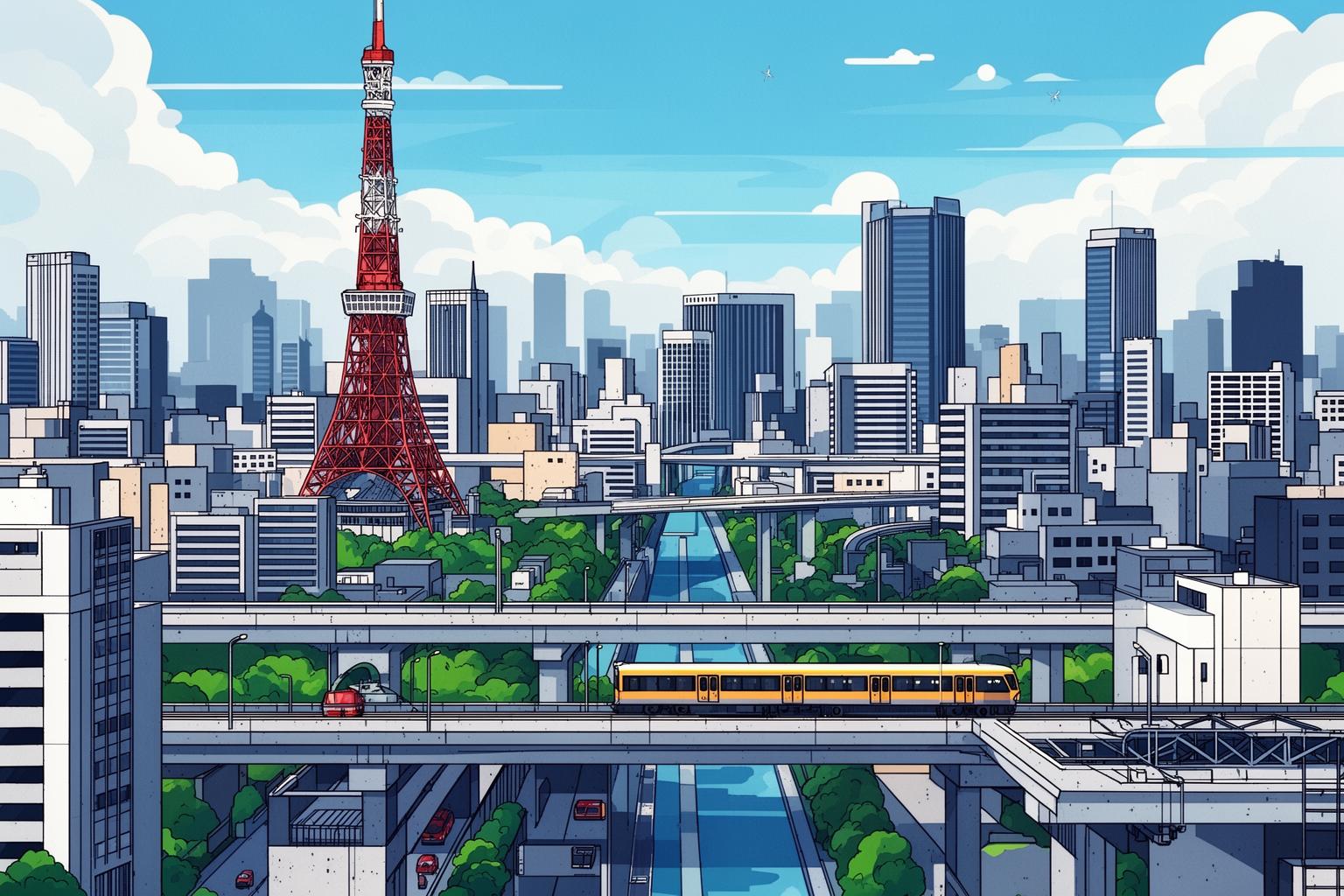
Tokyo is a city of striking contrasts. It is a place of vast scale and personal, intimate moments, where neon-lit nights give way to peaceful, sun-dappled mornings. This is the world of Taki Tachibana, a high school student navigating the currents of adolescence set against a backdrop of towering skyscrapers and intersecting train lines. To walk through his Tokyo is to feel the city’s rhythm, a pulsating energy that Shinkai captured with breathtaking accuracy. It’s a landscape where the ordinary becomes extraordinary, where a simple pedestrian bridge or a familiar skyline can carry the weight of a love story spanning the universe. Our journey begins at the very heart of this urban fabric, seeking out the iconic and subtle moments that define Taki’s side of the tale.
The Iconic Staircase: A Fateful Meeting at Suga Shrine
Few images are as emblematic of Your Name as the final, stunning scene on a set of red-railed stairs. This is the emotional pinnacle, the result of a years-long search, where two souls finally connect in the waking world. These stairs are real, leading up to the Suga Shrine nestled in a quiet residential area of Yotsuya. Discovering them feels like uncovering a hidden secret. Emerging from the subway at Yotsuya-Sanchome, the city’s roar softens, replaced by the gentle murmur of everyday life. The streets narrow, bordered by small homes and well-kept gardens. And then, there it is.
At first, the staircase appears unremarkable, flanked by apartment buildings. But as you draw near, the unmistakable red railing comes into view, sparking a thrill of recognition. The atmosphere here feels charged, alive with narrative possibility. Ascending the stairs, you can almost hear the film’s score swelling in the background. Each step echoes with the anticipation of Taki and Mitsuha’s encounter. The best way to relive the moment is as they did: walk up one side, and have a friend walk up the other, glimpsing each other through the divide. Upon reaching the top and turning around, the view down the sloping street framed by the railings perfectly mirrors the film’s final shot. It’s a profound moment of convergence where fiction and reality meld into one. For an optimal experience, visit on a weekday morning when the light is gentle and the crowds are sparse. You’ll have space to fully absorb the atmosphere and the quiet hope that fills this now-iconic Tokyo corner.
Shinjuku’s Symphony of Lights and Lines
If the Suga Shrine staircase is the emotional core of the film, Shinjuku is its vibrant circulatory system. This is the Tokyo that Taki inhabits daily—a dizzying, awe-inspiring maze of steel, glass, and humanity. Shinjuku Station is a world unto itself, the busiest train station on earth, where millions of stories intersect every day. Shinkai channels this overwhelming scale to highlight Taki’s journey, presenting him as a solitary figure amid a sea of anonymous faces. The film abounds with montages of Shinjuku’s landmarks: the distinctive “LOVE” sculpture, the crisscrossing pedestrian overpasses near the Shinjuku Police Station, and sweeping city views stretching to the horizon.
To truly immerse yourself in Taki’s world, embrace the beautiful chaos of Shinjuku. Stand on one of its overpasses and watch the river of headlights flowing beneath you. Lose yourself in the station’s labyrinthine passages. Then, go up. The best vantage point for a god’s-eye view, like those in the film, is the Tokyo Metropolitan Government Building. Its observation decks, free to the public, offer a breathtaking panorama that, on a clear day, extends all the way to Mount Fuji. As dusk falls and the city lights begin to sparkle, you come to understand the world through Taki’s eyes—a galaxy of lights filled with both hope and solitude. This is the grand stage of his life, and standing there, you can’t help but feel part of its vast, interconnected story.
A Moment of Calm: Taki’s Part-Time Job
Amid the sprawling city, Taki finds rhythm and meaning in his part-time job at an upscale Italian restaurant. Although the film’s “Il Giardino delle Parole” is fictional, it was inspired by Cafe La Bohème Shinjuku Gyoen, a beautiful restaurant with high ceilings, antique furnishings, and a theatrical, open-kitchen ambiance. This setting reveals another dimension of Taki’s life—his ambitions, his relationships with coworkers Okudera-senpai and Tsukasa, and the everyday moments that anchor his extraordinary experiences. Visiting a similar venue offers a tangible connection to his world. While you don’t need to go to that exact cafe, seeking out a stylish, inviting restaurant in the Shinjuku area lets you step into that part of the story. It’s an opportunity to relax, order a coffee or a plate of pasta, and imagine the conversations and daydreams that filled Taki’s shifts. It reminds us that amid a tale of cosmic scale, the small, quiet moments of daily life remain just as vital. Such places allow the characters to breathe and offer a more intimate way to connect with the film.
Into the Heart of Itomori: The Serene Landscapes of Hida
Leaving behind the electric hum of Tokyo, our pilgrimage takes a dramatic shift as we follow Taki’s path in search of Mitsuha. The journey itself is an integral part of the experience. Onboard the Shinkansen, the dense urban landscape slowly transitions to suburbs, then fields, and ultimately the majestic mountains of central Japan. The final stretch, aboard the Hida Wide View Express from Nagoya, is cinematic in its beauty. The train meanders through a deep river valley, with panoramic windows showcasing stunning views of emerald waters and forest-clad peaks. This marks the transition, the physical crossing from Taki’s world to Mitsuha’s. We are heading toward the Hida region of Gifu Prefecture, an area renowned for its breathtaking natural scenery and rich traditions. This region served as the main inspiration for Mitsuha’s fictional hometown of Itomori, a place characterized by sacred rituals, ancient beliefs, and the calm rhythm of rural life.
Hida-Furukawa: The Spirit of a Fictional Town
The small, charming town of Hida-Furukawa is the closest real-life counterpart to the heart of Itomori. Stepping off the train here feels like stepping into another era. The air is fresh and crisp, and the hectic energy of Tokyo gives way to a profound sense of tranquility. The town is renowned for its beautifully preserved wooden buildings, the historic Setogawa Canal where thousands of colorful koi swim, and a slow, gentle pace of life. For pilgrims, arriving in Hida-Furukawa is an emotional moment. The town is instantly familiar. While it is not a perfect replica of Itomori, its essence is unmistakably present. It’s reflected in the design of the train station, the atmosphere of the local library, and the reverence for tradition that fills the air. This is a place where you can wander, explore, and feel the spirit of Mitsuha’s world all around you. The local community has warmly embraced its connection to the film, providing maps and friendly guidance to visitors, making the pilgrimage feel like a warmly welcomed journey home.
Echoes at Hida-Furukawa Station
Your first stop is, naturally, Hida-Furukawa Station. This is where Taki, Okudera, and Tsukasa disembark, beginning their desperate search for a town that may not exist. The station in the film is an almost exact replica of the real one, from the platform’s design to the waiting area. Even the small details are faithfully captured, including the beloved Hida beef mascot, “Hidakuro,” who makes a cameo appearance. Standing on that platform, you can vividly feel Taki’s mixture of hope and uncertainty. The station often features a replica of the film’s Hida-gyu character for photos, a charming tribute to its cinematic fame. It serves as the perfect gateway to exploring the town, the very first point where the two worlds of the story begin to physically converge.
Whispers in the Library
One of the most memorable scenes in Taki’s search unfolds in a beautiful, warmly lit library where he finally uncovers the truth about Itomori. This is the Hida City Library, a must-visit location. Its stunning interior, featuring intricate wooden beams and soft natural light, showcases the region’s exceptional carpentry skills. The staff are very welcoming to Your Name fans. With permission, you can take photos at a designated desk specially set up to replicate the one Taki uses. Sitting there, surrounded by books and the quiet concentration of local visitors, you can sense the gravity of his discovery. It’s a somber, powerful moment in the film, and being in the actual space deepens its emotional impact. It underscores the significance of history, archives, and the stories embedded in places, a central theme throughout the film.
The Taste of Tradition: Goheimochi and Local Flavors
To truly immerse yourself in a place, you must taste it. As Taki and his friends explore the region, they enjoy goheimochi, a local specialty. This traditional treat consists of pounded rice skewered, coated with a sweet and savory sauce made from miso, walnuts, and sesame, then grilled over an open flame. The smoky, rich flavor embodies the taste of Hida. Vendors selling fresh goheimochi can be found near the main attractions in Hida-Furukawa and nearby Takayama. Sampling it is more than a culinary experience; it’s another sensory link to the film. This simple, rustic delicacy reflects the region’s culture and heritage. Eating it means you’re not just a tourist; you’re partaking in a local tradition, connecting with Mitsuha’s world through one of its most authentic flavors.
Bridging Two Worlds: The Art of a Modern Pilgrimage

A journey through the locations of Your Name ultimately becomes a journey about connection. It bridges the gap between the screen and the soil, between a masterfully crafted fiction and the tangible world that inspired it. This pilgrimage stands as a tribute to Makoto Shinkai’s artistic vision—his talent for discovering profound beauty in everyday Japan and transforming it into something mythical. By anchoring his fantasy in such detailed reality, he encourages us to view our own world with fresh eyes, finding magic in a familiar train station or the quiet dignity of a small-town library.
More Than Just a Photo Op
While recreating iconic shots is an enjoyable and essential part of any seichi junrei, the true essence of the pilgrimage runs deeper. It involves understanding the context of these places and sensing the atmosphere that made them perfect settings for the story. It means recognizing how Shinjuku’s overwhelming, futuristic energy fuels Taki’s ambition, and how the deep-rooted traditions and natural beauty of Hida shape Mitsuha’s spiritual identity and longing for a different life. These locations are not merely backgrounds; they are characters themselves. When you visit, take the time to simply be present. Listen to the sounds of the city and the silence of the countryside. Notice how light falls on a building or mountainside. By doing this, you move beyond just seeing the film’s locations and begin to feel the soul of the story.
Planning Your Own Journey: Practical Advice
Embarking on this two-part pilgrimage requires some planning, but it is incredibly rewarding. Traveling between Tokyo and the Hida region is straightforward. From Tokyo, take the Tokaido Shinkansen to Nagoya, then transfer to the scenic JR Hida Wide View Express, which will carry you directly to Hida-Furukawa and the nearby city of Takayama. For the best experience, consider the seasons. Spring and autumn are especially magical, reflecting the film’s vibrant color palette with cherry blossoms or fiery fall leaves. Winter offers a different yet equally beautiful perspective, covering the countryside in a quiet layer of snow, reminiscent of Itomori’s stark beauty.
Most importantly, keep in mind these are real places where people live and work. Be a respectful pilgrim. At shrines, be considerate of worshippers and observe proper etiquette. In residential areas like Yotsuya, lower your voice. In the Hida City Library, maintain silence. The warmth shown to fans by these communities is a gift; repay it with courtesy and respect. This helps ensure these places remain special and welcoming for all pilgrims who come after you.
A Connection Woven Through Time
As your journey comes to an end, you carry more than just photographs and souvenirs. You carry the sensation of having walked through a dream. From the bustling intersections of Tokyo to the peaceful canals of Hida, you have followed a story of searching, memory, and a bond that neither time nor disaster could break. The pilgrimage to the world of Your Name serves as a powerful reminder that the stories we cherish are not entirely separate from reality. They are rooted in it, drawing strength and meaning from real places, real traditions, and real landscapes. Standing on that staircase in Yotsuya or gazing out over the mountains of Hida, you feel it—a subtle but unmistakable thread connecting you to Taki, to Mitsuha, and to everyone who has ever looked up at the sky and searched for a name just beyond recall. It is a journey that leaves you with a renewed sense of wonder, not only for the magic of cinema but for the beautiful, story-filled world waiting just outside your door.








