
There are films that you watch, and then there are films that you live. Makoto Shinkai’s masterpiece, Kimi no Na wa, or Your Name, is breathtakingly, overwhelmingly, the latter. It’s a story that swept the globe, a celestial tapestry of intertwined destinies, body-swapping chaos, and a love that bends both time and space. The film’s emotional core is anchored not just in its unforgettable characters, Taki and Mitsuha, but in its breathtakingly rendered settings. These places, pulsating with life and detail, felt so real because, in many ways, they are. From the frantic, shimmering energy of Tokyo to the serene, traditional soul of a small mountain town, the world of Your Name exists, waiting to be explored. This isn’t just a trip; it’s a pilgrimage, a seichi junrei, as it’s known in Japan. It’s a chance to walk through the animation cels of your favorite scenes, to stand on the very ground where Taki and Mitsuha’s worlds collided, and to feel the lingering magic of their story in the air. This journey is a dialogue between fiction and reality, a quest to find the heart of a story etched into the Japanese landscape, inviting you to discover that the threads of fate might just be woven into the places we visit.
For those whose hearts were stirred by the film’s evocative settings, embarking on a Studio Ghibli pilgrimage might be the natural next step in exploring the magic of animated landscapes.
The Soul of Itomori: Discovering Hida-Furukawa
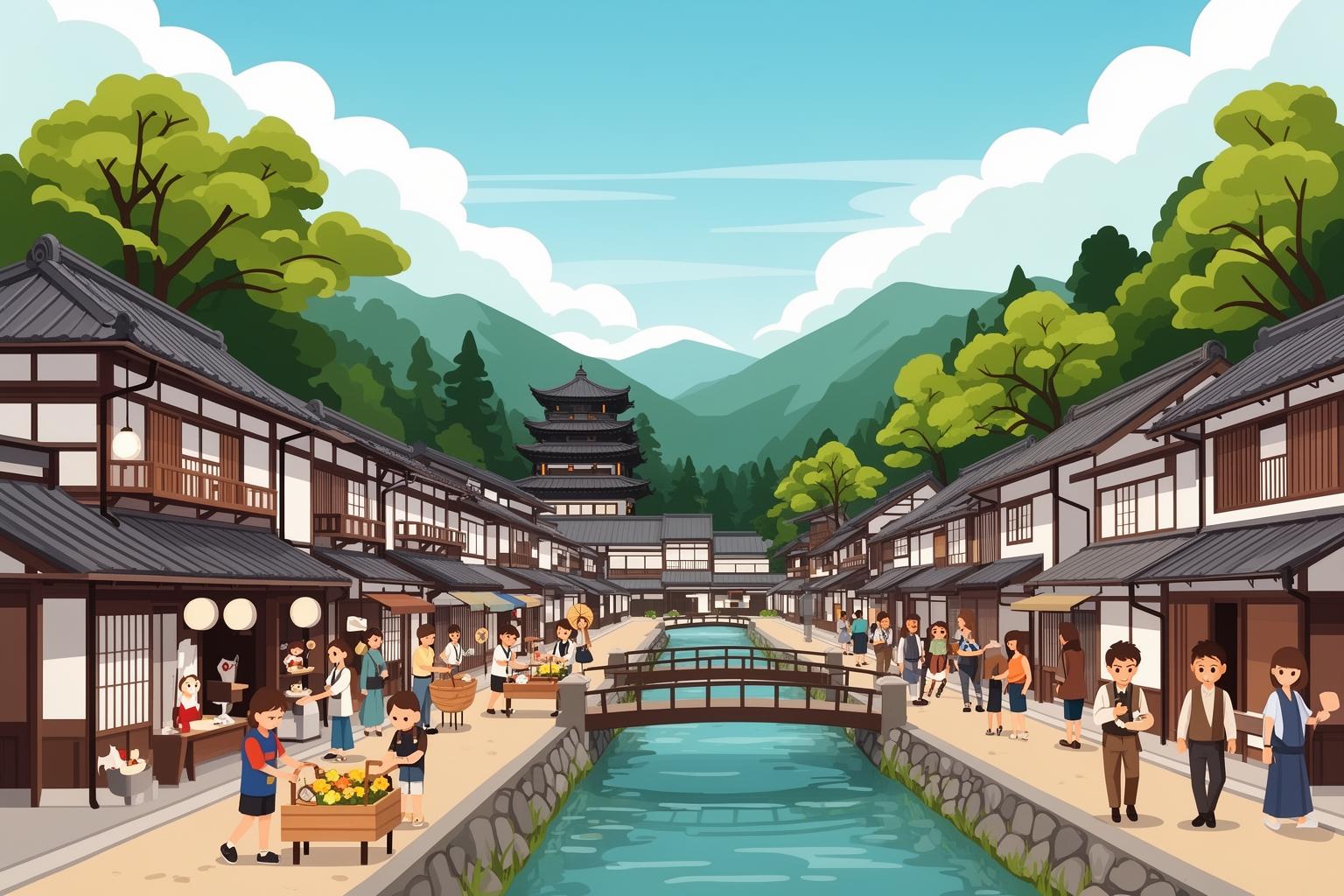
The journey into the heart of Mitsuha’s world doesn’t begin in the fictional town of Itomori but rather in the beautifully preserved streets of Hida-Furukawa in Gifu Prefecture. Stepping off the train here feels like a gentle shift from the ordinary to the magical. The air is distinct—crisp, clean, and filled with the distant sounds of temple bells and the babbling of water. This is a place that moves at a slower, more intentional pace. It’s a town of dark-wood lattices, white-walled storehouses, and canals bustling with vibrant koi fish. From the moment you arrive, you understand why this place inspired Itomori so deeply. It holds a timeless, almost sacred quality—a perfect backdrop for a story steeped in ancient traditions and celestial events.
Stepping into the Frame
Walking through Hida-Furukawa is an exercise in charming déjà vu. Every corner seems to whisper echoes of the film. The town isn’t a theme park; it’s a living community that has warmly embraced its place in cinematic history. The locals are friendly and accustomed to seeing travelers with cameras, eager to capture their own slice of the Your Name magic. The experience isn’t commercialized but rather feels like a shared appreciation. The atmosphere exudes profound peace, a stark and beautiful contrast to the urban maze of Tokyo that shapes Taki’s life. Here, visitors are encouraged to explore, to lose themselves in narrow lanes, and to allow the town to reveal its secrets just as it gradually revealed the truth to Taki during his search.
Iconic Moments Reimagined
The excitement of a seichi junrei lies in discovering those perfectly frame-accurate locations. Hida-Furukawa offers them in abundance, each serving as a powerful emotional anchor to the film’s story.
Hida-Furukawa Station
Taki’s journey begins here. The train station is almost flawlessly recreated in the anime, a simple yet deeply evocative starting point. Standing on the platform, you can almost picture Taki, Tsukasa, and Okudera-senpai stepping off the train, filled with uncertainty and hope. The wooden benches, overhead signs, and distinctive shape of the footbridge are all faithfully present. Just outside the station, the taxi stand where Taki showed his drawing to the driver is instantly recognizable. A small but charming detail for fans is the large, alpaca-like mascot doll, Hidakuro, inside the station. Taking a photo with it has become a beloved ritual for visiting pilgrims, a cute nod to the adventure that lies ahead. Spend a moment here watching the trains come and go; it’s a perfect spot for reflection before delving deeper into town.
The Hida City Library
One of the most striking real-world locations is the Hida City Library, where Taki and his friends uncover the tragic history of Itomori. From the outside, it appears modern and elegant, but the true magic lies within. The interior is a cathedral of light and wood, featuring a beautiful circular atrium and radiating shelves of books that the film captures perfectly. The sense of reverence and quiet discovery is tangible. The library staff warmly welcome fans, recognizing the significance of their workplace, and offer a designated spot for photography. Simply ask for permission at the front desk, and they will provide a pass. Sitting at one of the tables, gazing up at the exquisitely designed ceiling, you can feel the weight of Taki’s discovery. It’s a powerful moment that blurs the line between viewer and protagonist.
The Steps of Keta Wakamiya Shrine
Though the iconic red-railed staircase from the film’s finale is located in Tokyo, a key visual from Mitsuha’s life can be found here. The stone steps ascending to Keta Wakamiya Shrine, where Taki and his friends pause to rest, are a must-see. The steps themselves and the large stone torii gate at the base are unmistakable. Often mistaken for the fictional Miyamizu Shrine from the film, this spot served as direct inspiration for some of Itomori’s scenery. The climb is brief but steep, leading you into a serene, wooded sanctuary. It’s a place that feels ancient and spiritual, perfectly embodying the Miyamizu traditions central to Mitsuha’s identity.
The Flavors and Crafts of a Timeless Town
Beyond the anime’s landmarks, Hida-Furukawa invites you to experience its own unique culture. This journey isn’t about ticking off a checklist. Take time to savor the local specialty, Goheimochi, a grilled rice cake glazed with a sweet and savory miso-walnut sauce. These can be found at small stalls throughout the town and are the same snack Taki and his friends share during their search. The region is also renowned for its high-quality sake. Several historic breweries line the main streets, marked by large, hanging cedar balls called sugidama. Many offer tours and tastings, giving visitors a flavorful glimpse into centuries of local craftsmanship. For a perfectly photogenic stroll, wander along Shirakabe Dozogai Street, where the town’s iconic white-walled storehouses flank a picturesque canal. The contrast of dark wood, white plaster, and shimmering water creates a scene of pure Japanese elegance.
The Heartbeat of Tokyo: Taki’s Urban Landscape
If Hida-Furukawa is the soul of Your Name, then Tokyo is its pulsating heart. The film skillfully portrays the city’s dual nature: its vast scale alongside moments of quiet intimacy. This is Taki’s world—a landscape filled with soaring skyscrapers, intersecting train lines, and millions of unknown lives passing one another. Exploring Taki’s Tokyo means discovering the beautiful, cinematic moments hidden within the everyday hustle of the world’s largest metropolis. It’s a treasure hunt through Shinjuku and its neighboring areas, retracing the steps of a boy searching for a girl he’s never met.
A City of Intersecting Fates
Being in Taki’s Tokyo evokes a sense of exhilarating movement. The steady flow of people, the ringing of train station announcements, the glow from countless screens—it’s a fully immersive sensory experience. Yet, as Shinkai shows, there are tranquil pockets as well. A quiet side street, a view from a pedestrian bridge, the stairs of a local shrine. These are the settings for the film’s most touching moments, where characters pause to catch their breath amid the urban rush. Your journey should reflect this cadence, embracing both the energetic landmarks and the quieter, more reflective spots.
Tracing Taki and Mitsuha’s Footsteps
From a first date to a destined reunion, Tokyo’s landscape serves as the backdrop for Taki and Mitsuha’s bond. Each place is a piece of their story, and visiting them feels like assembling that story yourself.
The Suga Shrine Stairs
This is it—the ultimate destination for every Your Name fan. The stairs of Suga Shrine in Yotsuya set the stage for the film’s heart-stopping, emotionally powerful climax. Finding this modest neighborhood staircase and seeing it up close is a truly moving experience. The steep slope, the distinctive red railing, the houses lining the walls—it’s a flawless recreation. You can stand at the bottom, looking up as Taki did, or at the top, looking down as Mitsuha did. The magic lies in the space between. For the best experience, try to visit on a weekday morning when fewer people are around, and the soft morning light casts a cinematic glow. It’s a quiet residential area, so please be considerate of the locals. This isn’t just a photo opportunity; it’s the place where two souls finally, beautifully, find each other.
Shinjuku’s Crossroads and Views
Shinjuku is Taki’s territory, and its towering skyline is a recurring presence in the film. The iconic sight of the NTT Docomo Yoyogi Building, featured often in Shinkai’s work, is best viewed from the Shinjuku Southern Terrace. A short stroll away is the unique ring-shaped intersection in front of the Shinjuku Police Station, highlighted in a remarkable time-lapse sequence. Though the upscale restaurant where Taki and Okudera-senpai dine is fictional, you can enjoy a very similar panoramic view for free at the Tokyo Metropolitan Government Building, which has observation decks on the 45th floor open to the public. Seeing the city’s vast spread from above truly conveys the scale of Taki’s world and the near-impossibility of his quest.
Yotsuya Station and the Pedestrian Bridge
The daily commute is a huge aspect of Tokyo life, and the film depicts it beautifully. Yotsuya Station is a key spot where Taki often meets his friends or parts ways with Okudera-senpai. The view from the pedestrian bridge outside the station, looking down at the intersecting JR Chuo and Marunouchi lines, is another instantly recognizable scene. It perfectly captures the sensation of paths crossing, journeys beginning and ending. Standing there as the red and orange trains glide below, you gain a real sense of the urban rhythm shaping Taki’s life.
The National Art Center, Tokyo
For a touch of architectural elegance, visit The National Art Center in Roppongi, where Taki and Okudera-senpai share their date. The building’s striking undulating glass facade is an artwork in itself. Inside, you can visit the Salon de Thé Rond, the stylish cafe perched on a large concrete cone where the two had their meal. You don’t need a ticket to enter the main atrium and see the cafe. It’s a sleek, sophisticated space that offers a wonderful contrast to the more traditional and hectic locations on your pilgrimage. It’s an ideal spot to rest your feet and savor a chic slice of Tokyo life.
The Mystical Lake: A Glimpse of Itomori’s Heart

While Hida-Furukawa provides the townscape of Itomori, the inspiration for its most striking geographical feature—the vast, circular lake created by a comet fragment—comes from a completely different location. To discover it, you need to travel to Nagano Prefecture, to the shores of Lake Suwa. This expansive lake, nestled within a mountain valley, closely resembles Lake Itomori. The similarity is remarkable and enhances the realism of Mitsuha’s world.
The most stunning view, which perfectly matches the panoramic shots from the film, can be seen from the Tateishi Park observation deck. The hike or drive up is definitely worth the effort. From this viewpoint, the entire lake and surrounding towns stretch out before you in a breathtaking panorama that seems directly lifted from Shinkai’s storyboards. The ideal time to visit is during kataware-doki, or twilight. As the sun sets, the sky and water are bathed in fiery oranges and deep purples—the very magical hour when Taki and Mitsuha briefly met on the crater’s edge. Standing there, watching the town lights begin to sparkle below, you can almost sense the mystical energy of that moment. For visitors in August, the Suwa Lake Fireworks Festival is one of Japan’s most renowned events, a spectacular show that would surely make Mitsuha and her friends proud.
Practical Pilgrim’s Guide: Planning Your ‘Your Name’ Journey
Embarking on this pilgrimage is an incredibly fulfilling adventure, and with some careful planning, it can become a smooth and unforgettable journey. The key is to embrace the travel itself as an integral part of the story.
Getting Around: From Tokyo to Hida
The journey between Taki’s world and Mitsuha’s is a beautiful transition from cityscape to alpine panorama. The most efficient way to travel from Tokyo to Hida-Furukawa is by train. First, take the Tokaido Shinkansen (bullet train) from Tokyo to Nagoya, then transfer to the JR Hida Limited Express. This second segment, the Hida Limited Express, is a highlight on its own—the train meanders through breathtaking river valleys and dense forests, with large windows designed to offer the best views. The entire trip takes around four to five hours. For travelers visiting multiple regions in Japan, the Japan Rail Pass can be an economical choice covering this entire route.
Where to Stay and When to Go
During the Hida part of your trip, you can stay in Hida-Furukawa for a quiet, immersive experience or in the nearby, larger town of Takayama, which provides more accommodation and dining options and is just a 15-minute train ride away. In Tokyo, staying in or around the Shinjuku area is ideal, as it puts you near many of the film’s key locations. This journey can be enjoyed throughout the year, with each season offering its own unique charm. Spring showcases cherry blossoms, summer displays lush greenery, autumn sets the mountains ablaze with color, and winter covers Hida with a pristine blanket of snow, just like on the day the comet fell. A trip of at least two days for the Hida and Lake Suwa region and another two to three days for Tokyo is recommended to comfortably experience everything without rushing.
A Note on Etiquette and Respect
One of the most important things to keep in mind during a seichi junrei is that you are visiting real communities, not a movie set. The Hida City Library is a functioning library serving local residents. The Suga Shrine is a place of worship nestled in a quiet neighborhood. Be a considerate guest. Keep your voice low, especially in serene areas. Always ask for permission before photographing inside places like the library. Avoid blocking pathways or disrupting traffic while trying to capture the perfect shot. The beauty of this pilgrimage lies in the warm welcome fans have received, and maintaining that goodwill through respectful tourism ensures others can enjoy this magical experience for years to come.
Beyond the Animation: The Enduring Magic of Place

A journey through the world of Your Name goes far beyond simply recreating scenes from the film. It is an exploration of the deep connection between story and place. Walking the same streets as Taki and Mitsuha, breathing the mountain air they once inhaled, and witnessing the city lights they admired transforms your experience of the movie. It enriches the narrative, making their struggles, desires, and ultimate triumphs feel even more impactful. You begin to see how the calm, structured traditions of Hida influenced Mitsuha, while the chaotic, lively energy of Tokyo shaped Taki. These settings are not mere backdrops; they are essential to the characters’ identities. Standing on the Suga Shrine steps is more than just taking a photo; it’s about feeling the weight of their entire journey culminating in that single, hopeful question. This pilgrimage reminds us that stories, like people, possess a soul, and sometimes, that soul is found in the curve of a staircase, the view from a bridge, or the quiet reflection of a mountain lake.