
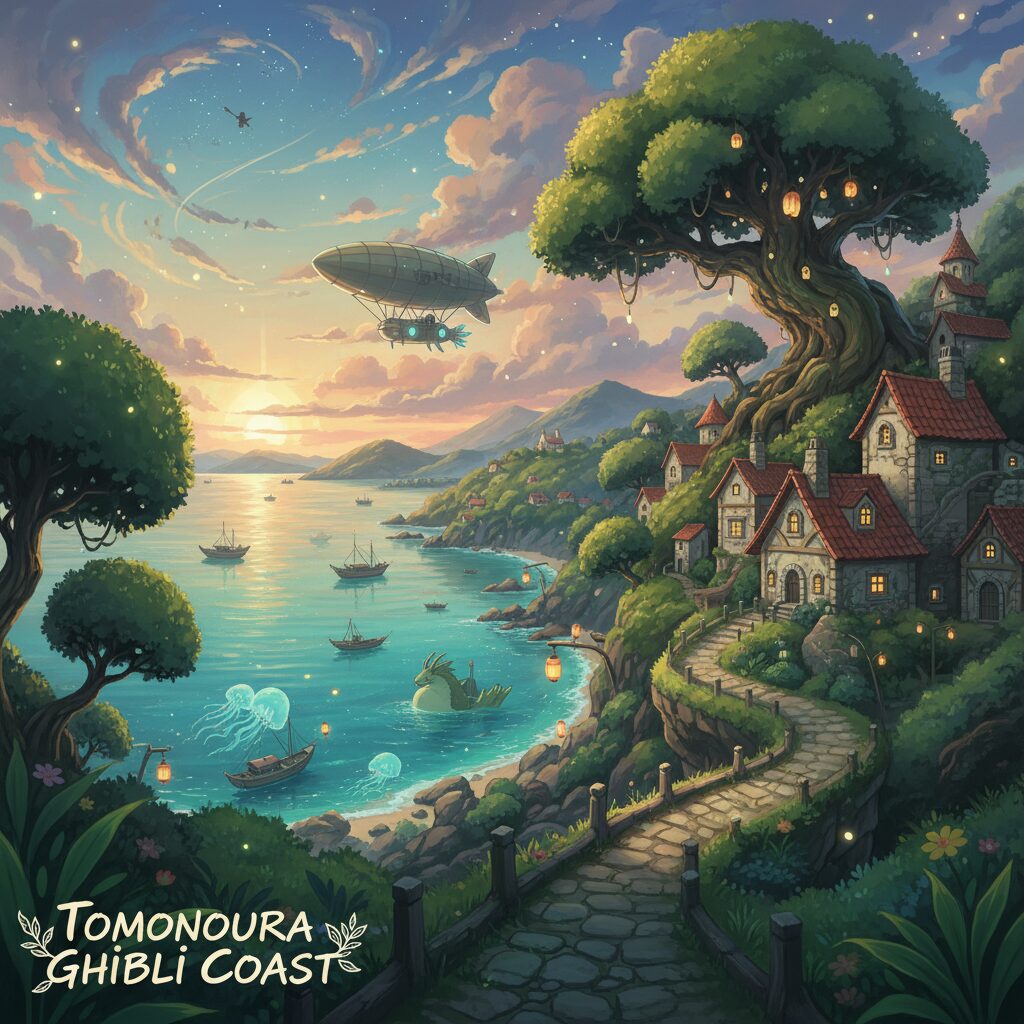
There are places in the world that feel like they were lifted from a dream, a forgotten memory, or perhaps, the cel of an animation. You step into them and the air shifts, time slows, and the world you thought you knew softens at the edges. Tomonoura, a small, crescent-shaped port town nestled in Hiroshima Prefecture, is one of those rare gems. It’s a place where the gentle rhythm of the Seto Inland Sea dictates the pace of life, where wooden fishing boats bob in the harbor much as they have for centuries, and where the narrow, stone-paved alleyways whisper tales of samurai, merchants, and artists. But for a generation of travelers, this historic town holds a different kind of magic. It is the living, breathing soul of the setting for Studio Ghibli’s beloved film, “Ponyo on the Cliff by the Sea.” This is where legendary director Hayao Miyazaki and his team of animators spent months, not just sketching the scenery, but inhaling its very essence. They absorbed the salty air, listened to the chatter of the fishermen, and watched the light dance across the tiled roofs. The result was a film that felt impossibly real, and a town that became a destination for those seeking to step inside the frame. A trip to Tomonoura isn’t just about seeing a film location; it’s about feeling the inspiration, a gentle, creative energy that permeates every corner of this beautifully preserved port. It’s a journey back in time, and into the heart of one of animation’s most enchanting worlds.
Immerse yourself further into Tomonoura’s enchanting past by exploring how Ponyo’s ghostly allure continues to inspire a timeless cinematic legacy.
The Whispers of the Sea: Feeling the Ghibli Magic in the Air
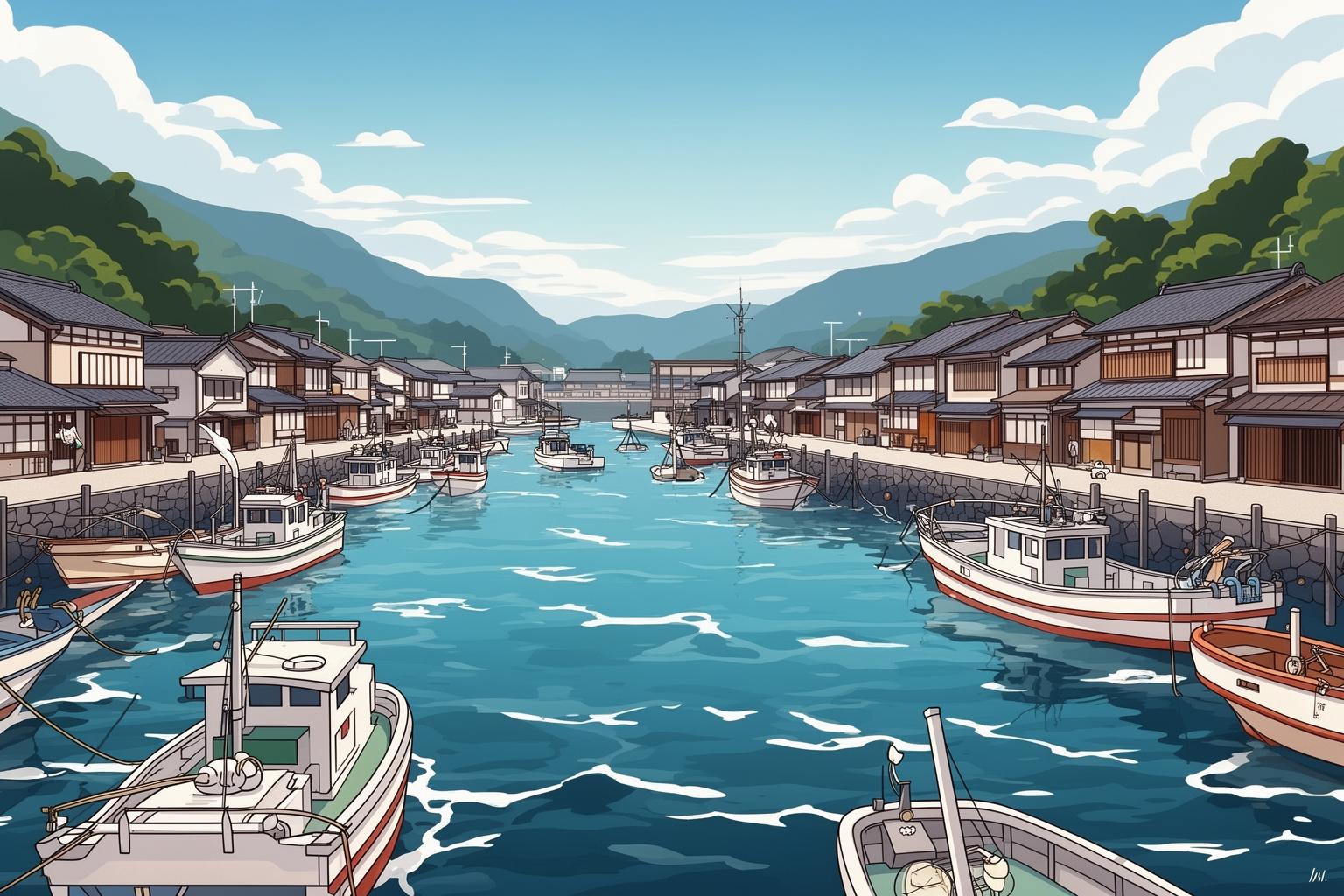
The moment you step off the bus from Fukuyama, the atmosphere of Tomonoura envelops you. It’s a sensory experience that animation, despite its beauty, can only hint at. The air is heavy with the brine of the Seto Inland Sea, a crisp, clean scent blended with the faint, sweet aroma of drying fish and aged wood. The town’s soundtrack isn’t traffic; it’s the calls of gulls, the distant drone of a boat engine, and the soft lapping of water against the stone gangî steps leading into the harbor. This is the magic Miyazaki aimed to capture. It’s not about locating exact film spots but about immersing yourself in the very environment that ignited his imagination. As you stroll along the waterfront, the visual links to “Ponyo” are unmistakable and exhilarating. The town curves around the harbor just like Sosuke’s village, with houses stacked on the hillside, their dark, tiled roofs forming a beautiful, chaotic mosaic against the green slopes. The fleet of small fishing boats, adorned with colorful flags and weathered hulls, looks as if it could have sailed straight out of the movie. You can almost envision Ponyo, in her fish form, darting among the boats, curious about the human world above. Miyazaki and his team rented a house overlooking this very harbor. They weren’t mere tourists; they became temporary locals. They observed daily routines, the way light shifted from dawn to dusk, painting the sea in shades of silver, blue, and fiery orange. They witnessed how the tides dramatically reshaped the shoreline, revealing and hiding the ancient stone steps. This deep immersion explains why the film feels so genuine. The artists captured the town’s character, its quiet dignity, and its profound bond with the sea. Walking through Tomonoura, you feel as if you’re wandering through their sketchbook. Every corner offers a fresh perspective, a charming detail—a cat napping on a sun-warmed stone wall, a cluster of potted plants by a doorway, an old-fashioned shop with wooden shutters closed—that feels both distinctly Japanese and universally heartwarming, capturing the very essence of a Ghibli creation.
A Walk Through Time: Tomonoura’s Living History
While the initial attraction for many may be Tomonoura’s connection to Studio Ghibli, the town’s own history is equally fascinating, spanning over a thousand years. Once a crucial maritime center, it served as a shio-machi no minato, or a port where ships waited for favorable tides. Its strategic position in the heart of the Seto Inland Sea made it an ideal refuge for vessels seeking shelter while currents shifted. This heritage is not confined to museums; it is embedded in the very essence of the town. The street layouts, building architecture, and enduring symbols of its prosperous past together form a living museum, inviting visitors to explore at a leisurely pace.
The Joyato Lighthouse: A Beacon Through Centuries
Towering over the harbor both physically and symbolically is the Joyato Lighthouse. Unlike modern lighthouses, this elegant stone structure, standing eleven meters tall, dates back to the Edo period (1603-1868) and is the largest of its kind still standing in Japan. Positioned at the pier’s edge, it acts as a steadfast guardian watching over the comings and goings of boats. Its role was more than just illuminating ships; it marked the entrance to a safe harbor. Although its light no longer shines, its presence remains deeply significant. It is the town’s anchor, the first sight upon arrival and the lasting impression upon departure. Sitting on the steps near its base, observers can watch the daily life of Tomonoura unfold—fishermen repairing nets, local families on evening walks, and visitors pausing to capture the perfect shot against the sea and distant Sensui Island. The Joyato Lighthouse stands as a constant testament to Tomonoura’s longstanding role as a vital port, having witnessed centuries of transformation from the sailing era to steam ships, and now to pilgrims drawn by a different light—the spark of creative inspiration.
Stepping Back on the Stone-Paved Streets
To truly grasp Tomonoura’s spirit, leave the waterfront and get lost in the winding network of narrow backstreets where the Edo-period atmosphere is strongest. The main roads are flanked by beautifully preserved merchant houses, their dark wooden lattices and white plaster walls transporting visitors to another time. Many of these historic buildings continue to function as homes, shops, or small inns. A key historical site is the Irohamaru Museum, which honors a significant event in Japanese history. It tells the story of the steamship Irohamaru, captained by the renowned samurai revolutionary Sakamoto Ryoma, which sank just off Tomonoura’s coast in 1867 following a collision. The subsequent negotiations occurred in town, and the museum, housed in a former merchant’s warehouse, exhibits artifacts recovered from the wreck. This enriches the town’s narrative, linking it to the dramatic close of the samurai era. However, the true pleasure lies in aimless wandering. Turn a corner and you might discover a small, impeccably maintained shrine. Climb a flight of stone steps and find a temple gate opening onto a tranquil garden. The absence of modern distractions—no billboards, traffic signals, or convenience store chains—is striking, allowing the town’s understated beauty to shine through and creating a peaceful, contemplative experience far removed from the bustle of Japan’s major cities.
Finding Ponyo’s Footprints: Key Sights for Ghibli Fans
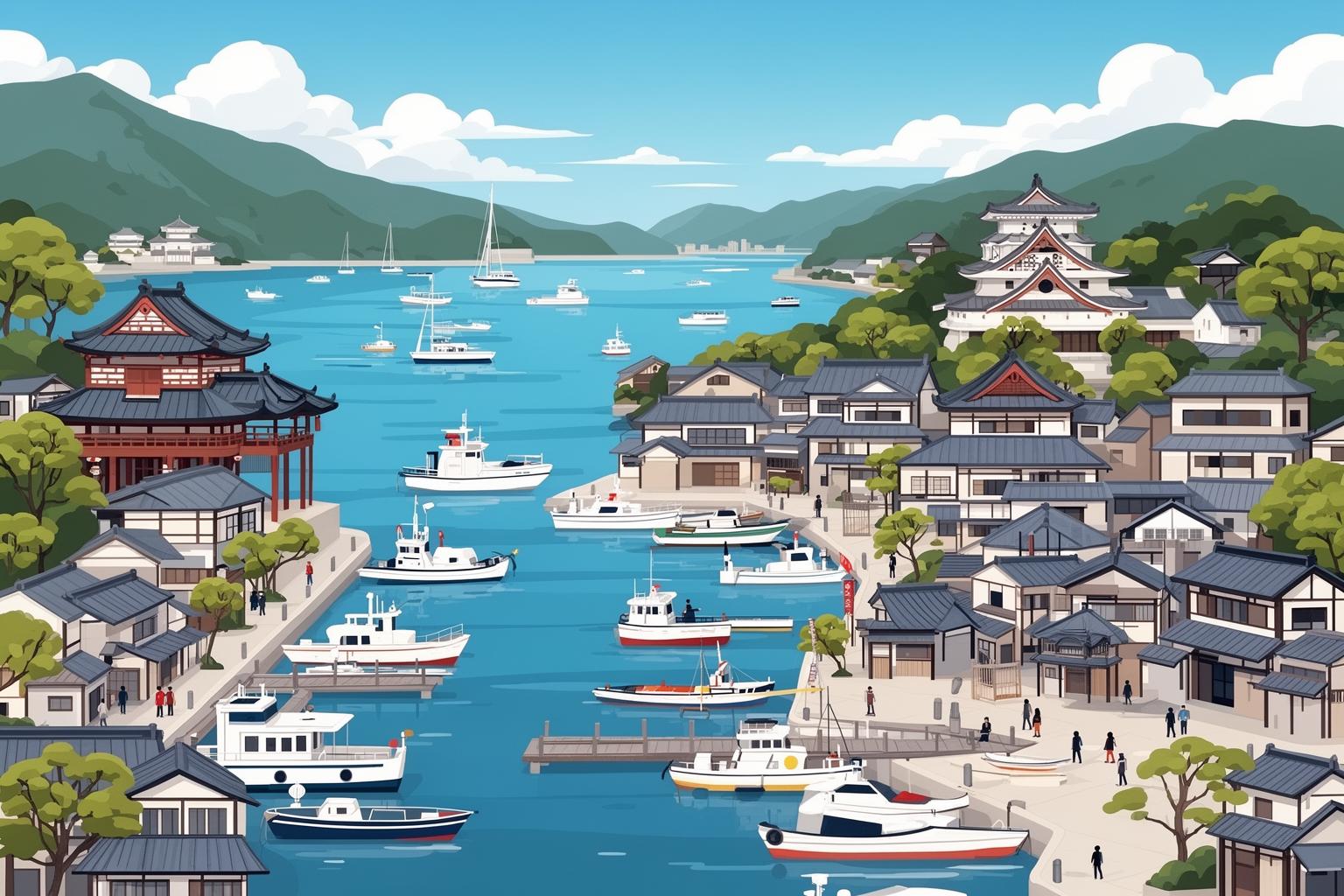
For those embarking on a pilgrimage to honor Hayao Miyazaki’s vision, Tomonoura presents countless moments of joyful recognition. The entire town acts as a treasure map of inspiration, making exploration feel like a gentle, real-world scavenger hunt. While you won’t find signs directing you to “Ponyo’s house,” you will encounter the very elements that were blended to create the film’s unforgettable world. The key is to observe the shapes, textures, and emotions that clearly made their way onto the screen.
The Curved Harbor and Gangî Steps
At the heart of Tomonoura, and arguably its most recognizable Ghibli-like landscape, lies the harbor itself. Stand near the Joyato Lighthouse and look back toward the town. The bay’s gentle curve, along with the houses tumbling down the hillside to meet the water, forms the quintessential image of Ponyo’s home. A distinctive feature of the port is the gangî—the stone-stepped embankments lining the harbor. These tiered staircases were cleverly designed to enable boats to be loaded and unloaded regardless of the tide, which can vary dramatically in the Seto Inland Sea. In the film, these steps are a constant presence, marking the boundary between Sosuke’s world on land and Ponyo’s world in the sea. Visiting them in person, it’s easy to picture a small boy running down to check his toy boat, or a magical fish-girl reaching shore in a glass jar. The gangî are more than a historical feature; they remain an integral part of daily life in town, a place where people sit, fish, and connect with the sea.
The View from Fukuzen-ji Temple
For a breathtaking panorama that captures the beauty inspiring Miyazaki, a visit to Fukuzen-ji Temple is a must. Perched on a hillside just a short walk from the harbor, the temple houses the Taichoro guest hall. This elegant wooden hall, built in 1690, historically received envoys from Korea. Its wide, open veranda offers what is often called the most picturesque view in the entire Seto Inland Sea region. Sitting on the tatami mats and looking through the hall’s open frame, the scene is perfectly composed: tiled roofs in the foreground, the iconic harbor with Joyato Lighthouse, and the lush green islands of Benten-jima and Sensui-jima floating on azure waters beyond. It is a vista of sublime peace and harmony. This elevated perspective, common in Ghibli films, provides a sense of scale and wonder. One can easily imagine the animation team sketching the landscape from this very spot, absorbing the serene energy that infused their work. It is a moment of quiet reflection, a chance to see Tomonoura not just as a town, but as a masterpiece of nature and human settlement.
A Quest for Sosuke’s House
A frequent question from visitors is, “Where is Sosuke’s house?” The charming red-roofed house on the cliff is one of the film’s most iconic images. In reality, there isn’t a single house that served as its model. Rather, the design is a composite, an artistic interpretation of various homes built on the cliffs and hills surrounding Tomonoura. The true enjoyment lies not in finding one specific spot but in undertaking the quest itself. Wander up the steep, narrow paths that wind away from the harbor. As you climb, you’ll pass numerous houses with small gardens, weathered walls, and stunning sea views. You will find red roofs, quaint gates, and winding staircases that all evoke the feeling of Sosuke’s home. This journey offers a wonderful way to explore the town’s residential areas and see how people truly live here. It invites you to closely observe details and appreciate the architectural spirit of the place. Ultimately, Sosuke’s house isn’t a pinpoint on a map; it is an idea, a blend of the warmth, resilience, and beautiful simplicity of the homes in Tomonoura.
The Flavors of the Port: Savoring Tomonoura’s Culinary Delights
A trip to a Japanese port town wouldn’t be complete without savoring its culinary delights, and Tomonoura delivers flavors deeply tied to the sea and its rich heritage. The cuisine here isn’t about flashy trends; it focuses on fresh, local ingredients prepared using time-honored methods. The highlight of the local fare is, unsurprisingly, seafood. The Seto Inland Sea is famous for its delicious fish, and Tomonoura is especially known for its sea bream, or tai. In spring, the town even hosts a Tai-ami festival, a traditional fishing event practiced for over 380 years. This prized fish can be enjoyed in several ways—delicate sashimi, grilled with salt, or simmered in a savory broth with rice. Finding a small, family-run restaurant near the harbor for a seafood lunch is an essential Tomonoura experience. Beyond seafood, the town is also recognized for a unique product called Homeishu, a medicinal herbal liquor with a history spanning more than three centuries. Made by steeping sixteen different herbs in sweet mirin rice wine, several old and atmospheric shops around town specialize in Homeishu. Their beautiful interiors, featuring dark wood and rows of ceramic jars, are worth visiting on their own. You can sample the liquor, which offers a complex, sweet, and herbal flavor, and it is believed to promote longevity and health. It makes a truly unique souvenir that reflects the town’s history of trade and traditional remedies. For a simpler delight, keep an eye out for small stalls and shops selling local snacks. Whether a freshly grilled fish cake on a stick or a sweet treat from a traditional confectionery, these small bites add to the joy of exploring the town’s charming streets.
Practical Guidance for Your Tomonoura Adventure
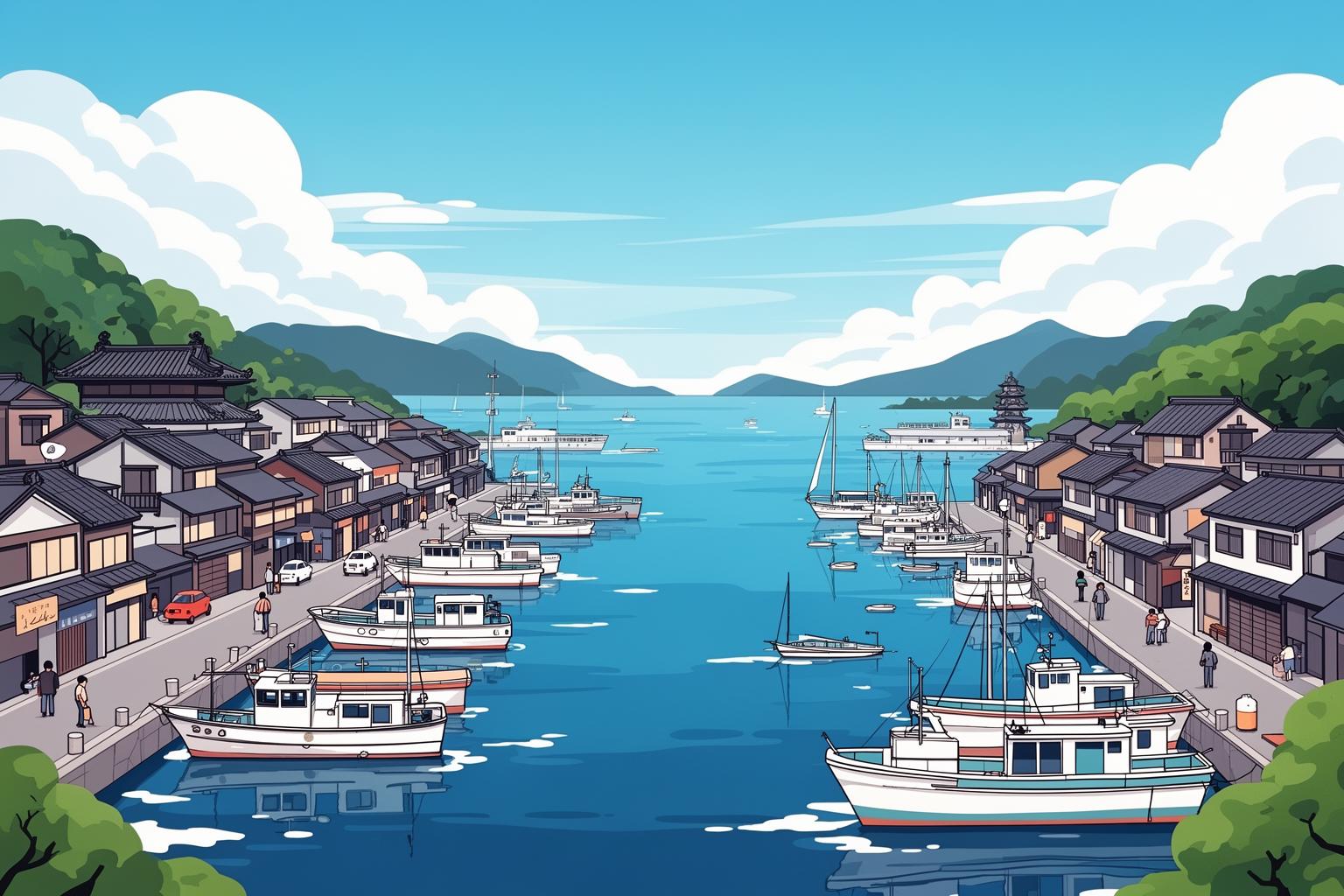
Tomonoura’s slight remoteness adds to its charm, but reaching it does require a bit of planning. The effort, however, is well worth it, offering a rewarding sense of discovery and tranquility. Having some practical knowledge beforehand will help ensure your visit is as smooth and enjoyable as the gentle sea breezes that sweep through the town.
Getting There: The Journey to the Coast
The most common way to get to Tomonoura is through the city of Fukuyama, a major stop on the Sanyo Shinkansen (bullet train) line. This makes it easily accessible from major cities such as Osaka, Kyoto, and Hiroshima. From Fukuyama Station, the route is straightforward. Head to the bus terminal just outside the station’s south exit and catch the Tomotetsu bus heading to Tomo Port (鞆港, Tomo-kō). Buses run frequently, usually every twenty minutes or so. The ride is a pleasant, thirty-minute trip that takes you from Fukuyama’s urban center, through the suburbs, and finally along the scenic coast as you near the historic port. The final stop is right on the harbor’s edge, setting you in the perfect spot to begin your exploration. This easy last leg makes Tomonoura an excellent day trip from nearby cities; however, staying overnight is highly recommended to fully experience its tranquil evenings and peaceful early mornings.
When to Visit and What to Expect
Tomonoura is a wonderful destination year-round, with spring and autumn offering the most comfortable weather for walking. The clear, mild days of April, May, October, and November are perfect for enjoying coastal views and wandering the winding streets. Summer can be hot and humid, but it’s also the season for lively local festivals. Winter is quiet and peaceful, providing a more reflective experience, though some smaller shops may have limited hours. The town itself is compact and mostly flat around the harbor, making it very walkable. Comfortable shoes are a must, as you’ll be navigating stone pavements and uneven steps. The true charm of Tomonoura comes to those who take their time; it’s not a place to rush through a list of sights. Plan for at least half a day, but a full day or an overnight stay will let you experience the magical ambiance when the day-trippers have left and the lanterns begin to glow around the harbor.
Tips for Families and First-Time Visitors
For those visiting Japan for the first time, Tomonoura offers a gentle and welcoming introduction to the country’s historic side. Its small scale keeps it manageable and not overwhelming. As an Australian mother often traveling with my family, I find places like this ideal. The slow pace is perfect for children, who will be more intrigued by watching the boats and exploring alleyways than by a crowded museum. It’s a place that sparks the imagination. A few practical tips can make your visit even smoother. While some larger restaurants and hotels accept credit cards, many smaller shops, cafes, and local eateries operate on a cash-only basis. It’s wise to carry enough Japanese yen with you. Also, remember you are walking through a living community. Many of the beautiful old houses are private residences, so be respectful when taking photos and keep your voices low in the quiet residential lanes. Finally, consider using Tomonoura as a base to explore the surrounding region. It’s an excellent starting point for ferry trips to nearby islands and can be combined with a visit to Onomichi, the charming temple town also located along the coast.
Beyond the Animation: The Enduring Soul of Tomonoura
Visiting Tomonoura solely as a film location reveals just one layer of its deep charm. While the spirit of “Ponyo” is a joyful and undeniable aspect of its contemporary identity, the town’s true magic rests in its authenticity. This is neither a theme park nor a movie set; it is a genuine, working port town where generations of families have sustained themselves through the sea. The Ghibli connection has brought well-deserved attention, but it has not diminished its soul. Tomonoura’s heart still beats to the rhythm of the tides, a slow and steady pulse that has persisted for centuries. The greatest gift a visit here offers is a lesson in the beauty of slowness, of taking the time to notice the small details that make a place unique. It’s found in the kindness of a shopkeeper offering a sample of Homeishu, in the quiet dedication of a fisherman mending his gear, and in the shared moment of awe as the sun sets behind Sensui Island. Hayao Miyazaki did not create the magic of Tomonoura; he recognized it. He saw the wonder in its ordinary, everyday life and transformed it into a universal story of love and acceptance. By visiting, you are not merely chasing the ghost of a film; you are connecting with the very source of its inspiration. You depart not just with photographs of a beautiful town, but with a renewed appreciation for the quiet, enduring places of the world and the powerful stories they hold.








