Step off the train in Chichibu, and you feel it instantly. It’s a shift in the air, a slowing of time, a gentle whisper carried on the mountain breeze. Nestled in the verdant heart of Saitama Prefecture, just a surprisingly short and scenic ride from the electric hum of Tokyo, Chichibu is a town where stories breathe. For countless anime fans across the globe, this is hallowed ground, the real-life stage for the profoundly moving masterpiece, ‘Anohana: The Flower We Saw That Day.’ It’s a place where you can walk in the very footsteps of Jintan, Menma, and the Super Peace Busters, feeling the undeniable echoes of their laughter and tears on every street corner, at every quiet temple, and on the iconic bridge that spans the Arakawa River. It is a pilgrimage in the truest sense, a journey to connect with a story that touched the soul. But Chichibu’s own story runs much deeper and farther back than a single, beloved anime. It’s a place of ancient shrines that command breathtaking vistas from mist-shrouded mountain peaks, of thunderous festivals that fill the crisp winter sky with a symphony of light and sound, and of a quiet, enduring spirit that welcomes pilgrims of all kinds—whether they seek the ghost of a cherished childhood friend or a powerful connection to centuries of vibrant Japanese tradition. This is a journey into the heart of nostalgia, a deep dive into a town that feels both dreamlike and profoundly, beautifully real. Prepare to discover a place that might just become your own secret base.
Discover more of Japan’s layered enchantment by exploring the mysterious allure of a coastal town where legends linger in a ghostly port.
The Heartbeat of Nostalgia: Walking Through Anohana’s World
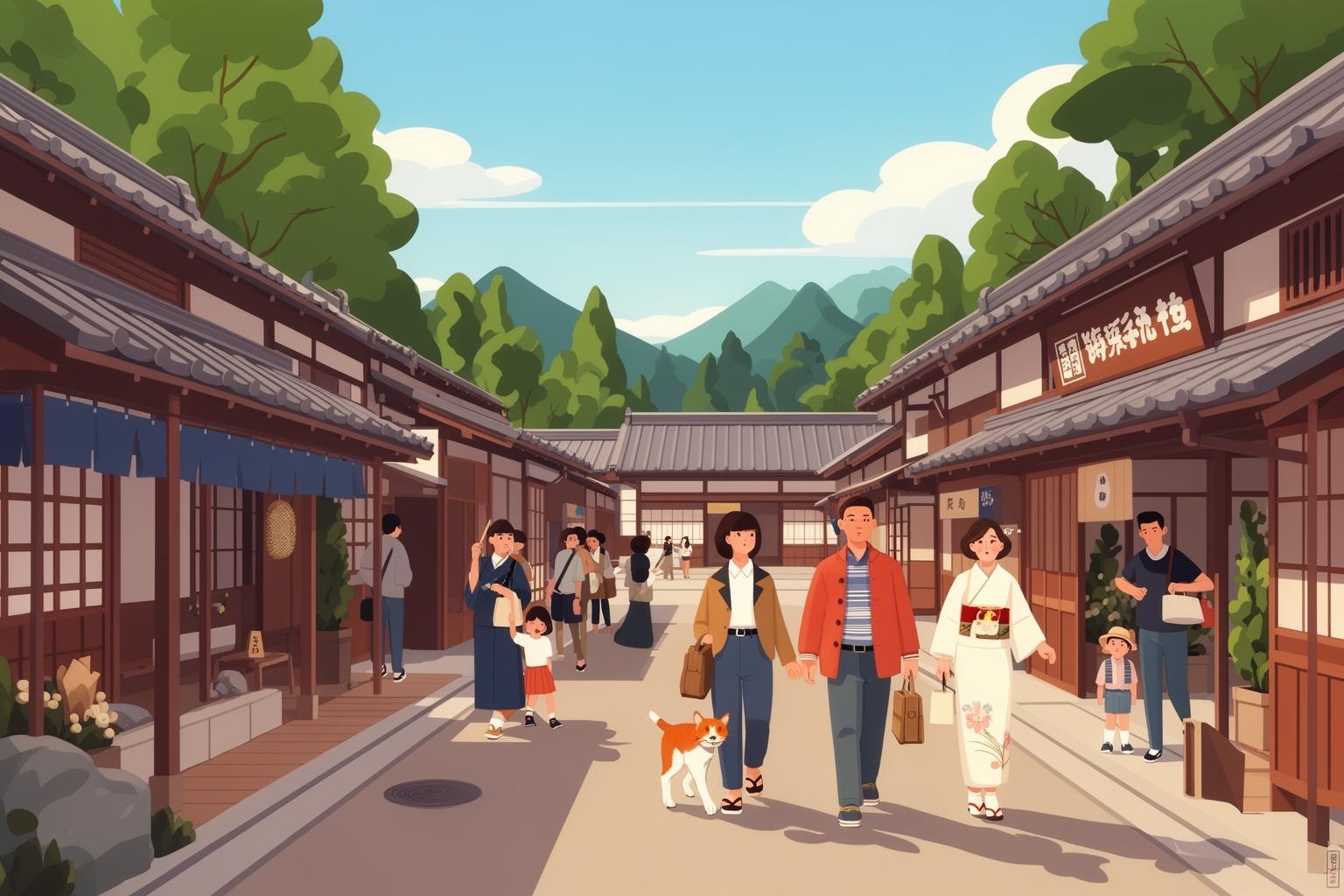
To grasp why Chichibu holds such a magnetic appeal for many, one must first understand the concept of ‘seichi junrei,’ or sacred site pilgrimage. It’s the heartfelt act of visiting real-world locations featured in anime, manga, or movies. More than mere tourism, it offers an immersive experience that blurs the boundaries between fiction and reality, allowing fans to pay tribute to a story that has made a lasting impression. ‘Anohana’ exemplifies this perfectly, weaving the actual map of Chichibu so intricately into its narrative that the town itself becomes a pivotal character. The tale of six childhood friends drifting apart after a tragedy, only to be reunited by the ghost of their friend Menma, is a universal story of grief, friendship, and the challenging transition into adulthood. Strolling through Chichibu feels like stepping directly into a scene from the show. The sunlight filters through the trees just as it did for Jintan, the river flows with the same gentle murmur, and the weight of unspoken emotions seems to linger in the quiet air. It’s a powerful, often emotional experience that forges an unbreakable bond between the viewer and the place.
Jorinji Temple: The Super Peace Busters’ Secret Base
At the heart of any Anohana pilgrimage lies Jorinji Temple. In the anime, this tranquil Buddhist temple serves as the gathering spot—the ‘secret base’ where the friends share their most vulnerable moments. Reaching it is a journey in itself, a short, pleasant walk from the main station area. As you draw near, the sounds of the town fade away, replaced by the rustle of leaves and the distant chime of a bell. The atmosphere here is one of deep tranquility. Yet what truly touches the heart is the sight of the temple grounds, which have warmly embraced their role in anime history. You’ll instantly recognize the stone steps and the main hall. The most moving feature, however, is the sea of ’ema’—small wooden prayer plaques. Here, they are not only filled with wishes for health or success but adorned with beautiful, heartfelt illustrations of Menma, Jintan, and the whole gang. Messages from fans around the world, written in dozens of languages, express their love for the story and gratitude for the characters. It feels less like a tourist destination and more like a living, breathing memorial—a testament to the show’s global influence. Standing there, surrounded by this collective outpouring of emotion, you truly sense that the spirit of the Super Peace Busters remains alive and strong.
The Old Chichibu Bridge: A Bridge of Memories
Few images from ‘Anohana’ are as iconic as the graceful, arching form of the Old Chichibu Bridge (Kyu-Chichibu-bashi). Featured prominently in the opening credits and several key scenes, this bridge symbolizes connection—the bond between friends, the link between past and present, and the divide between the world of the living and the realm of spirits. As you walk across its span, a palpable sense of drama unfolds. The Arakawa River flows broad and steady beneath, while the green mountains of Chichibu stretch out in every direction. It’s an ideal place for pause and reflection. You can almost picture Menma balancing on the railing or Jintan speeding by on his bicycle. The view from the bridge is stunning at any hour, but it takes on a particularly magical glow at sunset, when the sky is painted with shades of orange and purple, mirroring the anime’s often melancholic yet hopeful tone. This is a spot that invites contemplation—an invitation to stand still, feel the breeze, and let the story’s emotional weight wash over you. It bridges not just two sides of a river but connects the world of the anime with your own reality.
Keyaki Walk and Chichibu Station: Everyday Scenes Made Sacred
What makes ‘Anohana’ especially relatable is its grounding in the ordinary, everyday life of a small town. The pilgrimage extends to these seemingly mundane places, now imbued with special significance. The area around Seibu-Chichibu Station, where many visitors first arrive, feels instantly familiar. You can retrace the characters’ paths to school or part-time jobs. A short walk from the station lies the Keyaki Walk shopping complex, a modern hub featured in the show. Seeing these real-life locations—the convenience stores, vending machines, and residential streets—creates a strange and wonderful effect. It reinforces the notion that this powerful story could unfold anywhere, in any quiet town. The local community has embraced this connection wholeheartedly. You’ll find ‘Anohana’ posters, merchandise, and even themed goods in local shops, all presented with a genuine sense of pride. It’s a beautiful symbiosis where a fictional story has infused new energy into a real community, and the community, in return, keeps the story’s spirit alive for every fan who embarks on the journey.
Beyond the Anime: Discovering the Soul of Chichibu
While the ‘Anohana’ pilgrimage may initially draw many visitors to Chichibu, the town unveils itself as a destination with a rich and multifaceted spirit that reaches far beyond the anime scenes. This is a place steeped in history, spirituality, and a profound respect for nature. Leaving after just visiting the anime locations would be like reading only one chapter of a grand novel. The true charm of Chichibu lies in its dual nature: it serves as a vibrant hub of modern pop culture while simultaneously preserving ancient traditions. The mountains, which provide a stunning backdrop in the anime, also host some of the Kanto region’s most significant spiritual sites, and the town’s calendar is filled with spectacular festivals attracting visitors from across Japan.
The Grandeur of the Chichibu Night Festival: A UNESCO Treasure
As a festival planner, few events in Japan inspire as much admiration in me as the Chichibu Yomatsuri, or Night Festival. Held annually on December 2nd and 3rd, it is recognized as one of Japan’s top three float festivals, alongside Kyoto’s Gion Matsuri and the Takayama Matsuri. This event carries such cultural importance that it has been designated a UNESCO Intangible Cultural Heritage. The harsh cold of early winter does not deter the hundreds of thousands of spectators who come here, and for good reason. The festival is a feast for the senses, a display of raw energy and masterful craftsmanship.
A Symphony of Light and Sound
The stars of the festival are six enormous, exquisitely decorated floats: two ‘Kasaboko’ and four ‘Yatai.’ These are not simple parade floats; they are mobile masterpieces, each weighing between 10 and 20 tons. Adorned with intricate gilded wood carvings, heavy tapestries, and illuminated by cascades of paper lanterns that flicker in the winter night, they create a stunning spectacle. The air hums with energy as teams of men chant ‘Horyai! Horyai!’ while straining to pull these giants through the streets. The rhythmic chanting, soaring flute melodies, and the powerful taiko drumbeats from within the floats weave together into a mesmerizing, immersive soundscape. The climax arrives when the floats are hauled up the steep incline of Dango-zaka Hill toward the city hall plaza—a Herculean effort greeted by roaring applause. It’s a primal, unforgettable display of community spirit and raw strength.
The Winter Fireworks: A Spectacle Against the Cold
What makes the Chichibu Night Festival truly unique is its breathtaking fireworks display. Unlike typical Japanese fireworks usually held in summer, this winter show is rare and stunning. For two hours, the clear, crisp winter sky bursts into a kaleidoscope of colors and light. The sharp air amplifies the brightness of the colors, while the sound of explosions echoes dramatically against the surrounding mountains. Watching these dazzling bursts over the lantern-lit floats is a surreal and deeply moving experience, perfectly capping a festival that is both wildly energetic and profoundly beautiful. To fully savor it, find a spot with an unobstructed view of the sky and let the combination of fireworks above and festival sounds below wash over you.
Practical Tips for the Festival
Attending the Chichibu Night Festival requires some preparation. The main events take place on the evening of December 3rd. Trains and accommodations book up months, sometimes even a year ahead, so plan well in advance. Temperatures drop sharply at night, so dressing in warm layers including a hat, gloves, and scarf is essential. Wear comfortable shoes, as there will be much walking and standing. Crowds can be dense, so expect a slow pace. The reward is an unforgettable experience. Be sure to try some hot amazake (sweet, non-alcoholic sake) from a street vendor and fully immerse yourself in one of Japan’s most extraordinary cultural celebrations.
A Tapestry of Shrines and Temples
Chichibu has long been a spiritual pilgrimage center, dating back centuries before anime gained popularity. It is home to the Chichibu 34 Kannon Pilgrimage, a historic route linking 34 Buddhist temples across the region. Beyond this well-known trail, two shrines stand out as must-visit sites for anyone seeking a deeper spiritual connection with the area.
Chichibu Shrine: The Festival’s Heart
Situated in the city center, Chichibu Shrine acts as the town’s spiritual anchor and the core of the Night Festival. With a history spanning over 2,000 years, the shrine radiates a tangible sense of heritage. The current main hall, built in the late 16th century under Tokugawa Ieyasu’s patronage, exemplifies early Edo-period architecture. Take time to admire the vivid, intricate carvings decorating the building. Look out for the ‘Tsunagi no Ryu’ or ‘Chained Dragon,’ said to have been so lifelike that it would escape at night to cause havoc nearby before being chained to the shrine. Another notable carving is the ‘Ogenki Sansaru,’ or ‘Three Wise Monkeys,’ depicted here as ‘seeing well, speaking well, and listening well’—offering a more positive interpretation than the famous trio at Nikko. The shrine grounds provide a serene refuge, an ideal spot to absorb the history and spiritual power underpinning the town’s most famous festival.
Mitsumine Shrine: A Spiritual Retreat in the Clouds
For a truly profound spiritual encounter, head into the mountains to Mitsumine Shrine. Perched at 1,100 meters altitude, this shrine feels like an entirely different world. The journey itself is part of the experience—a winding bus ride up the mountain with ever-expanding breathtaking views. Upon arrival, visitors are welcomed by fresh mountain air and an extraordinary ‘torii’ gate featuring three arches instead of the usual one or two. The shrine’s guardians are not the typical ‘komainu’ lion-dogs but wolves, known as ‘Oinusama.’ Statues of these powerful wolf guardians are found everywhere, lending the shrine a wild and mystical atmosphere. It is regarded as a potent ‘power spot,’ a place teeming with spiritual energy, attracting many seeking a spiritual ‘battery recharge.’ On the first of each month, a special white amulet is distributed, drawing large crowds prepared to stand in long lines for its protective power. Even without the amulet, the shrine’s sheer beauty, ancient cedar trees, and panoramic mountain views make the pilgrimage more than worthwhile. It is a place to clear your mind and connect deeply with the raw, untamed nature of Chichibu.
A Taste of Chichibu: Culinary Delights and Local Crafts
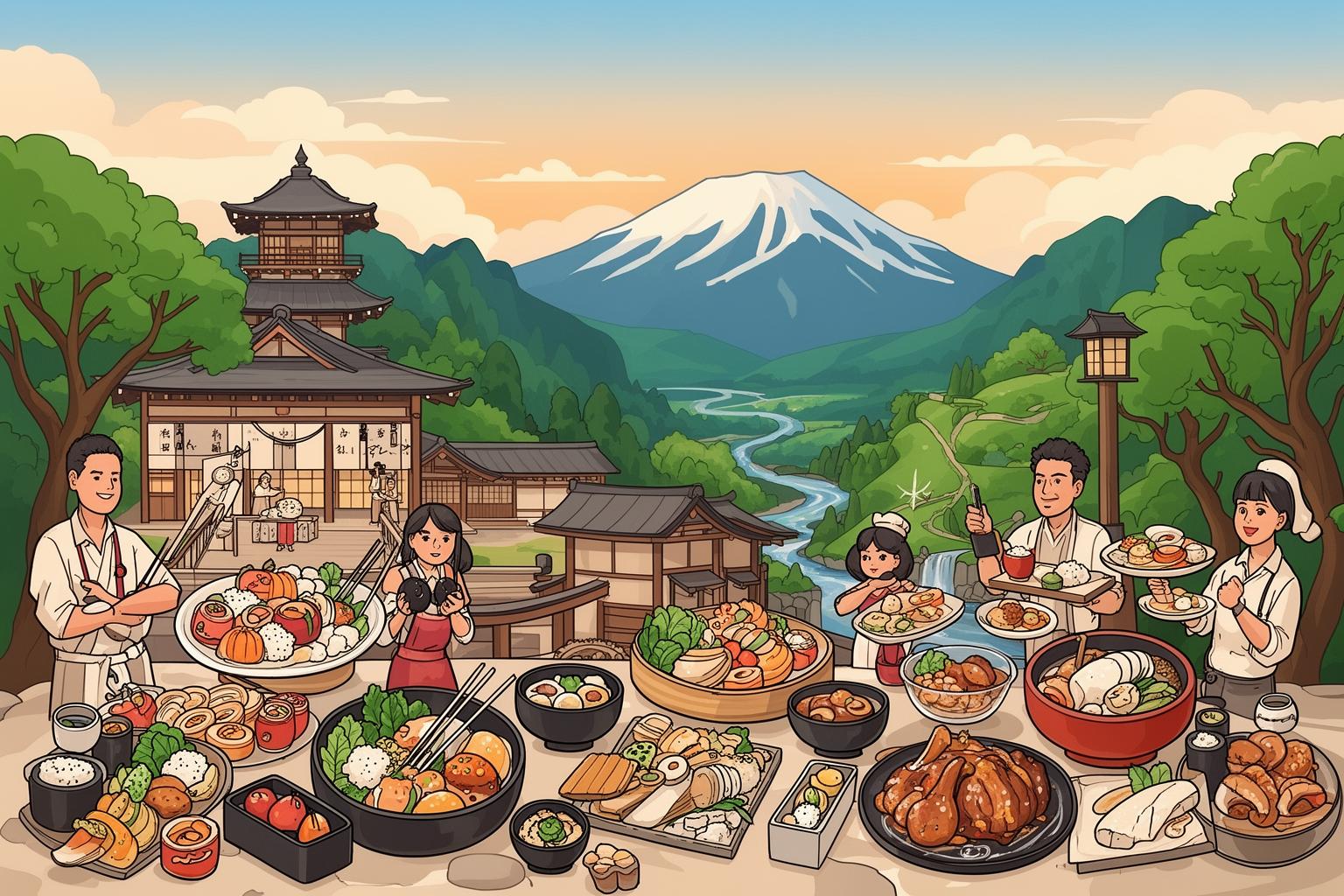
Traveling to any part of Japan is incomplete without savoring its local cuisine, and Chichibu presents a delightful range of rustic, hearty flavors that perfectly match its mountainous surroundings. The food here is simple, comforting, and deeply connected to the local environment. Exploring the culinary offerings is just as essential as visiting the temples and shrines, providing another way to engage with the region’s heart and soul.
Savoring the Local Flavors: Waraji Katsudon and More
The undisputed star of Chichibu’s cuisine is the ‘Waraji Katsudon.’ The term ‘waraji’ refers to traditional straw sandals, and the dish is named for the two large, thin, crispy pork cutlets that extend over the edges of the rice bowl, resembling a pair of sandals. These cutlets are coated in a sweet and savory soy-based sauce that seeps into the bed of fluffy white rice below. It’s a simple yet incredibly satisfying meal loved by both locals and visitors. Many restaurants in town serve this dish, each offering a slight variation on the secret sauce. Another regional specialty is soba noodles. Chichibu’s climate and water are ideal for cultivating buckwheat, and the local soba is prized for its firm texture and rich, nutty taste. Whether served cold with a dipping sauce or hot in a savory broth, it perfectly represents the region’s flavors. For a quick and delicious snack while exploring, try ‘Miso Potato’ — skewered, steamed potatoes that are battered, fried, and coated in a thick, sweet miso glaze. It’s the ultimate Japanese comfort food on a stick, especially comforting on a cold day.
A Toast to Tradition: Ichiro’s Malt and Chichibu Meisen
Recently, Chichibu has gained international recognition for something quite unexpected: world-class whisky. The Chichibu Distillery, founded by visionary Ichiro Akuto, produces the renowned Ichiro’s Malt. Though a relatively new distillery, it has earned numerous global awards, and its bottles have become highly prized by collectors. The pure mountain water and the unique climate of the Chichibu basin, with its hot summers and cold winters, are believed to accelerate the whisky’s maturation and develop its complex flavor profile. While the distillery itself is generally not open for public tours, its acclaimed products are available at local liquor stores and bars. For a different type of local craft, seek out Chichibu Meisen, a silk fabric known for its bold, colorful, and often contemporary patterns. Though production is limited today, it remains a beautiful and significant part of Chichibu’s industrial heritage. Examples can be viewed at the Chichibu Meisenkan, a museum dedicated to this traditional craft.
Practical Pilgrim’s Guide: Planning Your Chichibu Journey
Chichibu’s combination of easy access from Tokyo and its remote, almost otherworldly atmosphere makes it a perfect choice for either a day trip or a more immersive weekend escape. With a bit of planning, you can fully enjoy your time in this enchanting mountain town, whether you’re searching for the ghost of Menma or the whispers of age-old festivals.
Getting There: Access from Tokyo
Getting to Chichibu is surprisingly straightforward and pleasant. The fastest and most comfortable option is the Seibu Red Arrow Limited Express train from Ikebukuro Station in Tokyo. This scenic trip takes about 80 minutes, providing beautiful views as the cityscape transitions into verdant countryside and rolling hills. The train stops at Seibu-Chichibu Station, conveniently located beside a modern complex housing shops, restaurants, and a hot spring facility—a perfect spot to unwind after a day of exploring. Alternatively, you can take a local train on the Seibu Ikebukuro/Chichibu Line; it takes longer but is more economical. Whichever option you choose, the journey itself is part of the allure, building excitement as you leave the metropolis behind and step into the heart of Saitama.
When to Visit: A Town for All Seasons
Chichibu is stunning throughout the year, with each season revealing its own charm. Spring is especially beautiful, as cherry blossoms adorn the town in early April. Later in spring, from mid-April to early May, the nearby Hitsujiyama Park transforms into a vast pink and purple carpet of ‘Shibazakura’ (moss phlox), a truly breathtaking sight. Summer brings lush greenery and opportunities for hiking and river activities along the Arakawa River. Autumn is a painter’s paradise, with mountainsides ablaze in fiery reds, oranges, and golds, making it a prime time for scenic drives and visits to mountain shrines. Winter has its own stark beauty, culminating in the spectacular Chichibu Night Festival in early December. The ideal time to visit depends on what you want to experience, but the town’s charm remains constant no matter the season.
Getting Around: Your Feet and the Local Bus
Upon arrival in Chichibu, you’ll find the central town area—including most of the key ‘Anohana’ sites such as Jorinji Temple and the Old Chichibu Bridge—is compact and easy to explore on foot. Walking is the best way to absorb the atmosphere and uncover hidden gems around town. For destinations farther afield, such as the impressive Mitsumine Shrine or the Shibazakura at Hitsujiyama Park, the local Seibu bus network is your go-to option. Buses depart frequently from right outside Seibu-Chichibu Station. Be sure to check schedules in advance, particularly for mountain routes, as service can be sparse. The tourist information center at the station is a fantastic resource for maps, bus timetables, and useful tips.
A First-Timer’s Tip Sheet
To ensure a smooth and enjoyable visit, keep a few things in mind. Wear comfortable walking shoes—you’ll be covering plenty of ground. Carry cash, since some small shops and eateries might not accept credit cards. When visiting temples and shrines, show respect—bow at the entrance gate, speak quietly, and observe any posted guidelines. Fully charge your phone and camera, as Chichibu offers countless photogenic moments. Most importantly, give yourself permission to slow down. Don’t rush from one photo spot to another. Take a moment to sit on a bench, admire the mountain views, listen to the river’s flow, and simply be present in this special place.
The Enduring Magic of Chichibu
Leaving Chichibu feels like awakening from a bittersweet dream. You carry the town with you—the flavor of miso potato, the rhythm of festival chants, the quiet dignity of ancient shrines, and the heartfelt story of friends who found their way back to one another. It is a rare place that serves as both a sanctuary for fans of contemporary Japanese culture and a stronghold of enduring tradition. It’s a town where a fictional tale of ghosts and friendship comfortably coexists with ancient legends of dragons and wolf spirits. The pilgrimage to Chichibu is, at its core, a journey of connection. It’s about connecting with beloved characters, with the breathtaking nature around you, and with the profound, spiritual history embedded in the very earth beneath your feet. Whether you come searching for the Super Peace Busters’ secret base or a tranquil moment in a sacred mountain forest, Chichibu offers them generously. It reminds us that some places, like certain stories, hold a magic that lingers in your heart long after you’ve boarded the train home.